Wollman Adam J M, Kioumourtzoglou Dimitrios, Ward Rebecca, Gould Gwyn W, Bryant Nia J
Department of Biology and York Institute of Biomedical Research, University of York, York YO10 5DD, UK.
Biosciences Institute, Newcastle University, Newcastle upon Tyne NE2 4HH, UK.
iScience. 2022 Mar 3;25(4):104023. doi: 10.1016/j.isci.2022.104023. eCollection 2022 Apr 15.
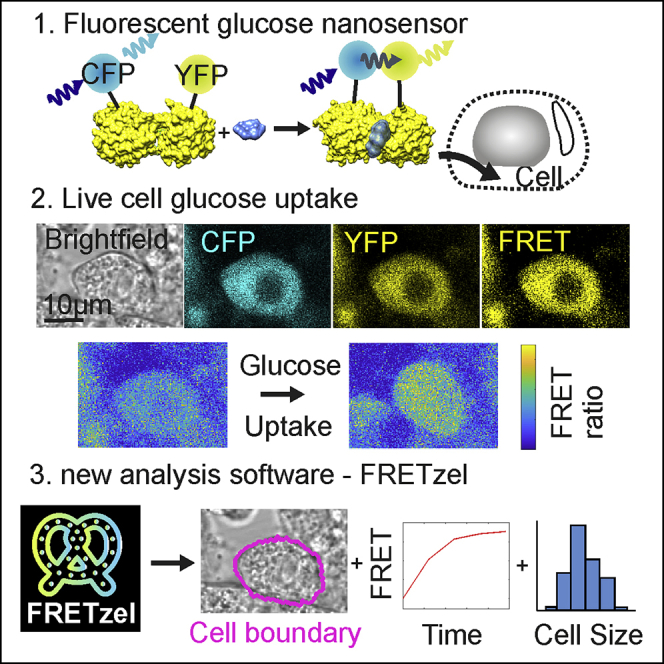
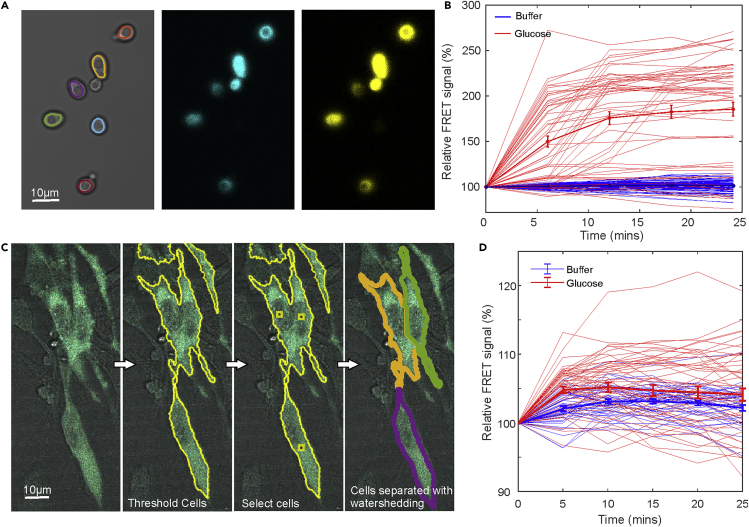
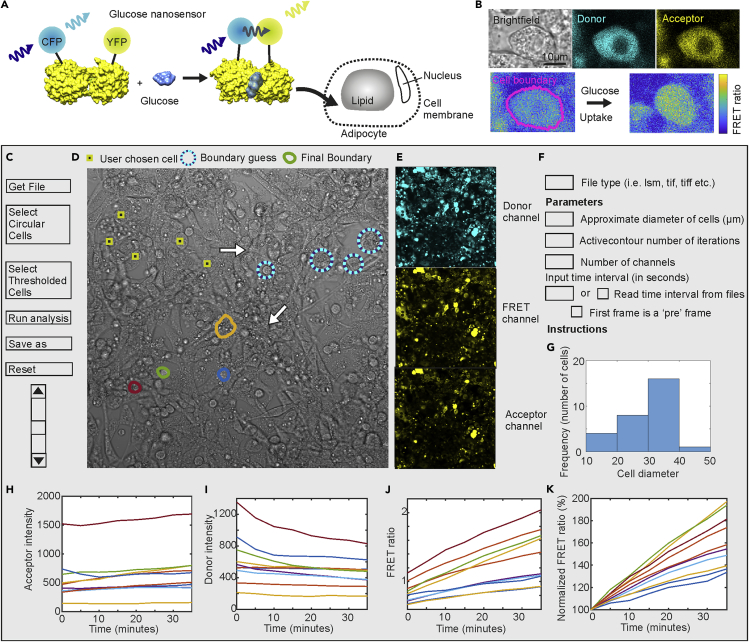
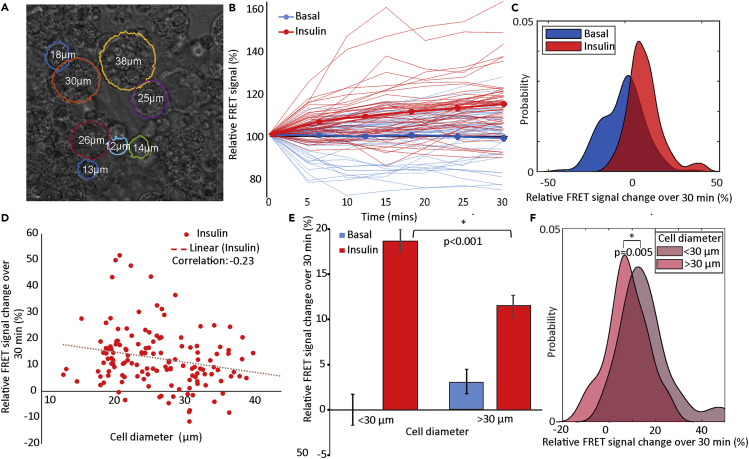
Fluorescent biosensors are powerful tools allowing the concentration of metabolites and small molecules, and other properties such as pH and molecular crowding to be measured inside live single cells. The technology has been hampered by lack of simple software to identify cells and quantify biosensor signals in single cells. We have developed a new software package, FRETzel, to address this gap and demonstrate its use by measuring insulin-stimulated glucose uptake in individual fat cells of varying sizes for the first time. Our results support the long-standing hypothesis that larger fat cells are less sensitive to insulin than smaller ones, a finding that has important implications for the battle against type 2 diabetes. FRETzel has been optimized using the messy and crowded environment of cultured adipocytes, demonstrating its utility for quantification of FRET biosensors in a wide range of other cell types, including fibroblasts and yeast via a simple user-friendly quantitative interface.
荧光生物传感器是强大的工具,可用于测量活的单细胞内代谢物和小分子的浓度以及其他特性,如pH值和分子拥挤程度。该技术一直受到缺乏简单软件的阻碍,这些软件无法识别细胞并量化单细胞中的生物传感器信号。我们开发了一个新的软件包FRETzel来填补这一空白,并首次通过测量不同大小的单个脂肪细胞中胰岛素刺激的葡萄糖摄取来展示其用途。我们的结果支持了一个长期存在的假设,即较大的脂肪细胞对胰岛素的敏感性低于较小的脂肪细胞,这一发现对对抗2型糖尿病具有重要意义。FRETzel已在培养的脂肪细胞这种混乱且拥挤的环境中进行了优化,通过简单易用的定量界面证明了其在包括成纤维细胞和酵母在内的广泛其他细胞类型中对FRET生物传感器进行定量的效用。