Headache Centre, Department of Advanced Medical and Surgical Sciences, University of Campania "Luigi Vanvitelli", Naples, Italy.
Headache. 2022 Apr;62(4):436-452. doi: 10.1111/head.14279. Epub 2022 Mar 21.
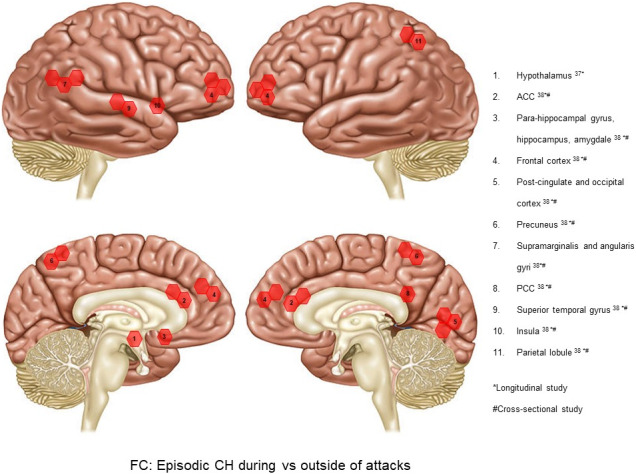
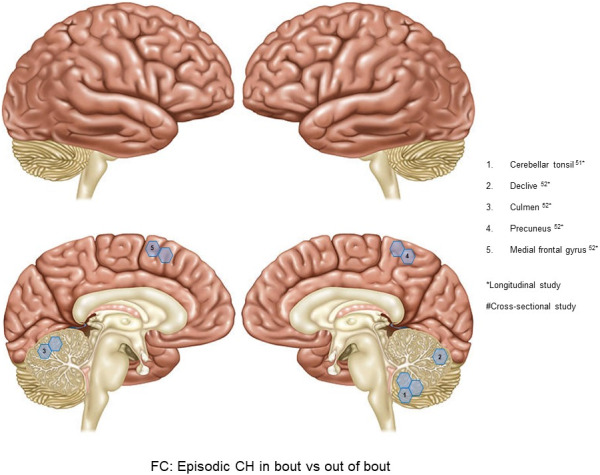
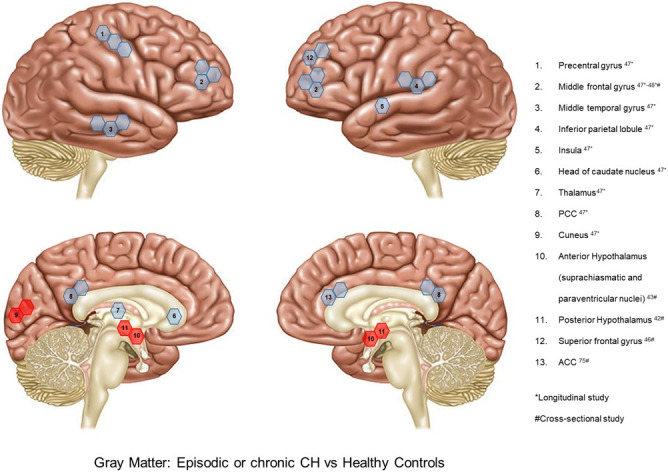
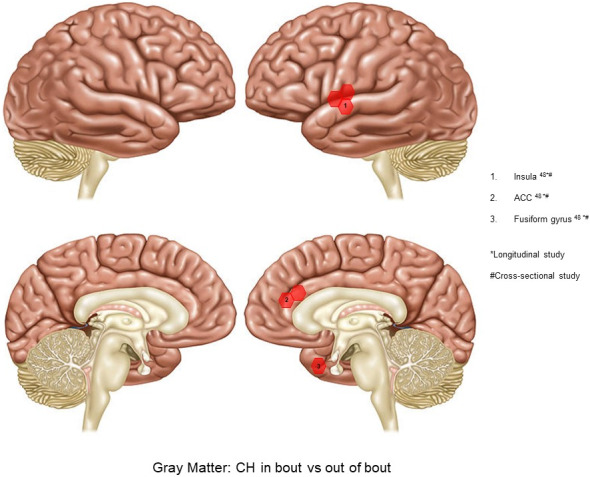
Although remarkable progress has been achieved in understanding cluster headache (CH) pathophysiology, there are still several gaps about the mechanisms through which independent subcortical and cortical brain structures interact with each other. These gaps could be partially elucidated by structural and functional advanced neuroimaging investigations.
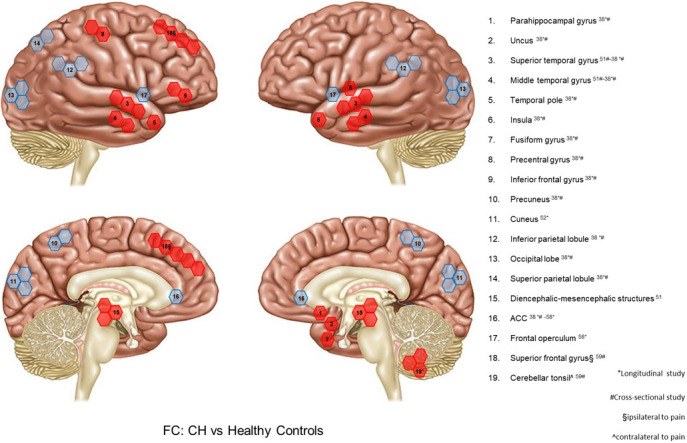
Although we are aware that substantial achievements have come from preclinical, neurophysiological, and biochemical experiments, the present narrative review aims to summarize the most significant findings from structural, microstructural, and functional neuroimaging investigations, as well as the consequent progresses in understanding CH pathophysiological mechanisms, to achieve a comprehensive and unifying model.
Advanced neuroimaging techniques have contributed to overcoming the peripheral hypothesis that CH is of cavernous sinus pathology, in transitioning from the pure vascular hypothesis to a more comprehensive trigeminovascular model, and, above all, in clarifying the role of the hypothalamus and its connections in the genesis of CH.
Altogether, neuroimaging findings strongly suggest that, beyond the theoretical model of the "pain matrix," the model of the "neurolimbic pain network" that is accepted in migraine research could also be extended to CH. Indeed, although the hypothalamus' role is undeniable, the genesis of CH attacks is complex and seems to not be just the result of a single "generator." Cortical-hypothalamic-brainstem functional interconnections that can switch between out-of-bout and in-bout periods, igniting the trigeminovascular system (probably by means of top-down mechanisms) and the consensual trigeminal autonomic reflexes, may represent the "neuronal background" of CH.
尽管在理解丛集性头痛(CH)的病理生理学方面已经取得了显著的进展,但对于独立的皮质下和皮质脑结构如何相互作用的机制仍存在一些空白。这些空白可以通过结构和功能的高级神经影像学研究来部分阐明。
尽管我们意识到从临床前、神经生理学和生物化学实验中已经取得了重大进展,但本叙述性综述旨在总结结构、微观结构和功能神经影像学研究的最重要发现,以及理解 CH 病理生理机制的相应进展,以实现一个全面统一的模型。
先进的神经影像学技术有助于克服 CH 是海绵窦病理学的外周假说,从单纯的血管假说转变为更全面的三叉血管模型,最重要的是,阐明下丘脑及其连接在 CH 发病机制中的作用。
总的来说,神经影像学研究结果强烈表明,在“疼痛矩阵”的理论模型之外,在偏头痛研究中被接受的“神经边缘疼痛网络”模型也可以扩展到 CH。事实上,尽管下丘脑的作用不可否认,但 CH 发作的发生机制很复杂,似乎不仅仅是单一“发生器”的结果。在发作期和间歇期之间可以切换的皮质-下丘脑-脑干功能相互连接,可能会引发三叉神经系统(可能通过自上而下的机制)和共识性三叉自主反射,这可能代表 CH 的“神经元背景”。