Laboratory of Viral Metagenomics, Department of Microbiology, Immunology and Transplantation, Rega Institute, University of Leuven, 3000 Leuven, Belgium.
Laboratory of Molecular Bacteriology, Department of Microbiology, Immunology and Transplantation, Rega Institute, University of Leuven, 3000 Leuven, Belgium.
Proc Natl Acad Sci U S A. 2022 Mar 29;119(13):e2114619119. doi: 10.1073/pnas.2114619119. Epub 2022 Mar 23.
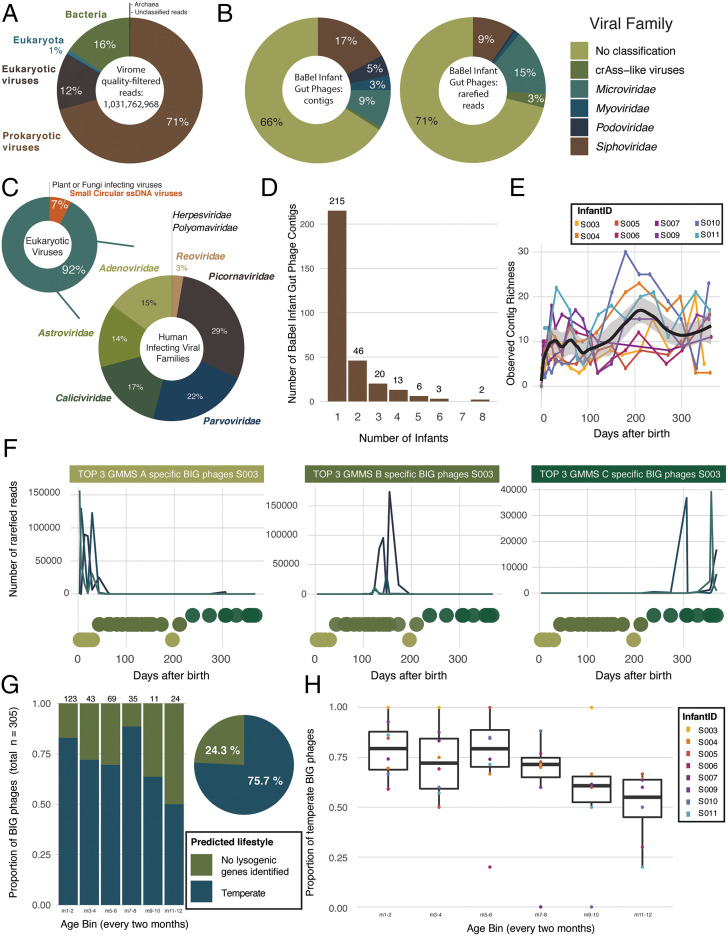
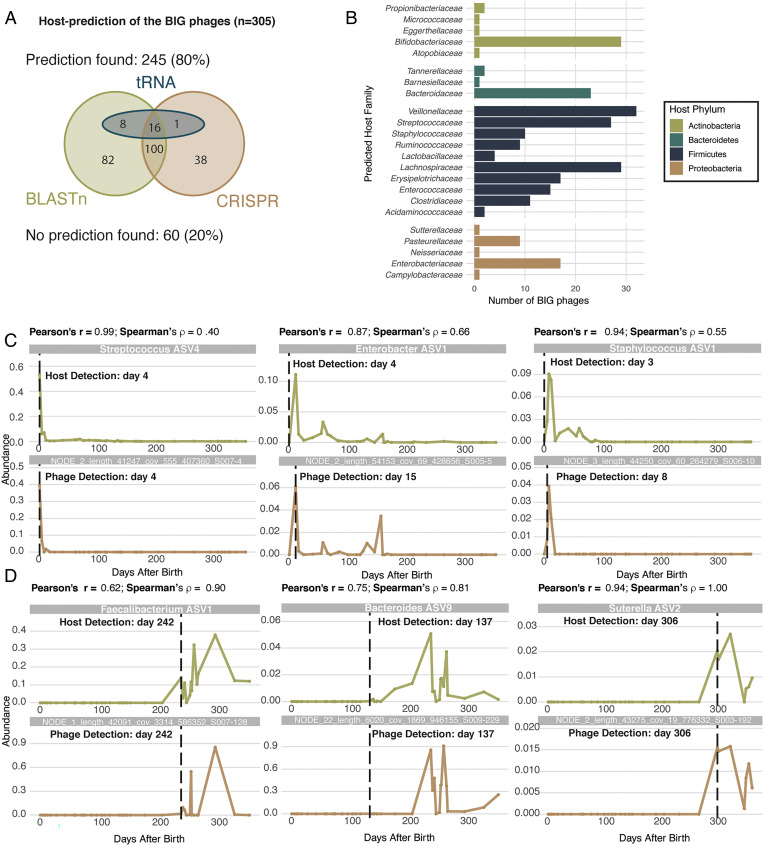
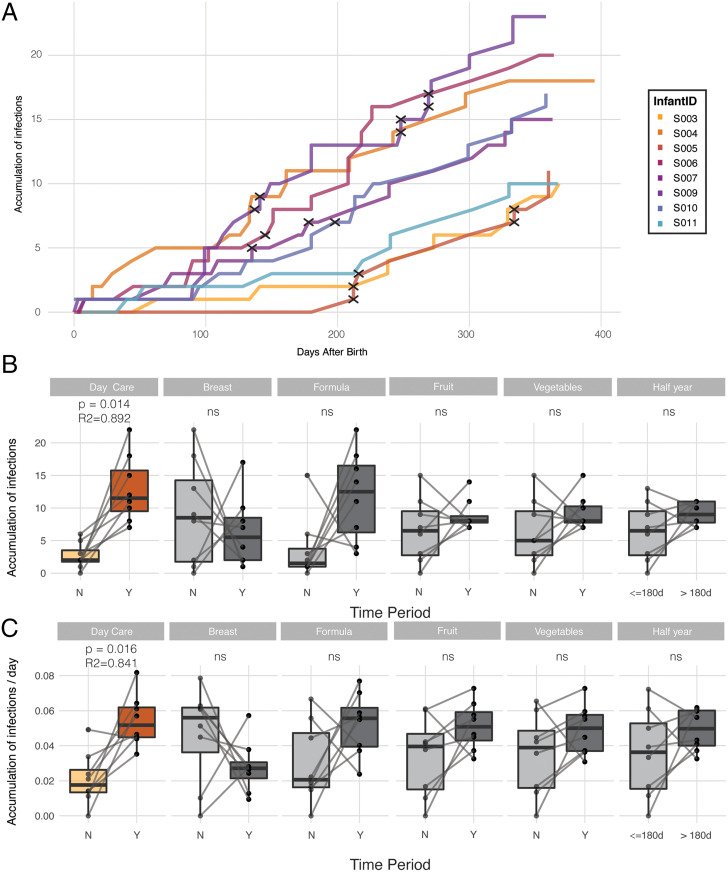
SignificanceMicrobes colonizing the infant gut during the first year(s) of life play an important role in immune system development. We show that after birth the (nearly) sterile gut is rapidly colonized by bacteria and their viruses (phages), which often show a strong cooccurrence. Most viruses infecting the infant do not cause clinical signs and their numbers strongly increase after day-care entrance. The infant diet is clearly reflected by identification of plant-infecting viruses, whereas fungi and parasites are not part of a stable gut microbiota. These temporal high-resolution baseline data about the gut colonization process will be valuable for further investigations of pathogenic viruses, dynamics between phages and their bacterial host, as well as studies investigating infants with a disturbed microbiota.
意义
在生命的头一年(s)中,定植于婴儿肠道的微生物对免疫系统的发育起着重要作用。我们发现,在出生后,(几乎)无菌的肠道会迅速被细菌及其病毒(噬菌体)定植,这些细菌和噬菌体通常具有强烈的共同出现现象。感染婴儿的大多数病毒不会引起临床症状,并且在进入日托机构后,其数量会大量增加。通过鉴定感染植物的病毒,可以明显反映出婴儿的饮食情况,而真菌和寄生虫则不是稳定肠道微生物群的一部分。这些关于肠道定植过程的时间分辨率高的基准数据对于进一步研究致病性病毒、噬菌体与其细菌宿主之间的动态关系以及研究肠道微生物群失调的婴儿将具有重要价值。