Graduate School of Health Sciences, Hokkaido University, Sapporo, Hokkaido, Japan.
Faculty of Health Sciences, Hokkaido University, Sapporo, Hokkaido, Japan.
PLoS One. 2022 Mar 23;17(3):e0265719. doi: 10.1371/journal.pone.0265719. eCollection 2022.
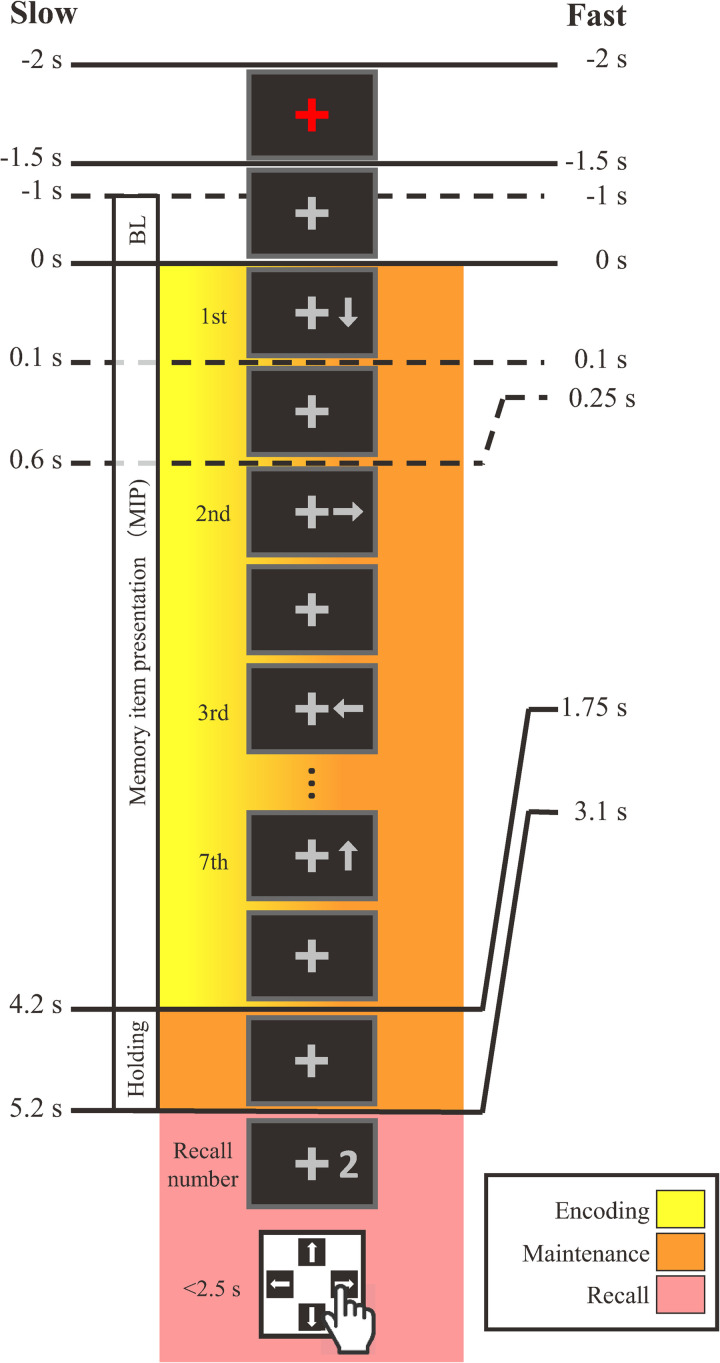
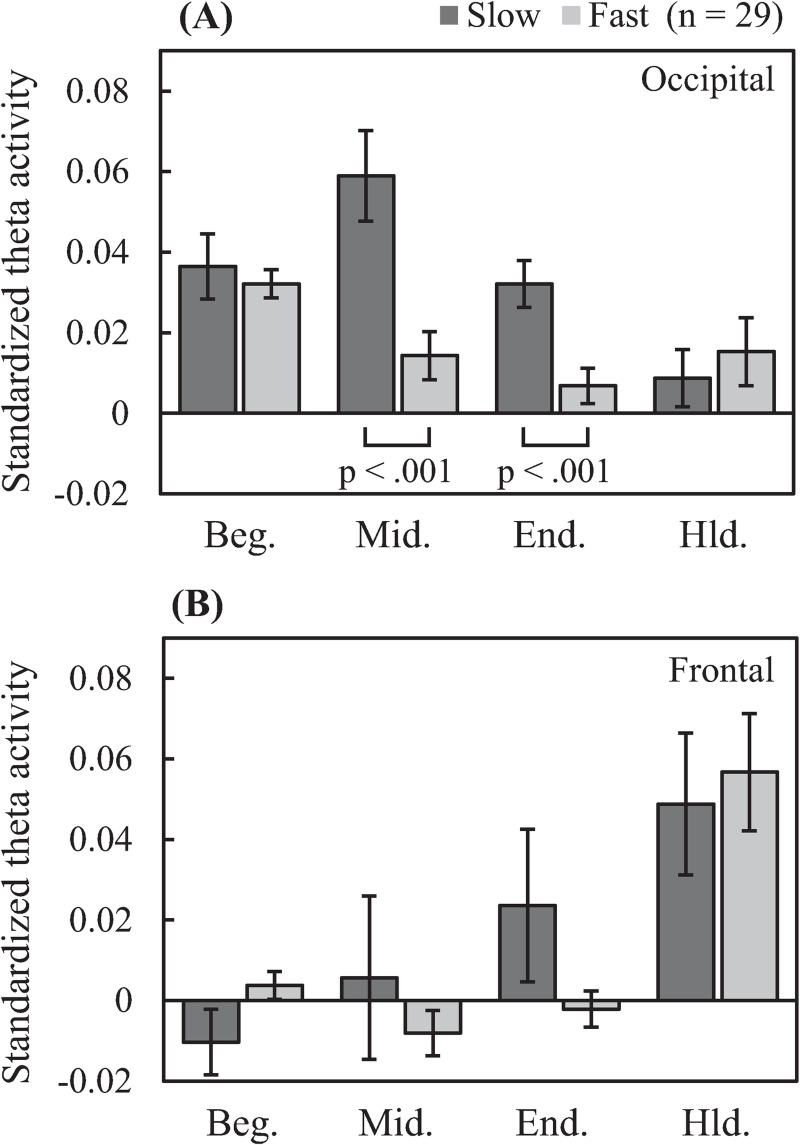
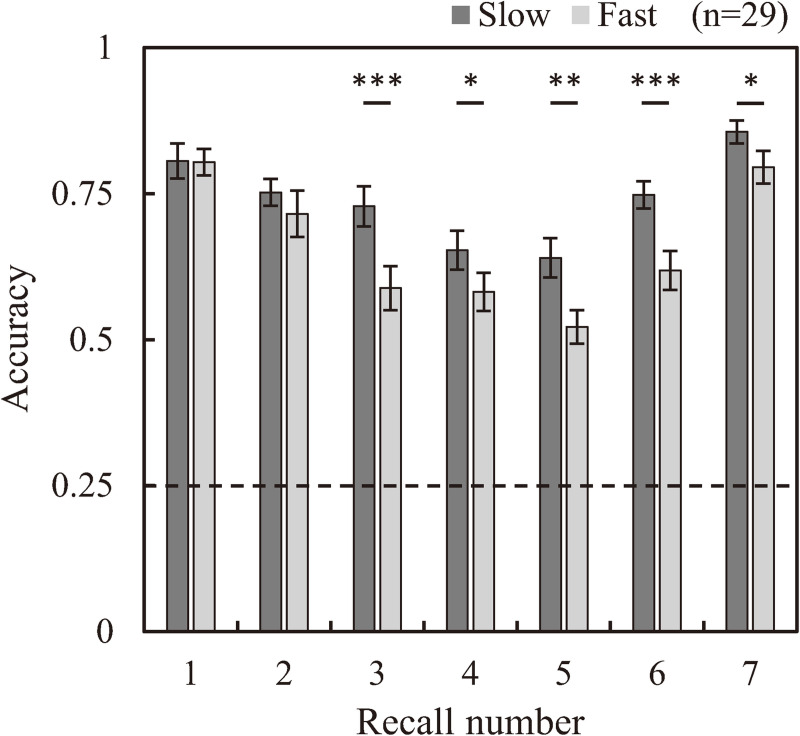
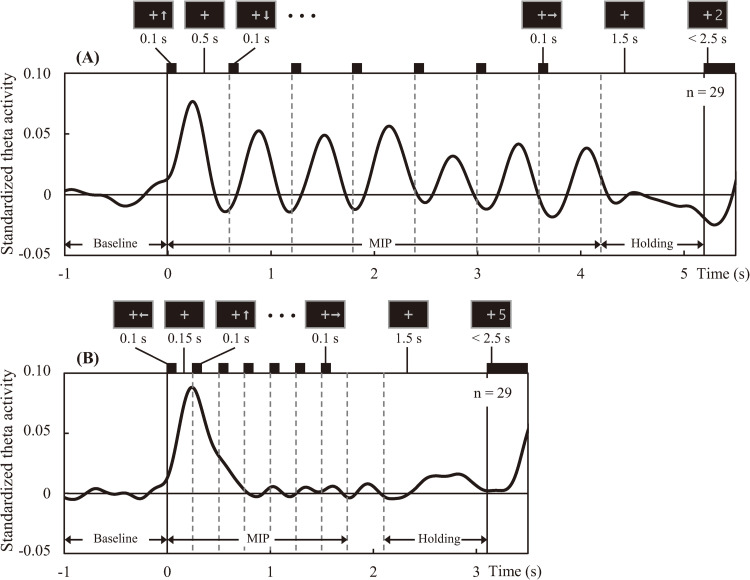
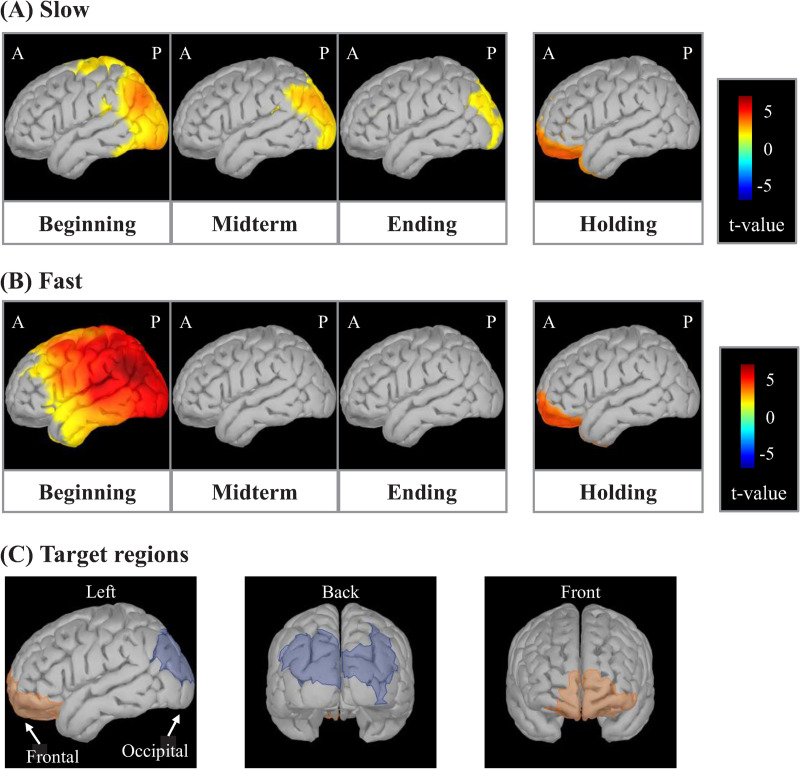
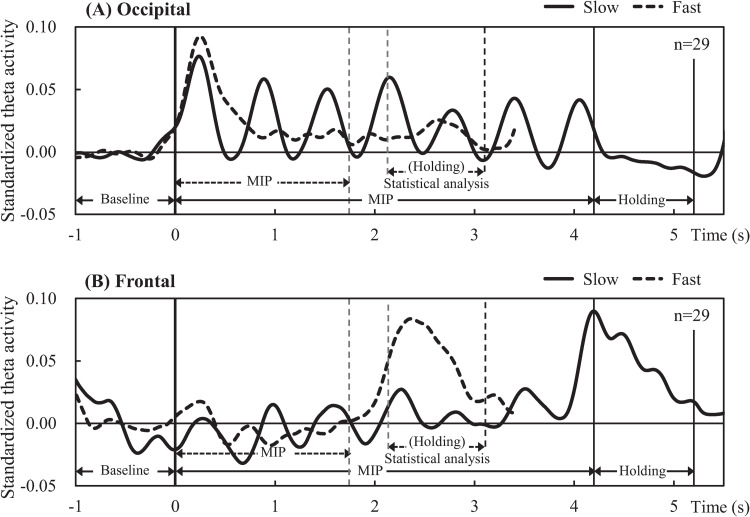
Electrophysiological studies have demonstrated that theta-band activity is useful for investigating neural mechanisms of memory. However, mechanisms specifically driving memory performance remain poorly understood. In sequential memory, performance can be artificially attenuated by shortening the inter-stimulus interval (ISI) between memory item presentations. Therefore, we sought to clarify the mechanisms of sequential memory performance by analyzing theta-band (4-8 Hz) activity recorded via magnetoencephalogram in 33 participants during performance of a sequential memory task where memory items were presented at either slow or fast rates in accordance with longer or shorter ISIs, respectively. Particularly in the slow task, theta activity clearly modulated in accordance with the presentation of memory items. Common cortical target regions in the occipital and frontal cortex were identified in both tasks and related to visual encoding and memory maintenance, respectively. Compared to the slow task, occipital-theta activity was significantly lower in the fast task from the midterm until the ending of encoding, in correspondence with significantly lower recall for memory items in this same period. Meanwhile, despite a loss of clarity in responsiveness to individual memory items in the fast task, frontal-theta activity was not different between tasks and exhibited particularly strong responses in both tasks during the holding period prior to recall. Our results indicate that shorter processing time erodes sequential memory performance beginning at the level of visual encoding.
电生理研究表明,θ 波段活动可用于研究记忆的神经机制。然而,特定驱动记忆表现的机制仍知之甚少。在序列记忆中,通过缩短记忆项目呈现之间的刺激间间隔(ISI)可以人为地减弱表现。因此,我们试图通过分析 33 名参与者在执行序列记忆任务时记录的脑磁图中的θ 波段(4-8 Hz)活动来阐明序列记忆表现的机制,在该任务中,记忆项目以较慢或较快的速度呈现,分别对应较长或较短的 ISI。特别是在慢任务中,θ 活动明显根据记忆项目的呈现而调制。在两个任务中都确定了枕叶和额叶皮质的常见皮质靶区,分别与视觉编码和记忆维持有关。与慢任务相比,在快任务中,从中期到编码结束,θ 活动明显低于编码期间记忆项目的明显较低的回忆,在此期间枕叶的 θ 活动明显较低。同时,尽管在快任务中对个别记忆项目的响应清晰度降低,但额叶的 θ 活动在两个任务之间没有差异,并在回忆之前的保持期内表现出特别强烈的反应。我们的结果表明,较短的处理时间从视觉编码开始侵蚀序列记忆表现。