Gordon R D, Fung J J, Markus B, Fox I, Iwatsuki S, Esquivel C O, Tzakis A, Todo S, Starzl T E
Surgery. 1986 Oct;100(4):705-15.
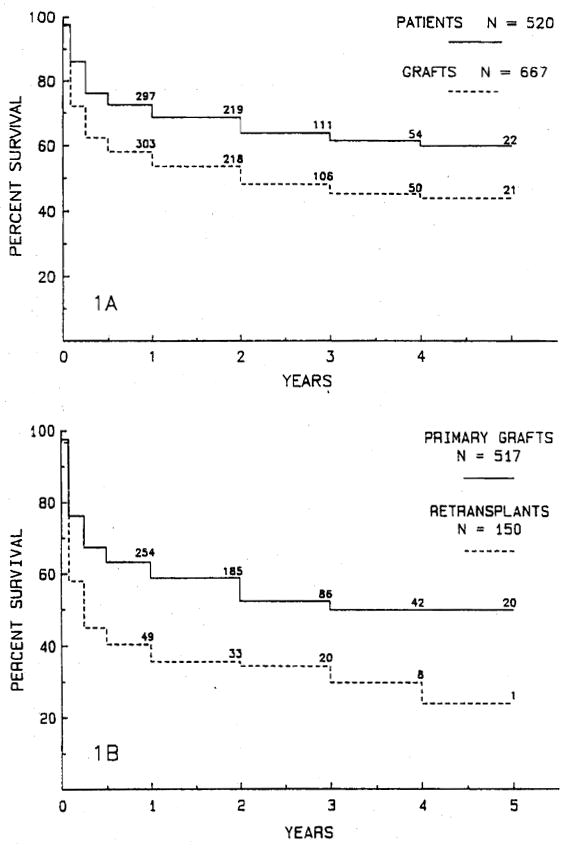
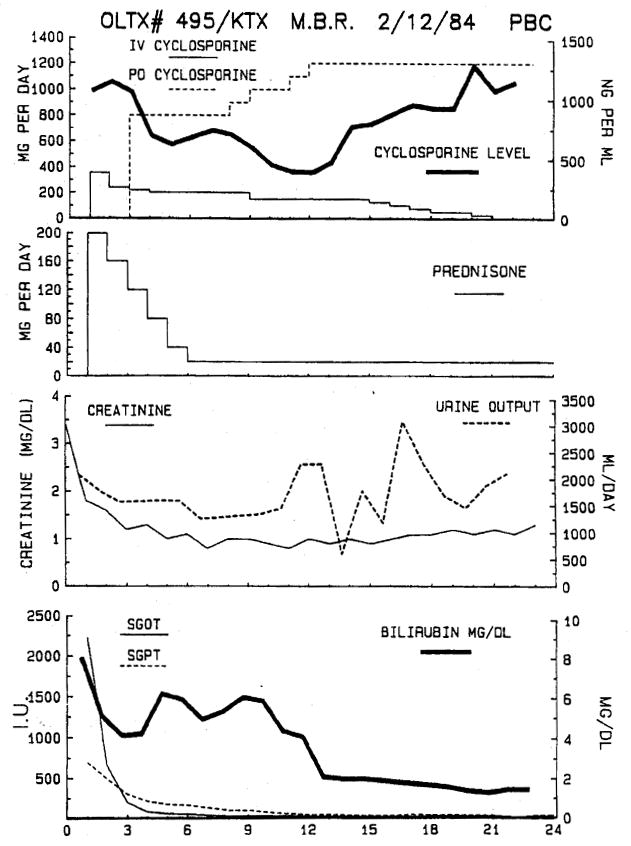
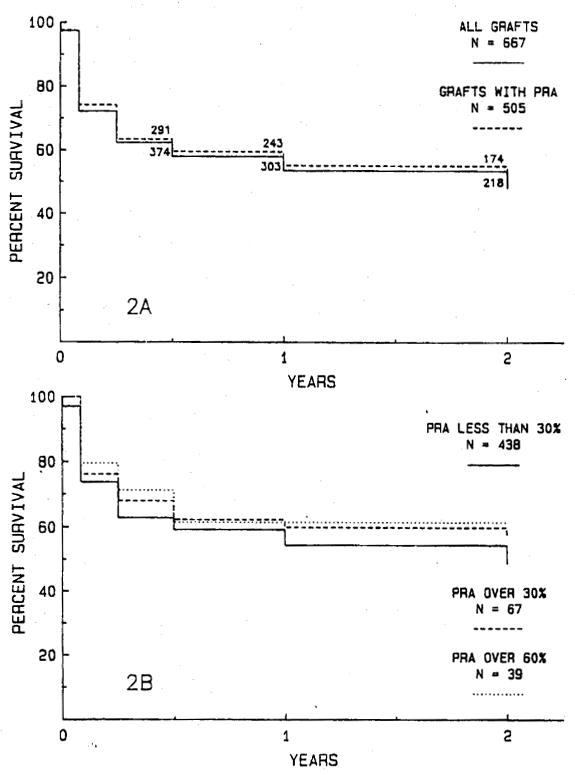
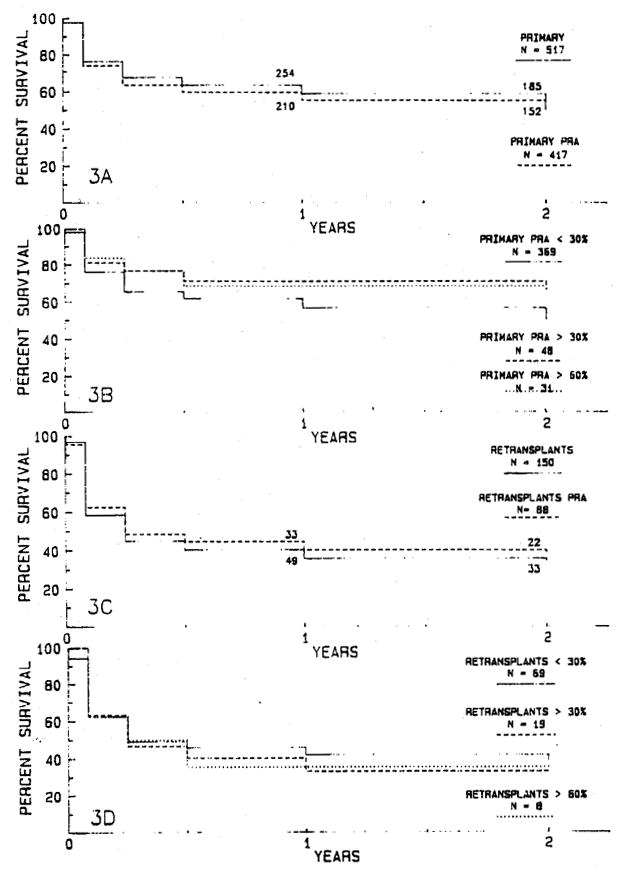
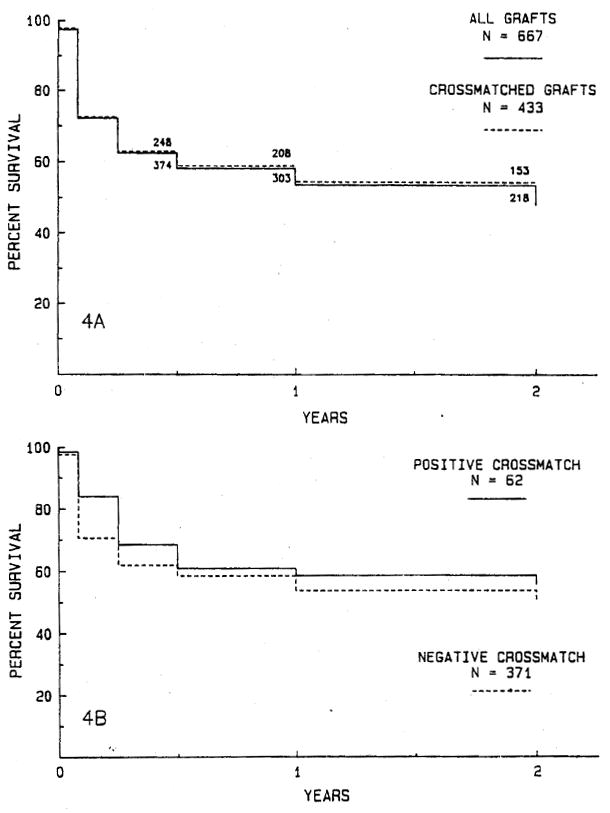
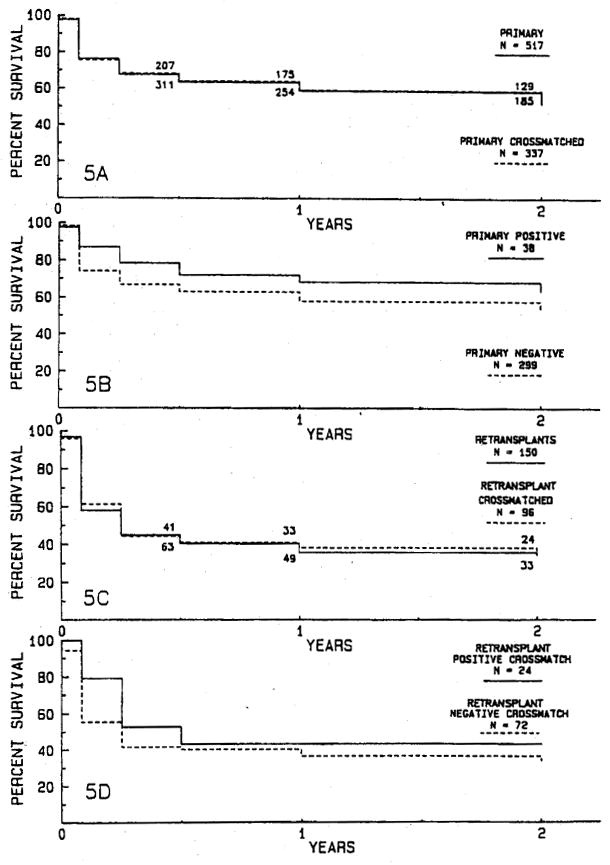
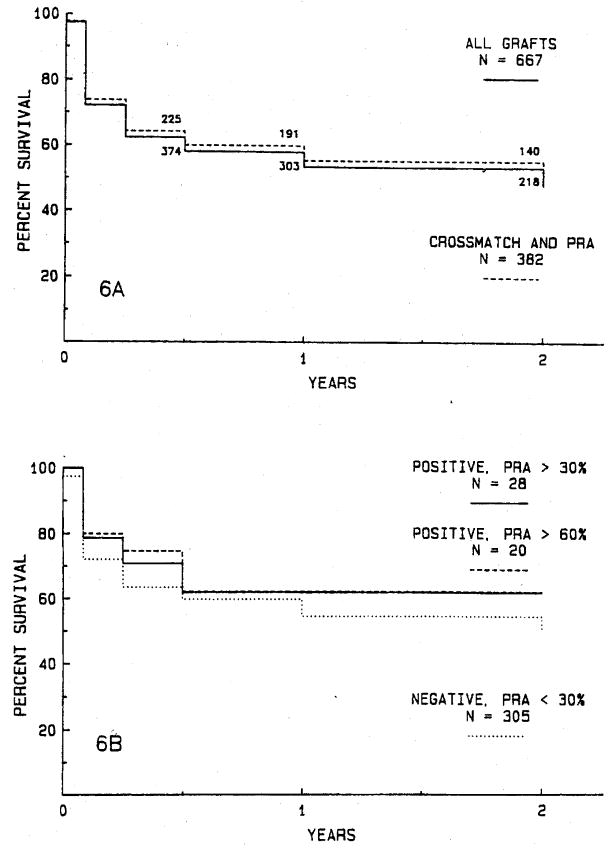
Six hundred sixty-seven first, second, and third orthotopic liver allografts in 520 patients were reviewed to determine the effect of recipient panel-reactive antibody (PRA) and donor-recipient antibody crossmatch on 2-year patient and liver allograft survival rates. Neither a high panel-reactive antibody nor a positive crossmatch for donor-specific preformed antibody was associated with decreased patient or liver allograft survival for primary grafts or retransplants. Two patients have been given kidney transplants immediately after a liver allograft from a donor with whom each patient had an initial strongly positive donor-specific antibody crossmatch. The liver apparently removed or neutralized circulating anti-donor antibody, since the renal allografts functioned promptly and did not experience hyperacute rejection.
回顾了520例患者接受的667例首次、二次和三次原位肝移植,以确定受者群体反应性抗体(PRA)和供受者抗体交叉配型对患者2年生存率和肝移植生存率的影响。无论是高群体反应性抗体还是供者特异性预存抗体的阳性交叉配型,均与初次移植或再次移植患者的生存率或肝移植生存率降低无关。有两名患者在接受来自一名供者的肝移植后立即接受了肾移植,每名患者最初与该供者的供者特异性抗体交叉配型均为强阳性。肝脏显然清除或中和了循环中的抗供者抗体,因为肾移植立即发挥功能,且未发生超急性排斥反应。