Department of Biochemistry and Molecular Biology, College of Basic Medical Sciences, Navy Medical University, Shanghai 200433, China.
College of Medicine, Shaoxing University, 900th Chengnan Avenue, Shaoxing 312000, China.
Toxins (Basel). 2022 Mar 5;14(3):195. doi: 10.3390/toxins14030195.
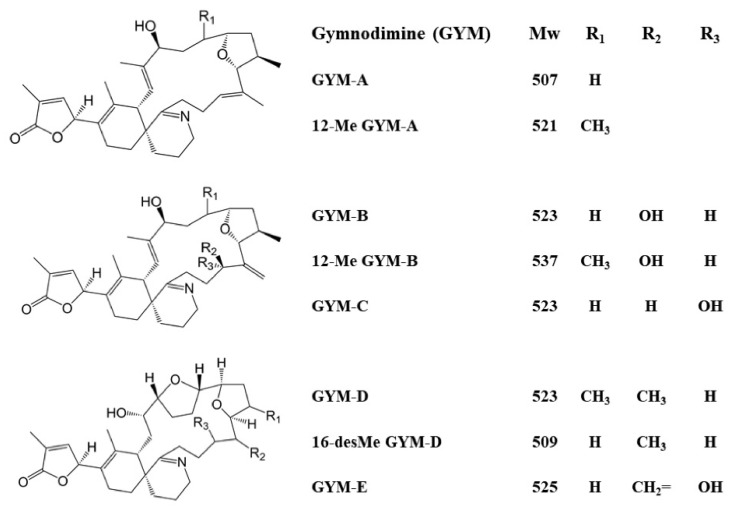
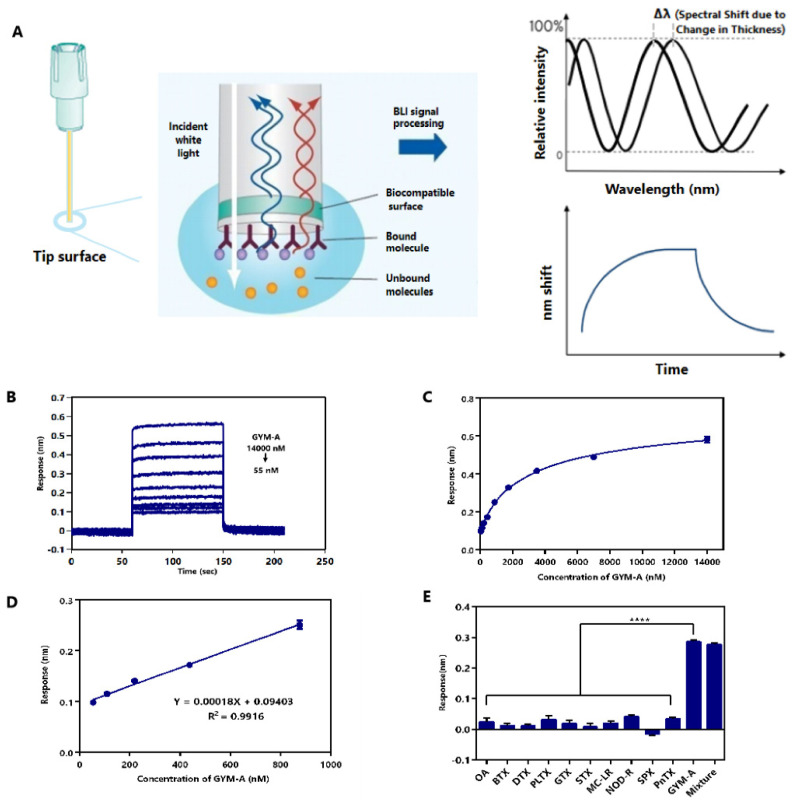
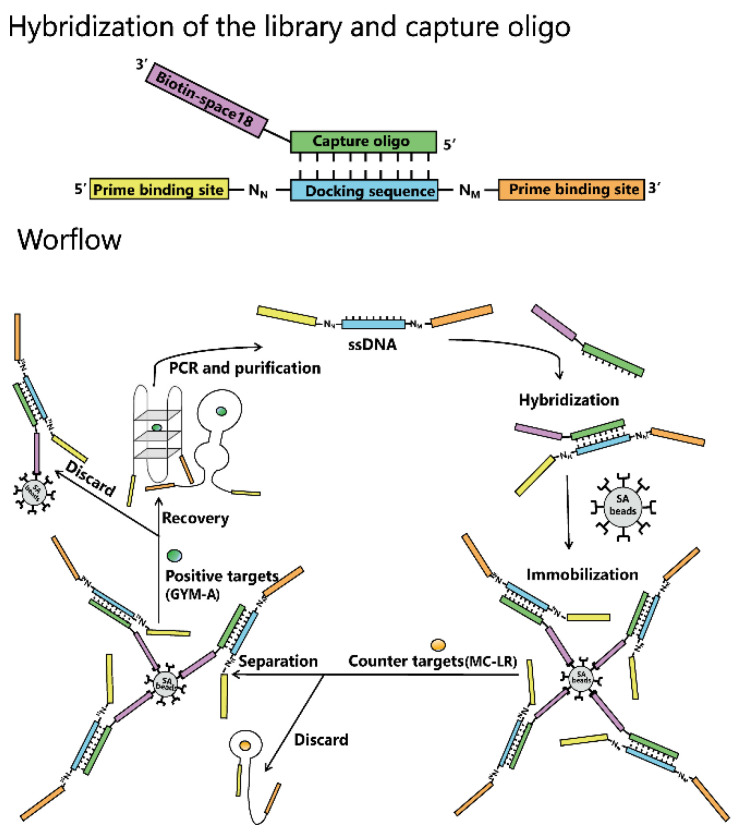
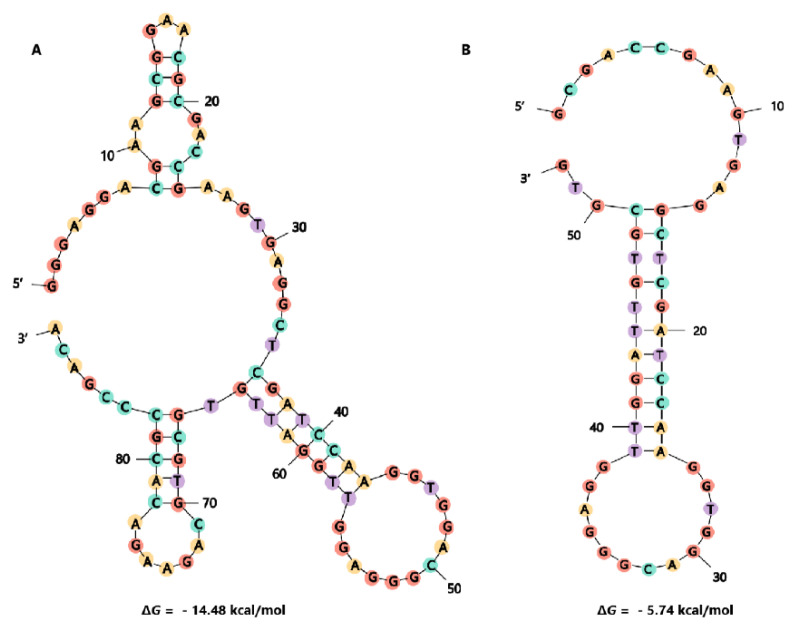
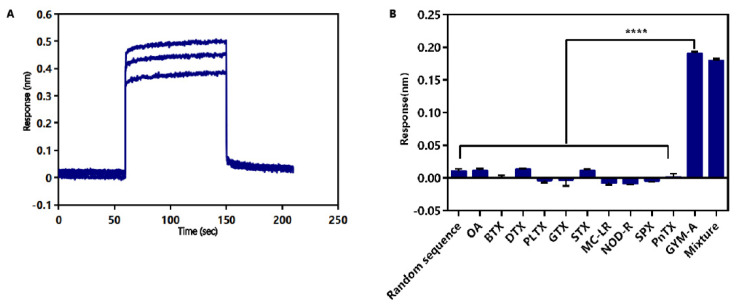
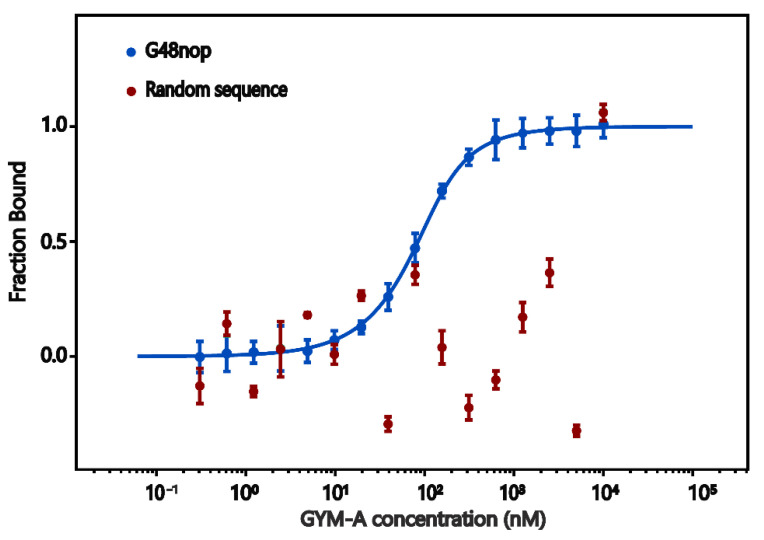
Gymnodimines (GYMs), belonging to cyclic imines (CIs), are characterized as fast-acting toxins, and may pose potential risks to human health and the aquaculture industry through the contamination of sea food. The existing detection methods of GYMs have certain defects in practice, such as ethical problems or the requirement of complicated equipment. As novel molecular recognition elements, aptamers have been applied in many areas, including the detection of marine biotoxins. However, GYMs are liposoluble molecules with low molecular weight and limited numbers of chemical groups, which are considered as "challenging" targets for aptamers selection. In this study, Capture-SELEX was used as the main strategy in screening aptamers targeting gymnodimine-A (GYM-A), and an aptamer named G48nop, with the highest value of 95.30 nM, was successfully obtained by screening and optimization. G48nop showed high specificity towards GYM-A. Based on this, a novel aptasensor based on biolayer interferometry (BLI) technology was established in detecting GYM-A. This aptasensor showed a detection range from 55 to 1400 nM (linear range from 55 to 875 nM) and a limit of detection (LOD) of 6.21 nM. Spiking experiments in real samples indicated the recovery rate of this aptasensor, ranging from 96.65% to 109.67%. This is the first study to report an aptamer with high affinity and specificity for the challenging marine biotoxin GYM-A, and the new established aptasensor may be used as a reliable and efficient tool for the detection and monitoring of GYMs in the future.
海兔毒素(GYMs)属于环亚胺(CIs),具有作用迅速的特点,通过海产品污染可能对人类健康和水产养殖业造成潜在风险。现有的 GYMs 检测方法在实践中存在一定缺陷,例如存在伦理问题或需要复杂的设备。适体作为新型分子识别元件,已应用于许多领域,包括海洋生物毒素的检测。然而,GYMs 是脂溶性的小分子,分子量低,化学基团数量有限,被认为是适体选择的“挑战性”靶标。本研究以捕获 SELEX 为主要策略筛选靶向 gymnodimine-A(GYM-A)的适体,经过筛选和优化,成功获得了 值为 95.30 nM 的最高值的适体 G48nop。G48nop 对 GYM-A 表现出高度特异性。在此基础上,建立了基于生物层干涉(BLI)技术的新型 GYM-A 检测适配体传感器。该适配体传感器的检测范围为 55-1400 nM(线性范围为 55-875 nM),检测限(LOD)为 6.21 nM。实际样品中的加标实验表明,该适配体传感器的回收率在 96.65%-109.67%之间。这是首次报道对具有挑战性的海洋生物毒素 GYM-A 具有高亲和力和特异性的适体,新建立的适配体传感器将来可用于 GYMs 的检测和监测,是一种可靠、高效的工具。