Division of Endocrinology and Metabolism, Department of Internal Medicine, Chonnam National University Medical School, 264 Seoyangro, Hwasun 58128, Korea.
Department of Anatomy, Chonnam National University Medical School, Hwasun 58128, Korea.
Int J Mol Sci. 2022 Mar 10;23(6):2982. doi: 10.3390/ijms23062982.
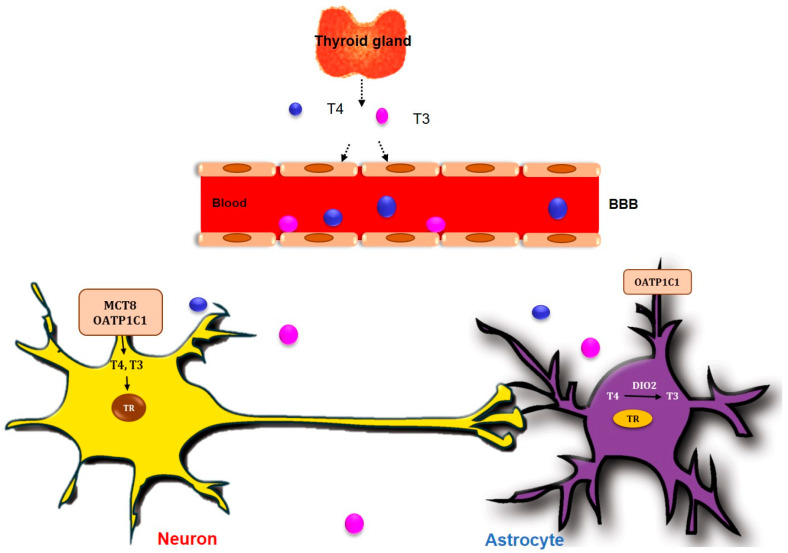
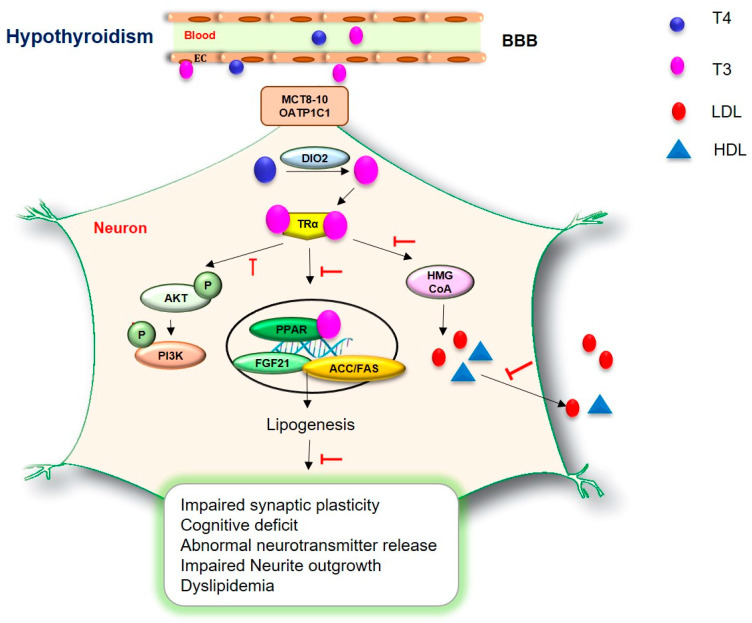
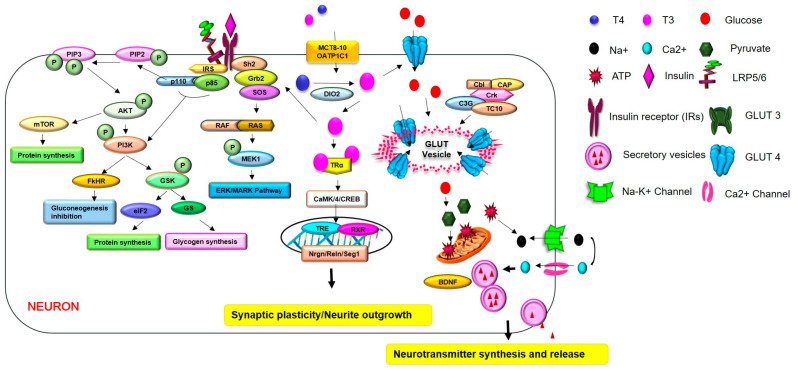
The incidence of dementia is steadily increasing worldwide. The risk factors for dementia are diverse, and include genetic background, environmental factors, sex differences, and vascular abnormalities. Among the subtypes of dementia, diabetes-related dementia is emerging as a complex type of dementia related to metabolic imbalance, due to the increase in the number of patients with metabolic syndrome and dementia worldwide. Thyroid hormones are considered metabolic regulatory hormones and affect various diseases, such as liver failure, obesity, and dementia. Thyroid dysregulation affects various cellular mechanisms and is linked to multiple disease pathologies. In particular, hypothyroidism is considered a critical cause for various neurological problems-such as metabolic disease, depressive symptoms, and dementia-in the central nervous system. Recent studies have demonstrated the relationship between hypothyroidism and brain insulin resistance and dyslipidemia, leading to diabetes-related dementia. Therefore, we reviewed the relationship between hypothyroidism and diabetes-related dementia, with a focus on major features of diabetes-related dementia such as insulin resistance, neuronal dysfunction, and dyslipidemia.
全球范围内,痴呆的发病率正在稳步上升。痴呆的危险因素多种多样,包括遗传背景、环境因素、性别差异和血管异常等。在痴呆的各种亚型中,与代谢失衡相关的糖尿病相关性痴呆作为一种复杂的痴呆类型逐渐显现,这是由于全球代谢综合征和痴呆患者数量的增加所致。甲状腺激素被认为是代谢调节激素,可影响多种疾病,如肝衰竭、肥胖和痴呆等。甲状腺功能紊乱影响多种细胞机制,并与多种疾病病理相关。特别是,甲状腺功能减退被认为是中枢神经系统多种神经问题(如代谢疾病、抑郁症状和痴呆)的关键原因。最近的研究表明,甲状腺功能减退与脑胰岛素抵抗和血脂异常有关,进而导致糖尿病相关性痴呆。因此,我们综述了甲状腺功能减退与糖尿病相关性痴呆之间的关系,重点关注糖尿病相关性痴呆的主要特征,如胰岛素抵抗、神经元功能障碍和血脂异常。