Upper Airway Chronic Inflammatory Diseases Laboratory, Korea University College of Medicine, Seongbuk-gu, Seoul 02841, Korea.
Medical Device Usability Test Center, Korea University Guro Hospital, Guro-gu, Seoul 08223, Korea.
Int J Mol Sci. 2022 Mar 10;23(6):3003. doi: 10.3390/ijms23063003.
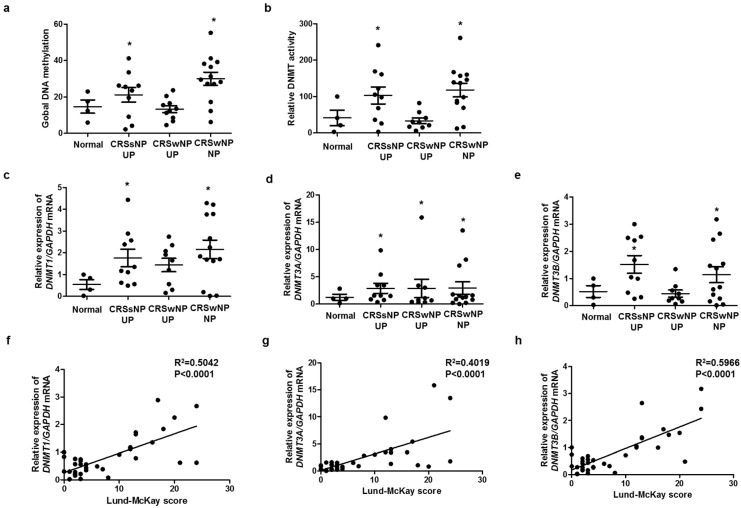
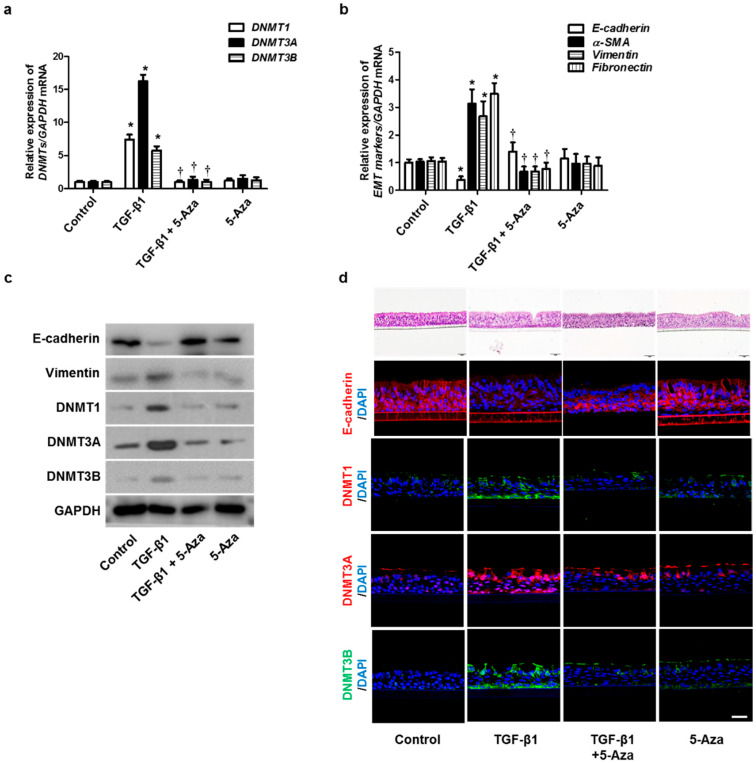
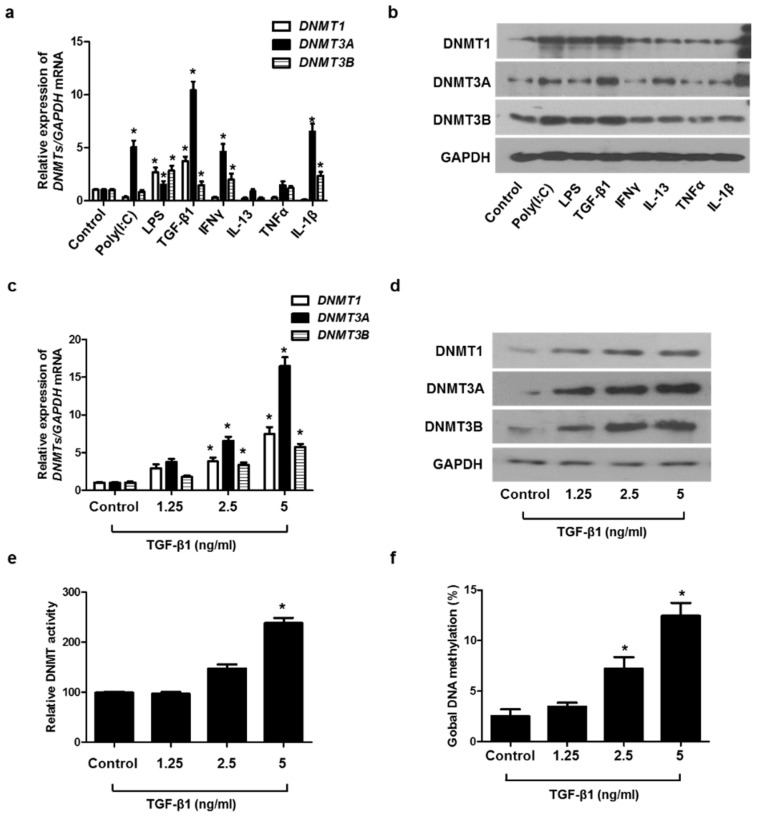
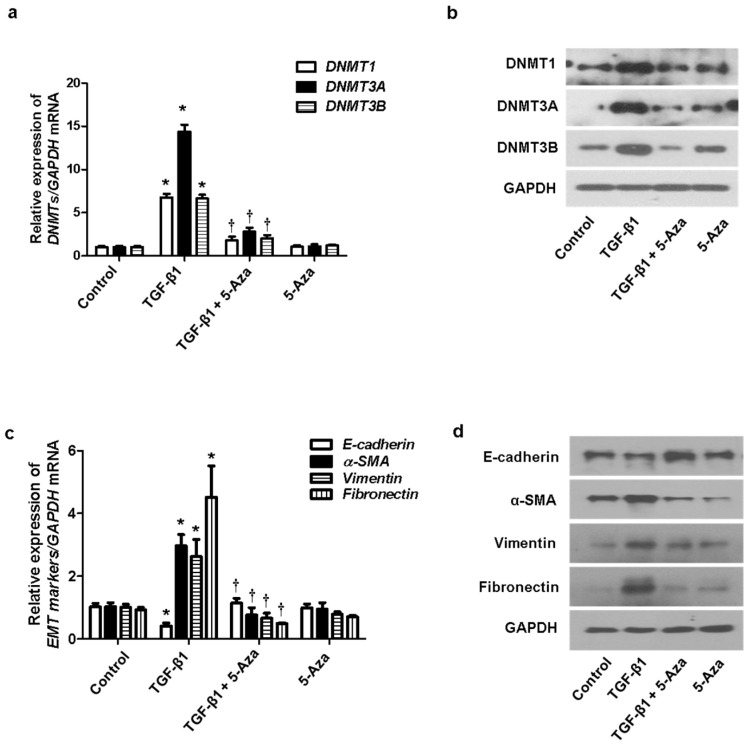
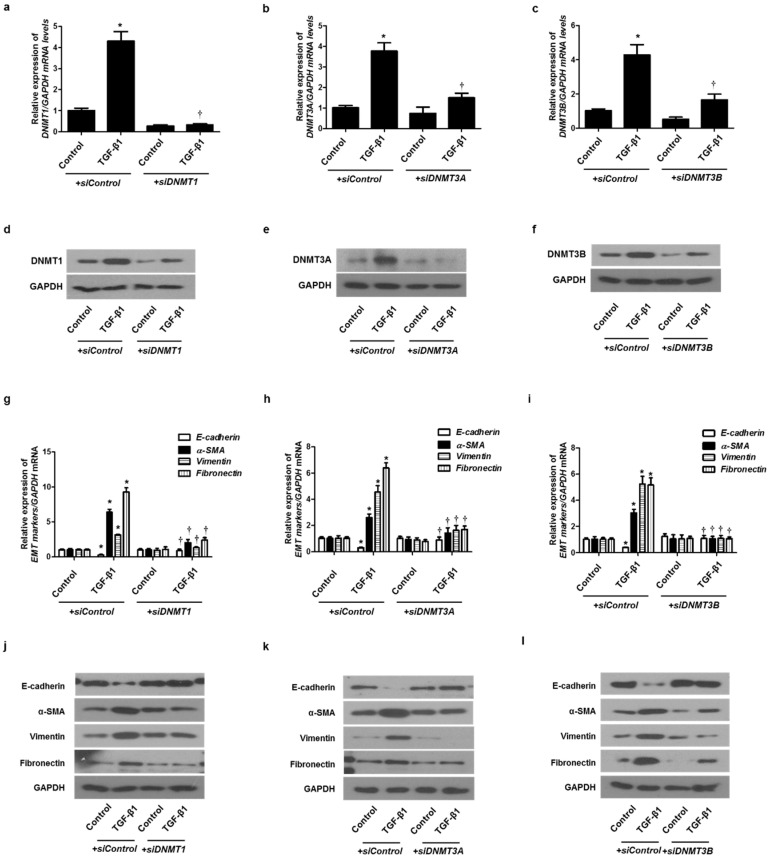
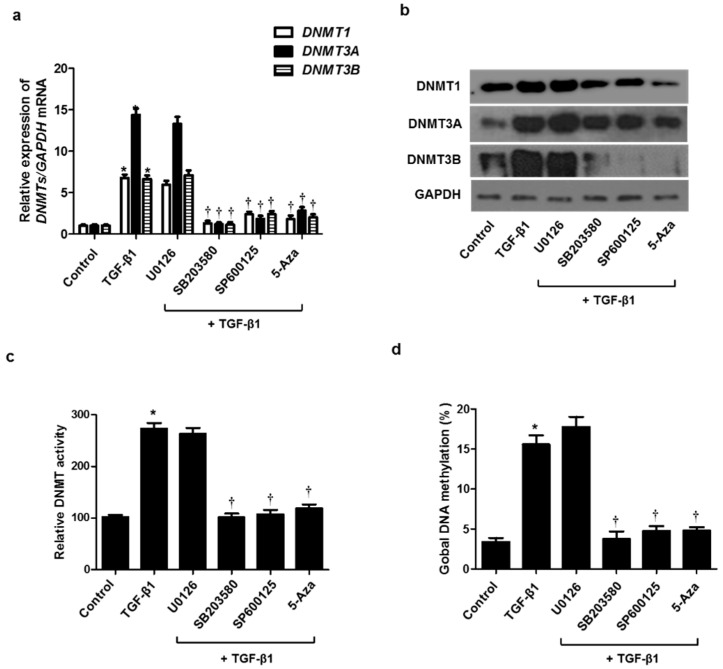
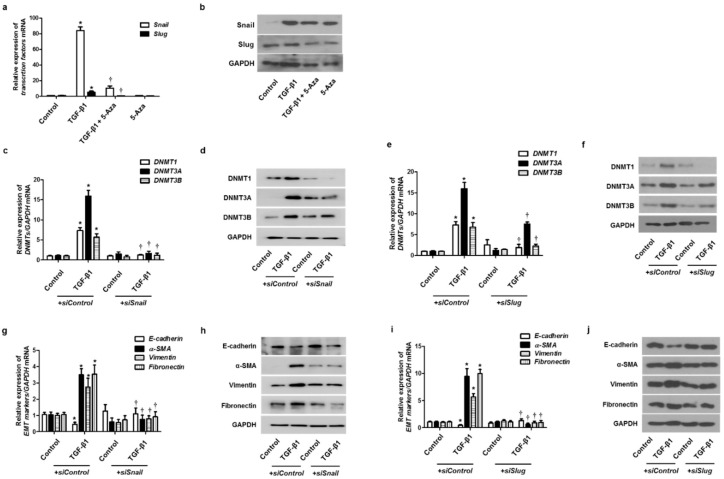
Chronic rhinosinusitis (CRS) pathogenesis is closely related to tissue remodeling, including epithelial-mesenchymal transition (EMT). Epigenetic mechanisms play key roles in EMT. DNA methylation, mediated by DNA methyltransferases (DNMTs), is an epigenetic marker that is critical to EMT. The goal of this study was to determine whether DNMTs were involved in TGF-β1-induced EMT and elucidate the underlying mechanisms in nasal epithelial cells and air-liquid interface cultures. Global DNA methylation and DNMT activity were quantified. DNMT expression was measured using real-time PCR (qRT-PCR) in human CRS tissues. mRNA and protein levels of DNMTs, E-cadherin, vimentin, α-SMA, and fibronectin were determined using RT-PCR and Western blotting, respectively. DNMT1, DNMT3A, and DNMT3B gene expression were knocked down using siRNA transfection. MAPK phosphorylation and EMT-related transcription factor levels were determined using Western blotting. Signaling pathways were analyzed using specific inhibitors of MAPK. We demonstrated these data in primary nasal epithelial cells and air-liquid interface cultures. Global DNA methylation, DNMT activity, and DNMT expression increased in CRS tissues. DNMT expression was positively correlated with Lund-McKay CT scores. TGF-β1 dose-dependently induced DNMT expression. Further, 5-Aza inhibited TGF-β1-induced DNMT, Snail, and Slug expression related to EMT, as well as p38 and JNK phosphorylation in A549 cells and TGF-β1-induced DNMT expression and EMT in primary nasal epithelial cells and air-liquid interface cultures. TGF-β1-induced DNMT expression leads to DNA methylation and EMT via p38, JNK, Snail, and Slug signaling pathways. Inhibition of DNMT suppressed the EMT process and therefore is potentially a CRS therapeutic strategy.
慢性鼻-鼻窦炎(CRS)的发病机制与组织重塑密切相关,包括上皮-间充质转化(EMT)。表观遗传机制在 EMT 中发挥关键作用。DNA 甲基化由 DNA 甲基转移酶(DNMTs)介导,是 EMT 的关键表观遗传标志物。本研究旨在确定 DNMT 是否参与 TGF-β1 诱导的 EMT,并阐明鼻上皮细胞和气-液界面培养物中的潜在机制。我们量化了全基因组 DNA 甲基化和 DNMT 活性。使用实时 PCR(qRT-PCR)测量人 CRS 组织中的 DNMT 表达。使用 RT-PCR 和 Western blot 分别测定 DNMTs、E-钙黏蛋白、波形蛋白、α-SMA 和纤连蛋白的 mRNA 和蛋白水平。使用 siRNA 转染敲低 DNMT1、DNMT3A 和 DNMT3B 基因表达。使用 Western blot 测定 MAPK 磷酸化和 EMT 相关转录因子水平。使用 MAPK 的特异性抑制剂分析信号通路。我们在原代鼻上皮细胞和气-液界面培养物中证明了这些数据。CRS 组织中全基因组 DNA 甲基化、DNMT 活性和 DNMT 表达增加。DNMT 表达与 Lund-McKay CT 评分呈正相关。TGF-β1 呈剂量依赖性诱导 DNMT 表达。此外,5-Aza 抑制 TGF-β1 诱导的与 EMT 相关的 DNMT、Snail 和 Slug 表达,以及 A549 细胞中 p38 和 JNK 磷酸化和 TGF-β1 诱导的原代鼻上皮细胞和气-液界面培养物中的 DNMT 表达和 EMT。TGF-β1 诱导的 DNMT 表达通过 p38、JNK、Snail 和 Slug 信号通路导致 DNA 甲基化和 EMT。DNMT 抑制抑制 EMT 过程,因此可能是 CRS 的一种治疗策略。