Sobotka Piotr, Przychodzki Maciej, Uściło Konrad, Woliński Tomasz R, Staniszewska Monika
Faculty of Physics, Warsaw University of Technology, 00-662 Warsaw, Poland.
Centre for Advanced Materials and Technologies CEZAMAT, Warsaw University of Technology, 02-822 Warsaw, Poland.
Materials (Basel). 2022 Mar 20;15(6):2302. doi: 10.3390/ma15062302.
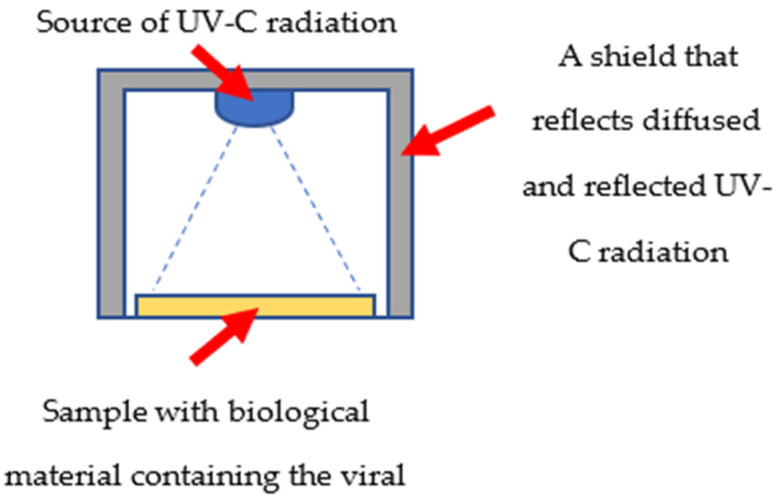
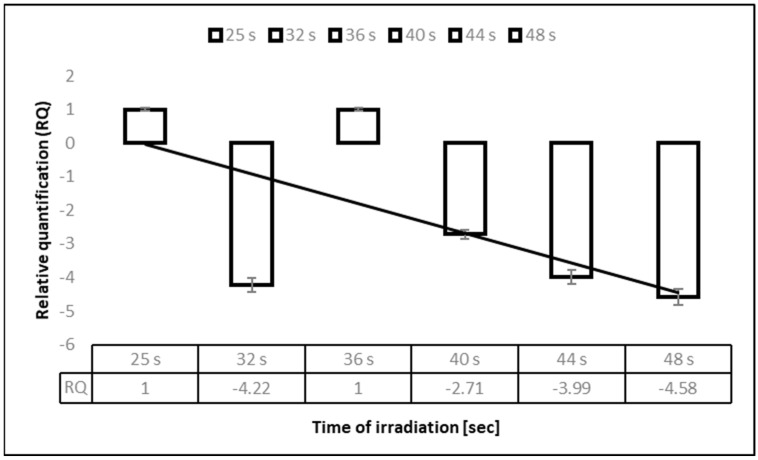
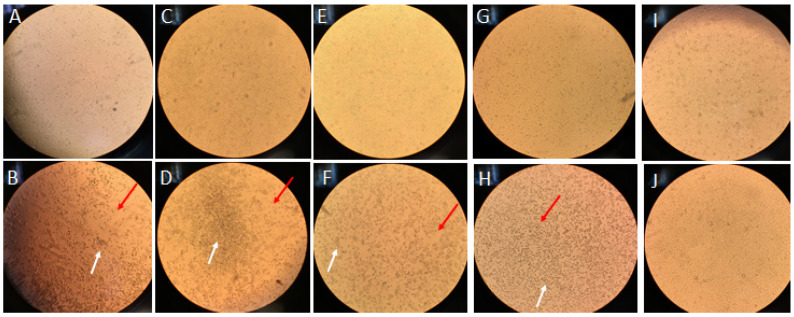
The severe acute respiratory syndrome coronavirus 2 (SARS-CoV-2) pandemic has completely disrupted people’s lives. All over the world, many restrictions and precautions have been introduced to reduce the spread of coronavirus disease 2019 (COVID-19). Ultraviolet C (UV-C) radiation is widely used to disinfect rooms, surfaces, and medical tools; however, this paper presents novel results obtained for modern UV-C light-emitting diodes (LEDs), examining their effect on inhibiting the multiplication of viruses. The main goal of the work was to investigate how to most effectively use UV-C LEDs to inactivate viruses. We showed that UV-C radiation operating at a 275 nm wavelength is optimal for germicidal effectiveness in a time exposure (25−48 s) study: >3 log-reduction with the Kärber method and >6 log-reduction with UV spectrophotometry were noted. We used real-time quantitative reverse transcription polymerase chain reaction (RT-qPCR) to reliably estimate virus infectivity reduction after 275 nm UV-C disinfection. The relative quantification (RQ) of infectious particles detected after 40−48 s distinctly decreased. The irradiated viral RNAs were underexpressed compared to the untreated control virial amplicon (estimated as RQ = 1). In conclusion, this work provides the first experimental data on 275 nm UV-C in the inactivation of human coronavirus OC43 (HoV-OC43), showing the most potent germicidal effect without hazardous effect.
严重急性呼吸综合征冠状病毒2(SARS-CoV-2)大流行彻底扰乱了人们的生活。在世界各地,人们采取了许多限制措施和预防措施以减少2019冠状病毒病(COVID-19)的传播。紫外线C(UV-C)辐射被广泛用于对房间、表面和医疗工具进行消毒;然而,本文展示了关于现代UV-C发光二极管(LED)的新成果,研究了它们对抑制病毒繁殖的作用。这项工作的主要目标是研究如何最有效地利用UV-C LED使病毒失活。我们发现,在时间暴露(25−48秒)研究中,波长为275纳米的UV-C辐射在杀菌效果方面是最佳的:采用凯尔贝法可实现>3个对数级的减少,采用紫外分光光度法可实现>6个对数级的减少。我们使用实时定量逆转录聚合酶链反应(RT-qPCR)来可靠地估计275纳米UV-C消毒后病毒感染力的降低情况。在40−48秒后检测到的感染性颗粒的相对定量(RQ)明显下降。与未处理的对照病毒扩增子相比(估计RQ = 1),经辐照的病毒RNA表达下调。总之,这项工作提供了关于275纳米UV-C灭活人冠状病毒OC43(HoV-OC43)的首批实验数据,显示出最强的杀菌效果且无有害影响。