Altimira Fabiola, Arias-Aravena Matias, Jian Ling, Real Nicolas, Correa Pablo, González Carolina, Godoy Sebastián, Castro Jean Franco, Zamora Olga, Vergara Cristina, Vitta Nancy, Tapia Eduardo
Laboratorio de Entomología y Biotecnología, Instituto de Investigaciones Agropecuarias, INIA La Platina, Santiago 8831314, Chile.
Department of Plant Protection, Institute of Vegetables and Flowers, Chinese Academy of Agricultural Sciences, Beijing 100081, China.
J Fungi (Basel). 2022 Mar 1;8(3):253. doi: 10.3390/jof8030253.
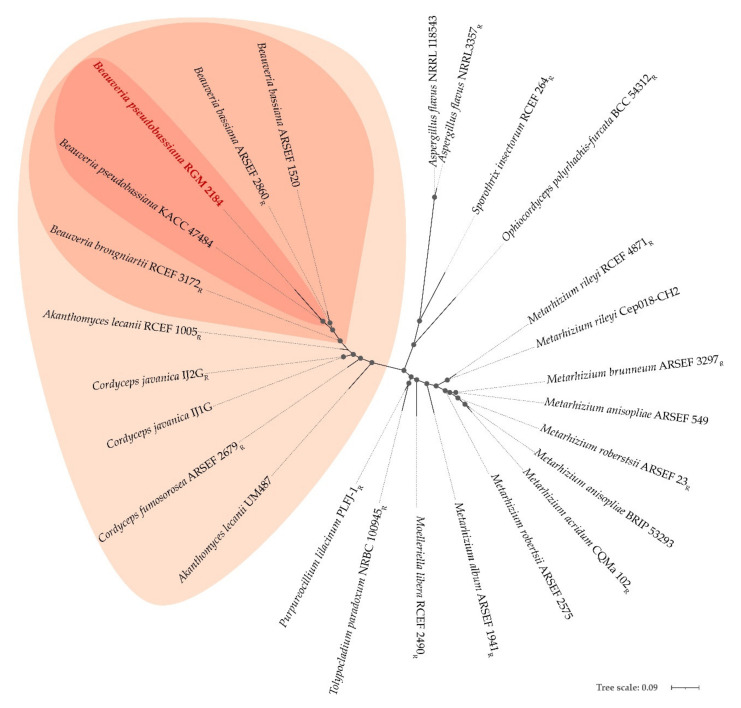
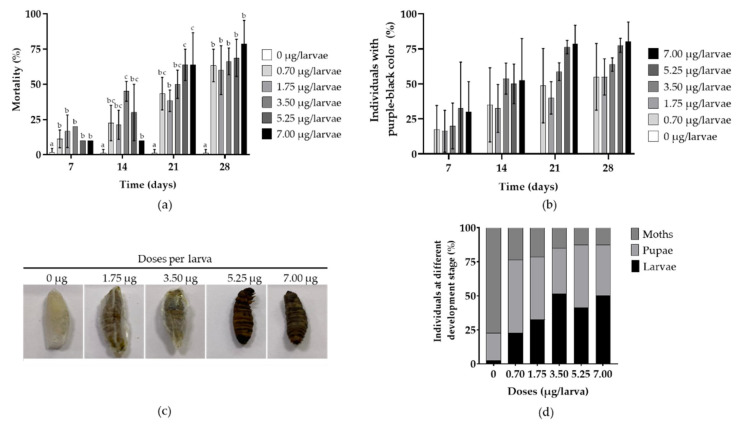
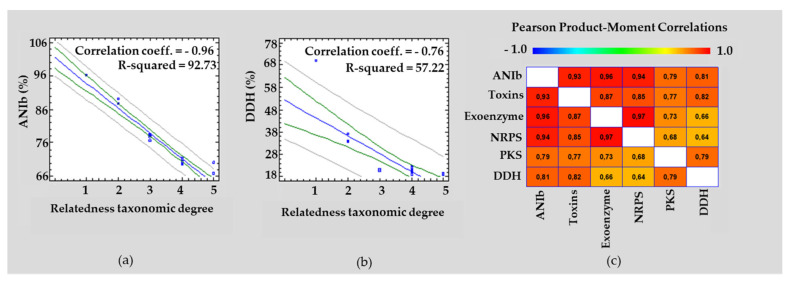
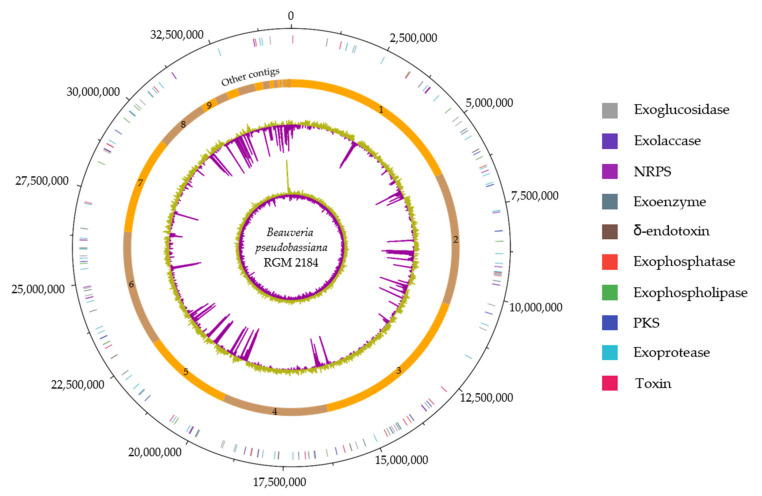
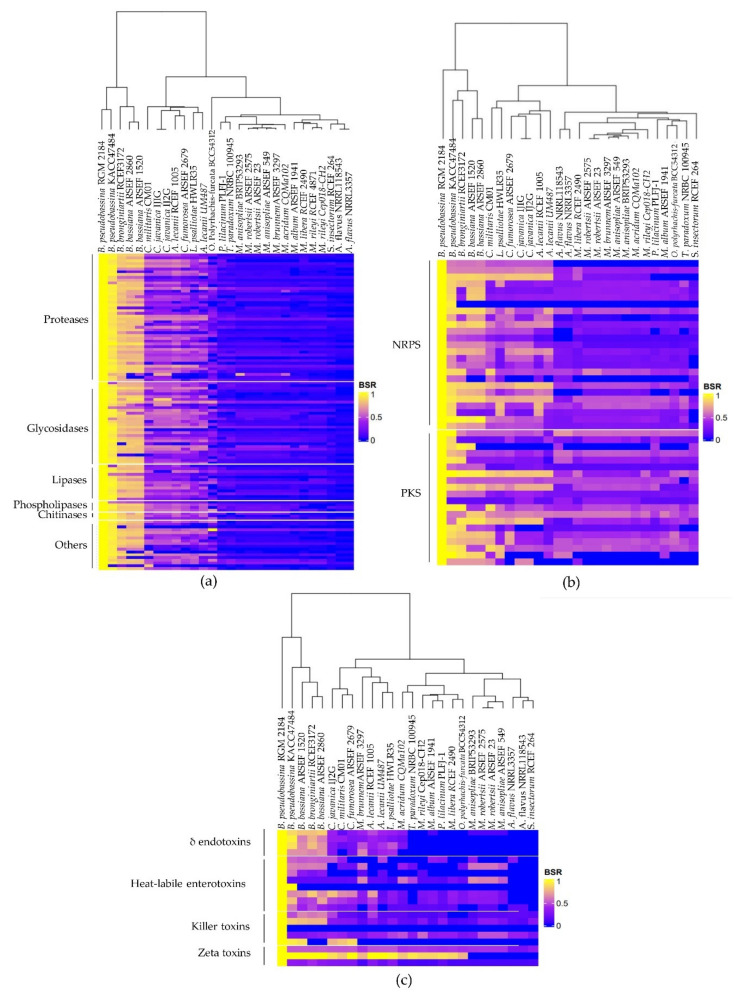
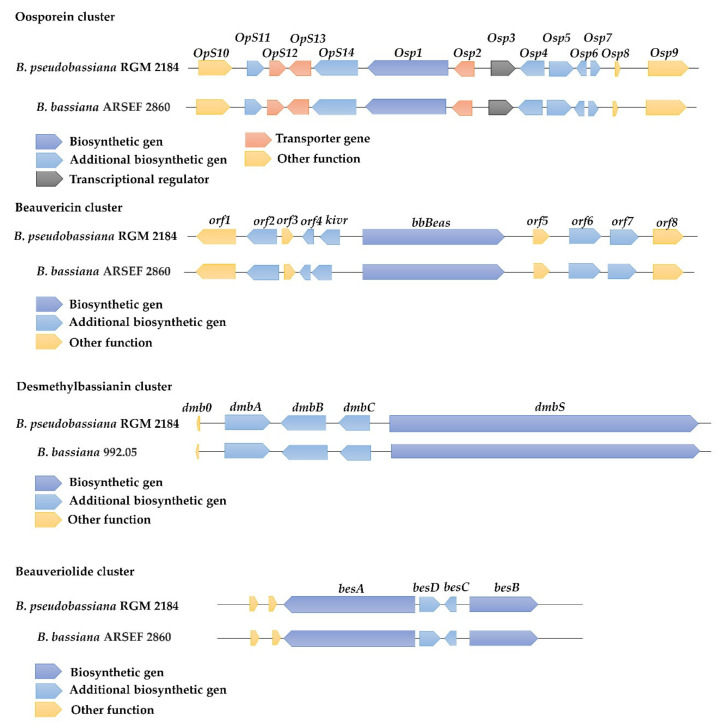
The entomopathogenic fungus strain RGM 2184 can reach a maximum efficacy of 80% against the quarantine pest in field assays. In this study, the RGM 2184 genome was sequenced, and genome mining analyses were performed to predict the factors involved in its insecticidal activity. Additionally, the metabolic profiling of the RMG 2184 culture's supernatants was analyzed by mass spectrometry, and the insecticidal activity from one of these extracts was evaluated in larvae. The genome analysis resulted in 114 genes encoding for extracellular enzymes, four biosynthetic gene clusters reported as producers of insecticidal and bactericidal factors (oosporein, beauvericin, desmethylbassianin, and beauveriolide), 20 toxins, and at least 40 undescribed potential biocontrol factors (polyketides and nonribosomal peptides). Comparative genomic analysis revealed that 65-95% of these genes are genus-specific. Metabolic profiling of supernatant extracts from RGM 2184 cultures exhibited secondary metabolites such as beauveriolide, oosporein, inflatin C, and bassiatin. However, a number of detected metabolites still remain undescribed. The metabolite extract caused 79% mortality larvae at 28 days. The results of this research lay the groundwork for the study of new insecticidal molecules.
昆虫病原真菌菌株RGM 2184在田间试验中对检疫性害虫的最高防治效果可达80%。在本研究中,对RGM 2184的基因组进行了测序,并开展了基因组挖掘分析,以预测其杀虫活性所涉及的因子。此外,通过质谱分析了RMG 2184培养上清液的代谢谱,并在幼虫中评估了其中一种提取物的杀虫活性。基因组分析结果显示有114个基因编码细胞外酶,有4个生物合成基因簇被报道为杀虫和杀菌因子(卵孢霉素、白僵菌素、去甲基白僵菌素和白僵菌环肽)的产生者,20种毒素,以及至少40种未描述的潜在生物防治因子(聚酮化合物和非核糖体肽)。比较基因组分析表明,这些基因中有65-95%是属特异性的。RGM 2184培养上清液提取物的代谢谱显示有白僵菌环肽、卵孢霉素、Inflatin C和巴氏杀菌素等次生代谢产物。然而,一些检测到的代谢产物仍未被描述。该代谢产物提取物在28天时导致幼虫死亡率达到79%。本研究结果为新型杀虫分子的研究奠定了基础。