Scherer Gerhard, Mütze Janina, Pluym Nikola, Scherer Max
ABF Analytisch-Biologisches Forschungslabor GmbH, Semmelweisstr. 5, 82152 Planegg, Germany.
Curr Res Toxicol. 2022 Mar 11;3:100067. doi: 10.1016/j.crtox.2022.100067. eCollection 2022.
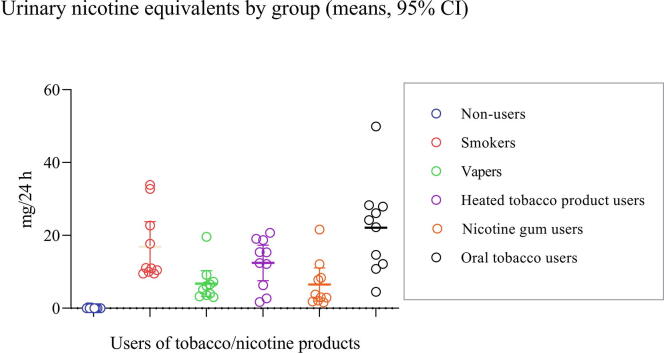
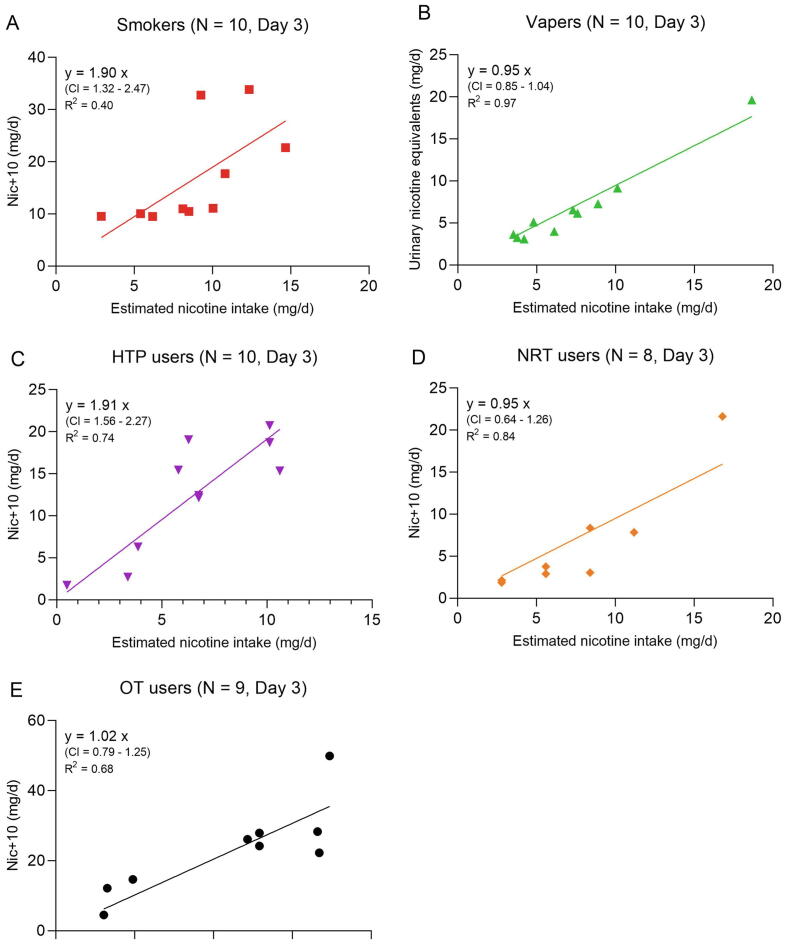
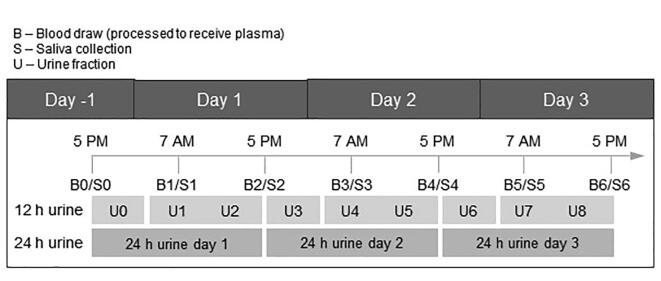
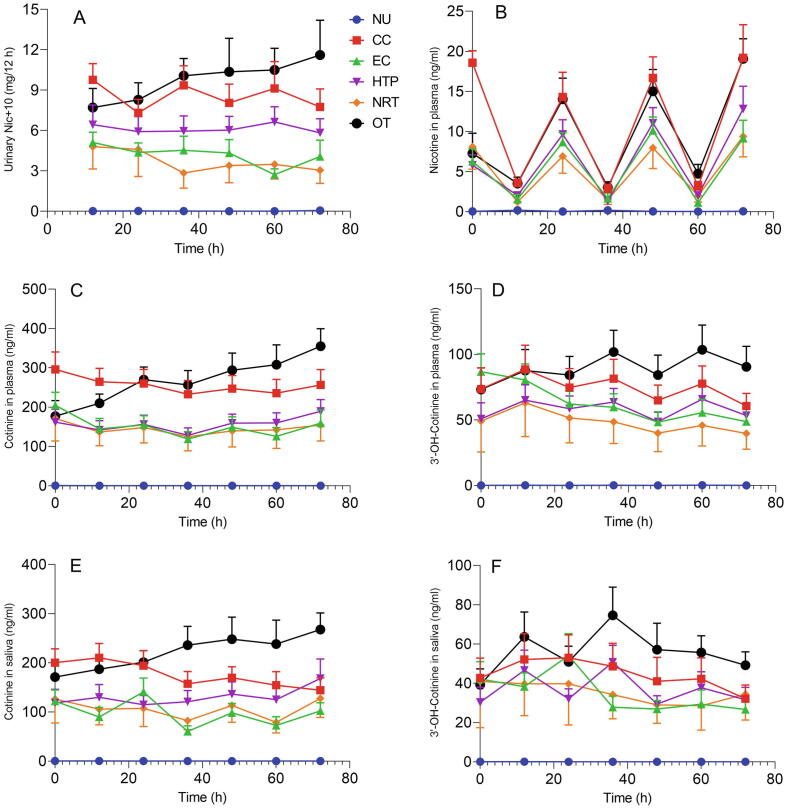
Today various tobacco and nicotine products are available, many of them can be regarded as potentially risk-reduced products when compared to the most frequently used product, combustible cigarettes (CCs). A commonality of these products is that they deliver nicotine, although in quite different amounts and uptake routes, the most common of which are inhalation through the lung and absorption through the oral mucosa. Product-specific nicotine delivery as well as the subject-related use patterns are important factors which determine the pharmacokinetics and achieved internal dose levels of the alkaloid. The latter two parameters are highly relevant for the long-term product loyalty and, consequently, for the implicated health risks, since the risk-reduced products will replace CCs in the long-term only when users will experience a similar level of satisfaction. We measured nicotine and its major metabolites in plasma, saliva and urine samples collected in a controlled clinical study with habitual users (10 per group) of CCs, electronic cigarettes (ECs), heated tobacco products (HTP), oral tobacco (OT), and nicotine replacement therapy (NRT). Non-users (NU) of any tobacco/nicotine products served as (negative) control group. Moderate to strong correlations were observed between the daily consumption and the urinary nicotine equivalents (comprising nicotine and its 10 major metabolites, Nic + 10) or plasma and saliva cotinine concentrations. The average daily nicotine dose as measured by the urinary excretion of Nic + 10 (reflecting approximately 95 % of the absorbed nicotine) amounted to 17 and 22 mg/24 h for smokers (CC) and OT users, respectively, while it was in the range of 6-12 mg/24 h for users of ECs, HTP and NRT products, with high inter-individual variations in each user group. The individual daily nicotine intake, which was calculated by applying product-specific models, showed none to good agreement with the corresponding internal nicotine dose measured by Nic + 10 excretion. Possible reasons for the observed deviations between calculated and objectively measured nicotine doses are discussed.
如今,各种烟草和尼古丁产品层出不穷,与最常用的产品——可燃香烟(CCs)相比,其中许多都可被视为潜在的风险降低型产品。这些产品的一个共性是它们都能输送尼古丁,尽管输送量和摄取途径差异很大,最常见的摄取途径是通过肺部吸入和通过口腔黏膜吸收。特定产品的尼古丁输送以及与受试者相关的使用模式是决定该生物碱药代动力学和体内剂量水平的重要因素。后两个参数与长期产品忠诚度高度相关,因此也与潜在的健康风险高度相关,因为只有当使用者体验到相似的满意度时,风险降低型产品才会在长期内取代可燃香烟。我们在一项针对CCs、电子烟(ECs)、加热烟草制品(HTP)、口用烟草(OT)和尼古丁替代疗法(NRT)的习惯性使用者(每组10人)的对照临床研究中,测量了血浆、唾液和尿液样本中的尼古丁及其主要代谢物。未使用任何烟草/尼古丁产品的人(NU)作为(阴性)对照组。观察到每日消费量与尿中尼古丁当量(包括尼古丁及其10种主要代谢物,Nic + 10)或血浆和唾液中可替宁浓度之间存在中度至强相关性。通过尿中Nic + 10排泄量测量的吸烟者(CC)和OT使用者的平均每日尼古丁剂量分别为17和22毫克/24小时,而ECs、HTP和NRT产品使用者的平均每日尼古丁剂量在6 - 12毫克/24小时范围内,每个使用者群体的个体差异都很大。通过应用特定产品模型计算得出的个体每日尼古丁摄入量与通过Nic + 10排泄量测量的相应体内尼古丁剂量之间,显示出不一致到良好的一致性。文中讨论了计算得出的尼古丁剂量与客观测量的尼古丁剂量之间观察到偏差的可能原因。