Laboratory of Human Carcinogenesis, Center for Cancer Research, National Cancer Institute, Bethesda, MD, USA; Centre de Recherche du CHU de Québec - Université Laval, Axe Oncologie, Québec, QC G1V 4G2, Canada; Centre de Recherche sur le Cancer de l'Université Laval, Québec, QC G1R 3S3, Canada.
Centre de Recherche du CHU de Québec - Université Laval, Axe Oncologie, Québec, QC G1V 4G2, Canada; Centre de Recherche sur le Cancer de l'Université Laval, Québec, QC G1R 3S3, Canada; Centre de Recherche en Données Massives de l'Université Laval, Québec, QC G1V 0A6, Canada; Département de Biologie Moléculaire, Biochimie Médicale et Pathologie, Faculté de Médecine, Université Laval, Québec, QC G1V 0A6, Canada.
Trends Cancer. 2022 Jul;8(7):583-597. doi: 10.1016/j.trecan.2022.02.009. Epub 2022 Mar 21.
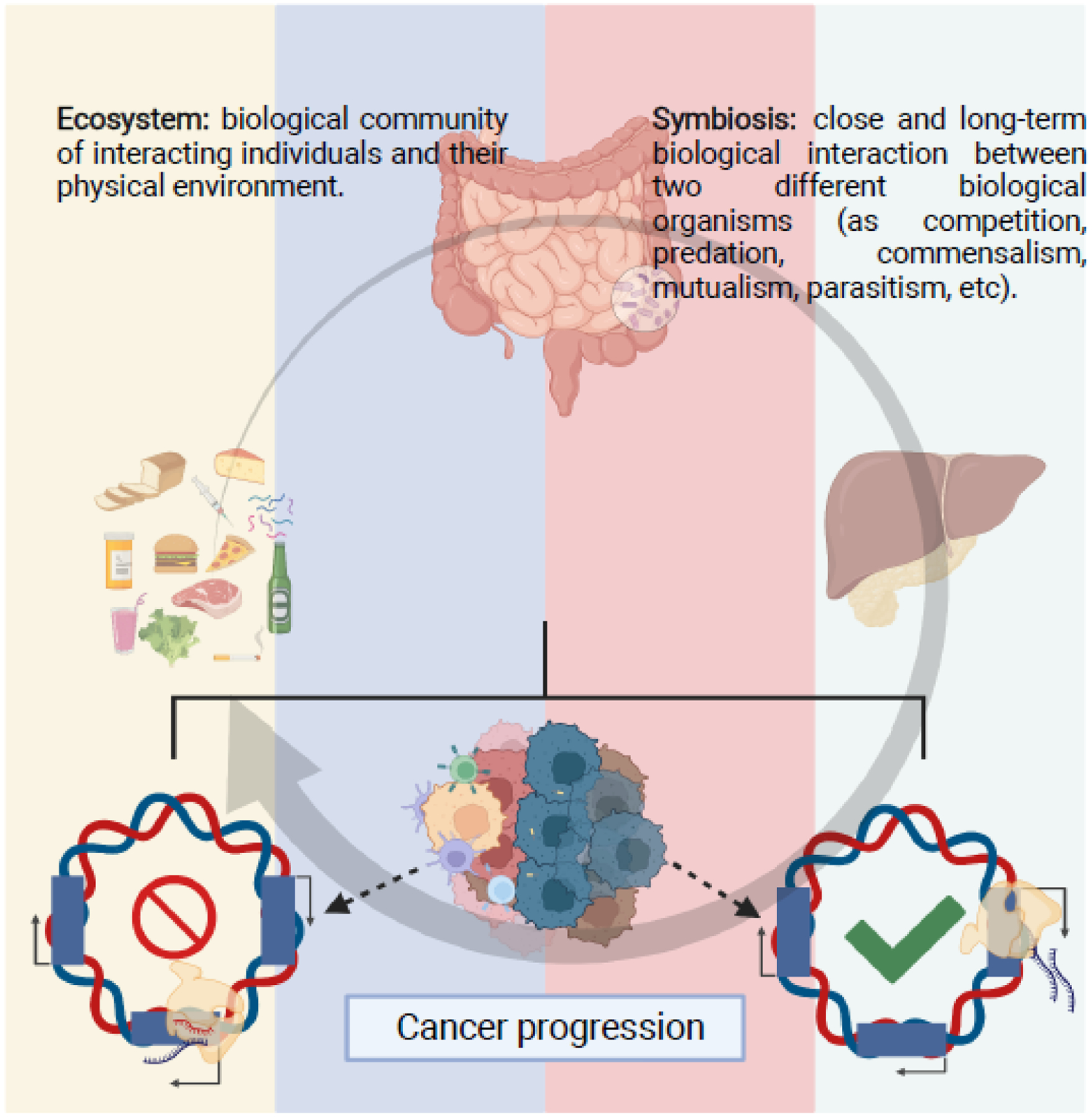
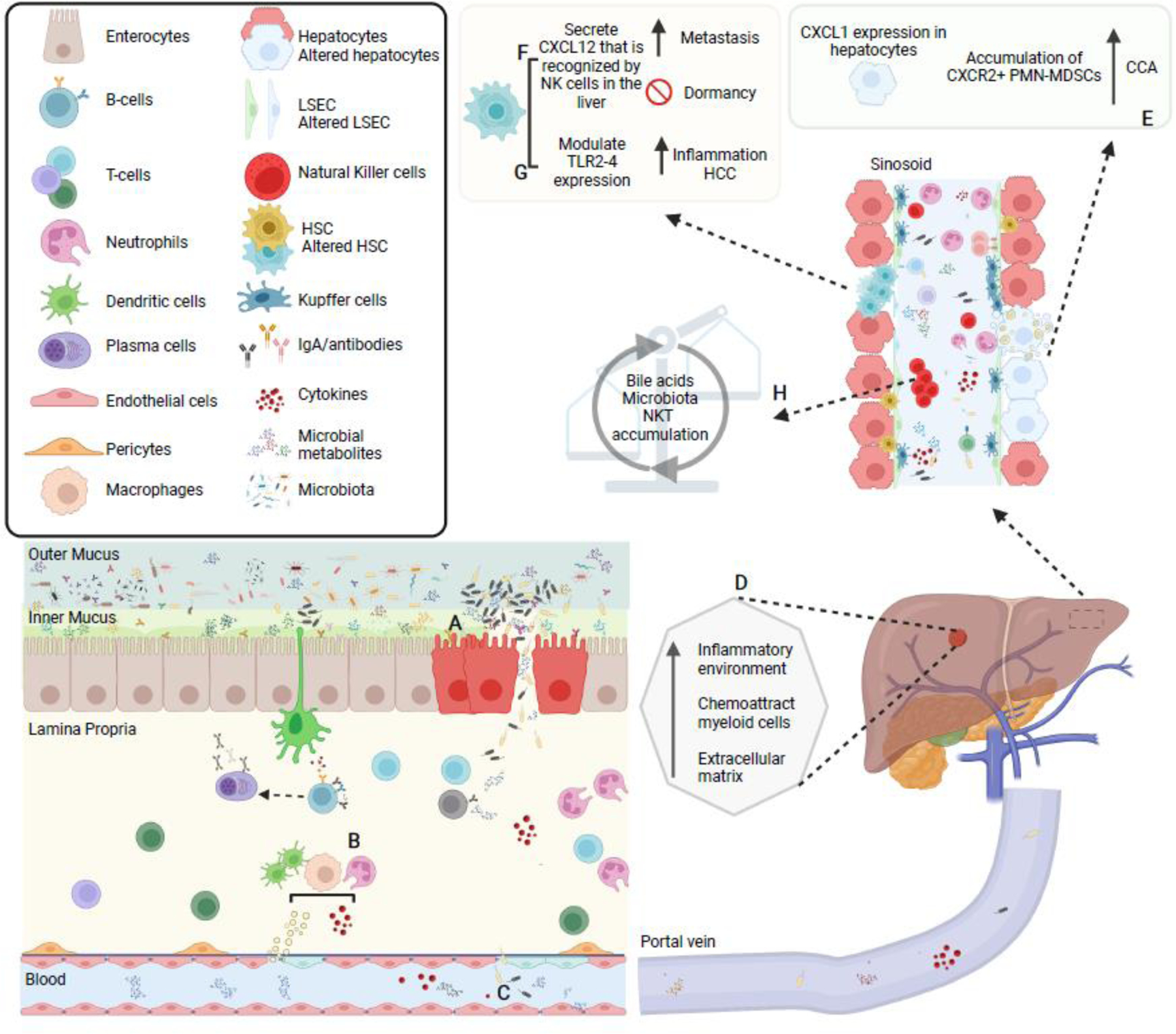
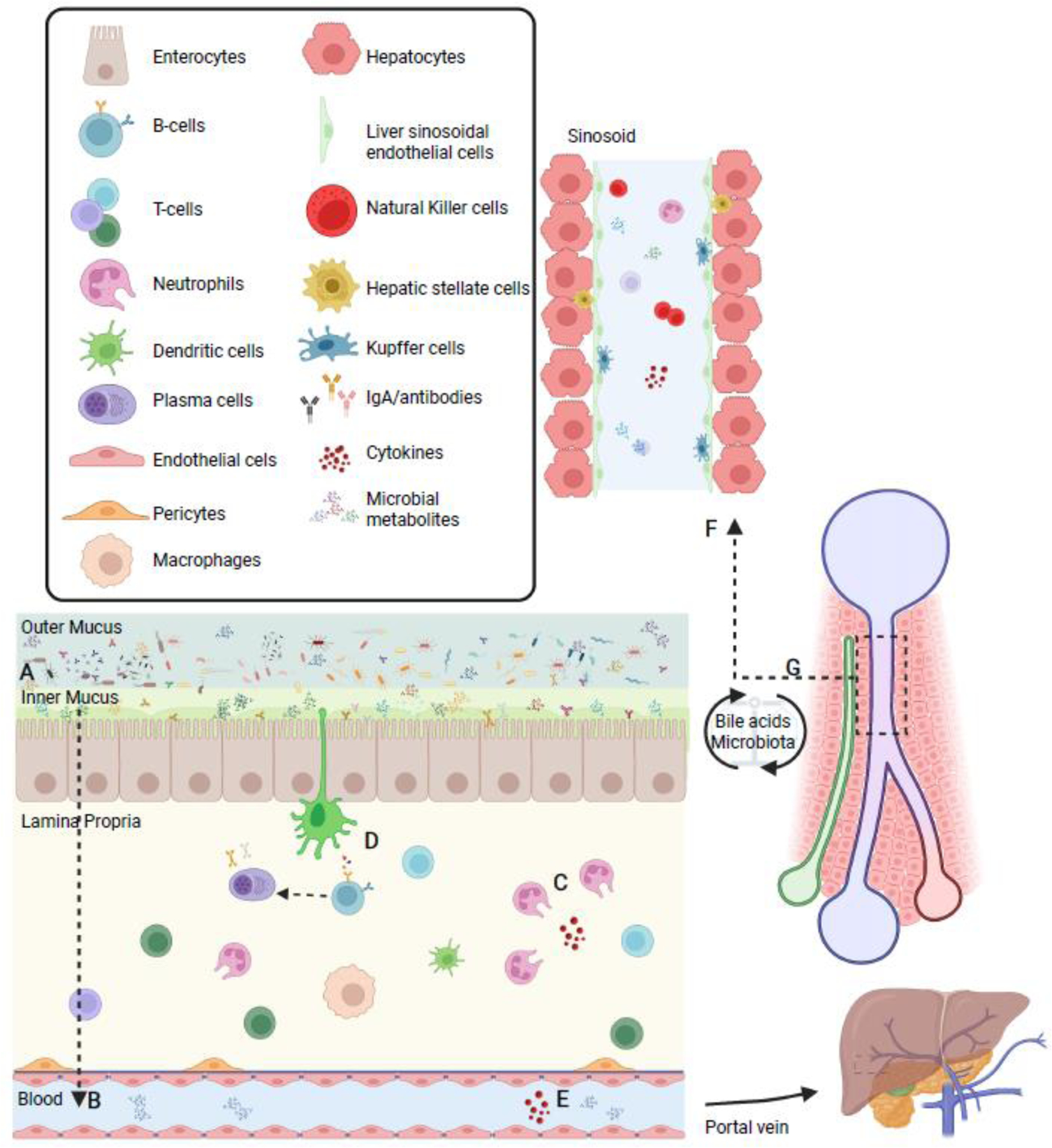
Although their etiologies vary, tumors share a common trait: the control of an oncogenic transcriptional program that is regulated by the interaction of the malignant cells with the stromal and immune cells in the tumor microenvironment (TME). The TME shows high phenotypic and functional heterogeneity that may be modulated by interactions with commensal microbes (the microbiota) both systemically and locally. Unlike host cells, the microbiota adapts after environmental perturbations, impacting host-microbe interactions. In the liver, the bidirectional relationship in the gut and its associated microbiota creates an interdependent environment. Therefore, the gut microbiota and its metabolites modulate liver gene expression directly and indirectly, causing an imbalance in the gut-liver axis, which may result in disease, including carcinogenesis.
虽然肿瘤的病因各异,但它们有一个共同的特征:致癌转录程序的失控,而该程序受到恶性细胞与肿瘤微环境(TME)中的基质细胞和免疫细胞相互作用的调控。TME 表现出高度的表型和功能异质性,这种异质性可能受到与共生微生物(微生物组)的系统和局部相互作用的调节。与宿主细胞不同,微生物在环境干扰后会发生适应性变化,从而影响宿主-微生物的相互作用。在肝脏中,肠道及其相关微生物群的双向关系创造了一个相互依存的环境。因此,肠道微生物群及其代谢物直接和间接地调节肝脏基因表达,导致肠道-肝脏轴失衡,从而可能导致疾病,包括癌症的发生。