Stambler Danielle Mollie, Feddema Erin, Riggins Olivia, Campeau Kari, Breuch Lee-Ann Kastman, Kessler Molly M, Misono Stephanie
Department of Writing Studies, University of Minnesota, Minneapolis, MN, United States.
Department of Otolaryngology, University of Minnesota, Minneapolis, MN, United States.
JMIR Hum Factors. 2022 Mar 25;9(1):e26461. doi: 10.2196/26461.
Web-based health interventions are increasingly common and are promising for patients with voice disorders because web-based participation does not require voice use. To address needs such as Health Insurance Portability and Accountability Act compliance, unique user access, the ability to send automated reminders, and a limited development budget, we used the Research Electronic Data Capture (REDCap) data management platform to deliver a patient-facing psychological intervention designed for patients with voice disorders. This was a novel use of REDCap.
We aimed to evaluate the usability of the intervention, with this intervention serving as a use case for REDCap-based patient-facing interventions.
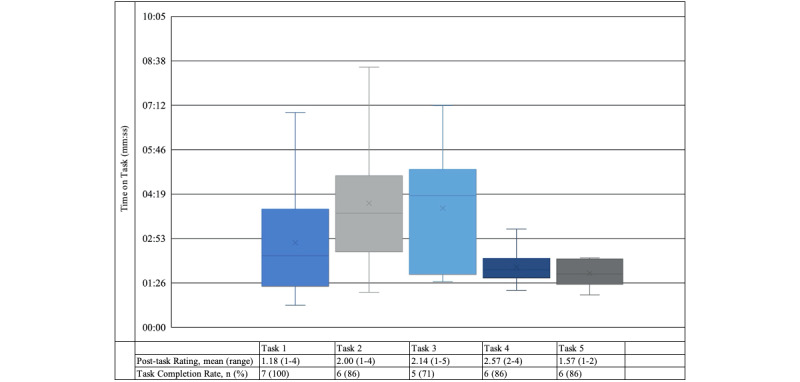
We used REDCap survey instruments to develop the web-based voice intervention modules, then conducted usability evaluations using (1) heuristic evaluations by 2 evaluators, and (2) formal usability testing with 7 participants, consisting of predetermined tasks, a think-aloud protocol, ease-of-use measurements, a product reaction card, and a debriefing interview.
Heuristic evaluations found strengths in visibility of system status and real-world match, and weaknesses in user control and help documentation. Based on this feedback, changes to the intervention were made before usability testing. Overall, usability testing participants found the intervention useful and easy to use, although testing revealed some concerns with design, content, and terminology. Some concerns were readily addressed, and others required adaptations within REDCap.
The REDCap version of a complex web-based patient-facing intervention performed well in heuristic evaluation and formal usability testing. REDCap can effectively be used for patient-facing intervention delivery, particularly if the limitations of the platform are anticipated and mitigated.
基于网络的健康干预越来越普遍,对于嗓音障碍患者很有前景,因为基于网络的参与不需要使用嗓音。为满足诸如符合《健康保险流通与责任法案》、独特用户访问、发送自动提醒的能力以及有限的开发预算等需求,我们使用研究电子数据采集(REDCap)数据管理平台来提供一种面向嗓音障碍患者的心理干预。这是对REDCap的一种新颖应用。
我们旨在评估该干预的可用性,此干预作为基于REDCap的面向患者干预的一个用例。
我们使用REDCap调查工具来开发基于网络的嗓音干预模块,然后使用以下方法进行可用性评估:(1)由2名评估人员进行启发式评估,以及(2)对7名参与者进行正式可用性测试,包括预定任务、出声思维协议、易用性测量、产品反应卡和汇报访谈。
启发式评估发现系统状态可见性和与现实世界匹配方面的优势,以及用户控制和帮助文档方面的劣势。基于此反馈,在可用性测试之前对干预进行了更改。总体而言,可用性测试参与者认为该干预有用且易于使用,尽管测试揭示了在设计、内容和术语方面的一些问题。一些问题很容易解决,而其他问题需要在REDCap内进行调整。
基于REDCap的复杂的面向患者的网络干预版本在启发式评估和正式可用性测试中表现良好。REDCap可有效地用于提供面向患者的干预,特别是如果能预见并减轻该平台的局限性。