Department of Biomedical and Biotechnological Sciences, University of Catania, 95123 Catania, Italy.
Dipartimento di Medicina Clinica e Chirurgia, Sezione di Endocrinologia, Università "Federico II" di Napoli, Via Sergio Pansini, 5, 80131 Naples, Italy.
Nutrients. 2022 Mar 8;14(6):1137. doi: 10.3390/nu14061137.
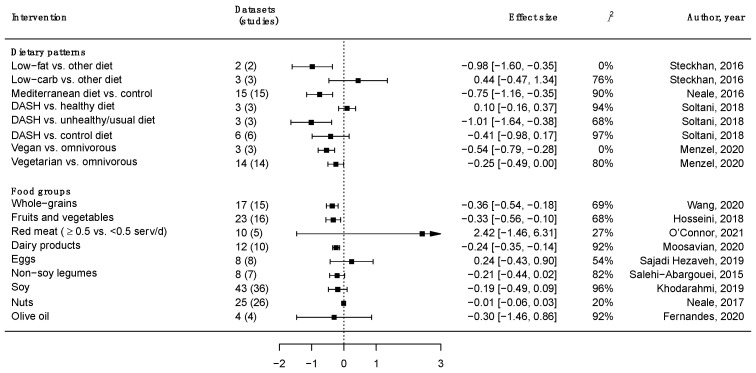
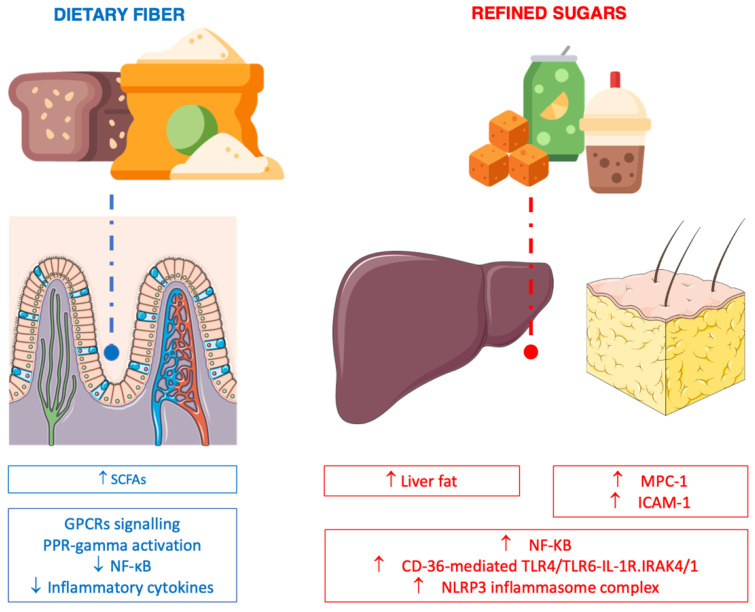
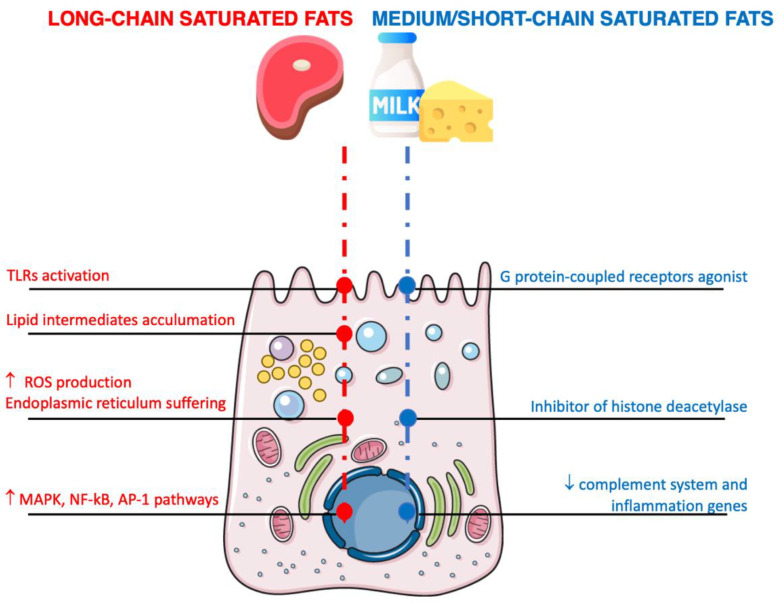
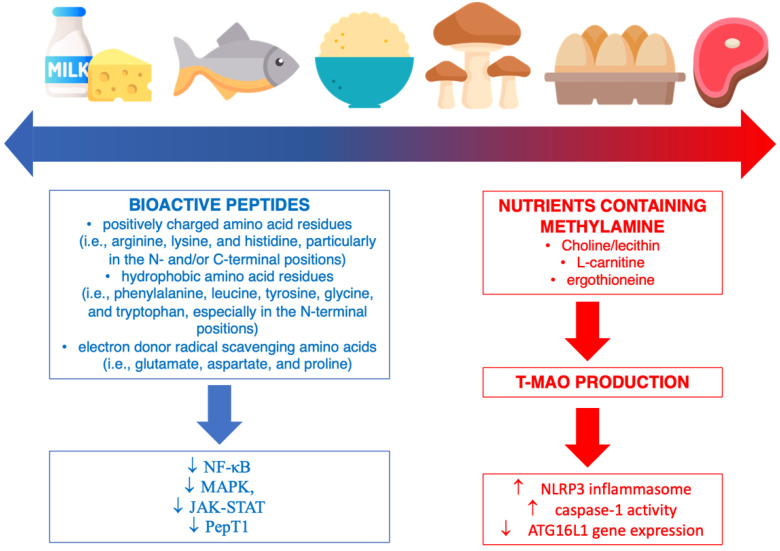
Growing evidence supports the hypothesis that dietary factors may play a role in systemic low-grade chronic inflammation. Summary evidence from randomized controlled trials has shown substantial effects on biomarkers of inflammation following the adoption of plant-based diets (including, but not limited to, the Mediterranean diet), while consistent findings have been reported for higher intakes of whole grains, fruits, and vegetables and positive trends observed for the consumption of legumes, pulses, nuts, and olive oil. Among animal food groups, dairy products have been shown to have the best benefits on biomarkers of inflammation, while red meat and egg have been shown to have neutral effects. The present review provides an overview of the mechanisms underlying the relation between dietary factors and immune system, with a focus on specific macronutrient and non-nutrient phytochemicals (polyphenols) and low-grade inflammation. Substantial differences within each macronutrient group may explain the conflicting results obtained regarding foods high in saturated fats and carbohydrates, underlying the role of specific subtypes of molecules (i.e., short-chain fatty acids or fiber vs. long chain fatty acids or free added sugars) when exploring the relation between diet and inflammation, as well as the importance of the food matrix and the commixture of foods in the context of whole dietary patterns. Dietary polyphenols and oligopeptides have been hypothesized to exert several functions, including the regulation of the inflammatory response and effects on the immune system. Overall, evidence suggests that dietary factors may affect the immune system regardless of obesity-related inflammation.
越来越多的证据支持这样一种假设,即饮食因素可能在全身低度慢性炎症中起作用。随机对照试验的综合证据表明,采用植物性饮食(包括但不限于地中海饮食)后,炎症生物标志物会发生显著变化,而大量摄入全谷物、水果和蔬菜以及豆类、豆类、坚果和橄榄油的消费也呈现出一致的发现,呈现出积极的趋势。在动物食品组中,乳制品被证明对炎症生物标志物有最好的益处,而红肉和鸡蛋则被证明有中性影响。本综述概述了饮食因素与免疫系统之间关系的潜在机制,重点介绍了特定的宏量营养素和非营养植物化学物质(多酚)和低度炎症。每个宏量营养素组内的差异可能解释了关于富含饱和脂肪和碳水化合物的食物的相互矛盾的结果,这表明在探索饮食与炎症之间的关系时,特定分子亚型(即短链脂肪酸或纤维与长链脂肪酸或游离添加糖)的作用以及在整个饮食模式背景下食物基质和食物混合的重要性。饮食多酚和寡肽被假设具有多种功能,包括调节炎症反应和对免疫系统的影响。总的来说,有证据表明,饮食因素可能会影响免疫系统,而与肥胖相关的炎症无关。