Paczkowska Anna, Hoffmann Karolina, Michalak Michał, Hans-Wytrychowska Anna, Bryl Wiesław, Kopciuch Dorota, Zaprutko Tomasz, Ratajczak Piotr, Nowakowska Elżbieta, Kus Krzysztof
Department of Pharmacoeconomics and Social Pharmacy, Poznan University of Medical Sciences, Rokietnicka 7 Street, 60-806 Poznań, Poland.
Department of Internal Diseases, Metabolic Disorders and Arterial Hypertension, Poznan University of Medical Sciences, Szamarzewskiego 84 Street, 60-572 Poznań, Poland.
Vaccines (Basel). 2022 Mar 12;10(3):434. doi: 10.3390/vaccines10030434.
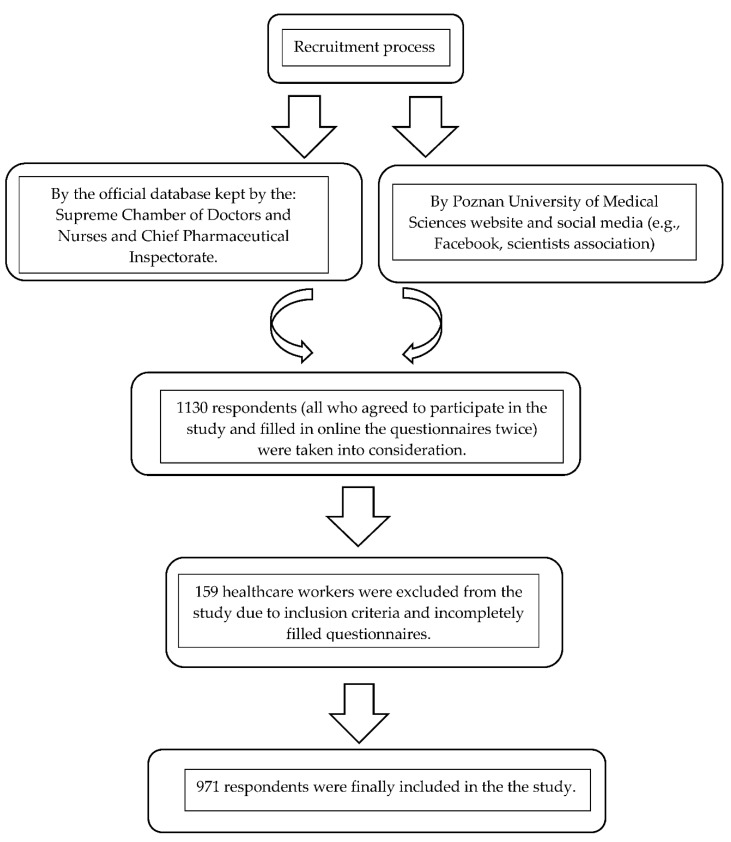
The aim of the study was to compare the safety profiles (prevalence of both local and systemic side effects) of COVID-19 vaccines (Pfizer−BioNTech, Moderna, Oxford−AstraZeneca) among healthcare workers (doctors, nurses, and pharmacists) administered with a first and a second dose of the vaccines. Another goal of the research was to evaluate potential demographic and clinical risk factors for the frequency and intensity of side effects. A post-marketing, cross-sectional survey-based study was carried out on a sample of 971 respondents (323 doctors, 324 nurses, and 324 pharmacists), all more than 18 years old, who have taken two doses of the following SARS-CoV-2 vaccines: BNT162b2 (Pfizer−BioNTech) (group 1), mRNA-1273 (Moderna) (group 2), and ChAdOx1 nCoV-19 (Oxford−AstraZeneca) (group 3). A validated, self-administered questionnaire was developed and delivered online to the target population group of healthcare workers. The survey was conducted during the third wave of the COVID-19 (1 February 2021−1 July 2021) pandemic. It was based on the CAWI (computer-assisted web interview) method. Questionnaires were disseminated using selected social media. The BNT162b2 (Pfizer−BioNTech) vaccine was the most commonly administered COVID-19 vaccine among healthcare professionals in Poland (69.61%). Side effects following a SARS-CoV-2 vaccine were reported by 53.11% of respondents in group 1, 72% in group 2, and 67.59% in group 3. The following were the most common side effects regardless of the type of vaccine administered: pain at the injection site, headache, muscle pain, fever, chills, and fatigue. The number and intensity of reported side effects following administration of a BNT162b2 (Pfizer−BioNTech) vaccine were significantly lower than in the other two study groups (p < 0.00001). Risk factors for side effects following administration of one of the SARS-CoV-2 vaccines subject to the analysis included being female, young, and suffering from a diagnosed allergy. Our results clearly show that the short-term safety profiles of the eligible COVID-19 vaccines (Pfizer−BioNTech, Moderna, Oxford−AstraZeneca) are acceptable. Nevertheless, the two-dose COVID-19 vaccines available in Poland differ significantly in the frequency of both local and systemic side effects and their intensity. Women, young people, and patients diagnosed with allergies are particularly exposed to the risk of side effects. Further studies are needed to determine the long-term safety profile of COVID-19 vaccines.
本研究的目的是比较医护人员(医生、护士和药剂师)接种第一剂和第二剂新冠疫苗(辉瑞-生物科技、莫德纳、牛津-阿斯利康)后的安全性概况(局部和全身副作用的发生率)。该研究的另一个目标是评估副作用发生频率和强度的潜在人口统计学和临床风险因素。我们开展了一项基于上市后横断面调查的研究,样本为971名受访者(323名医生、324名护士和324名药剂师),他们均年满18岁,且已接种两剂以下新冠病毒疫苗:BNT162b2(辉瑞-生物科技)(第1组)、mRNA-1273(莫德纳)(第2组)和ChAdOx1 nCoV-19(牛津-阿斯利康)(第3组)。我们设计了一份经过验证的自填式问卷,并在线发放给医护人员这一目标人群。该调查在新冠疫情第三波期间(2021年2月1日至2021年7月1日)进行。它基于计算机辅助网络访谈(CAWI)方法。问卷通过选定的社交媒体进行分发。BNT162b2(辉瑞-生物科技)疫苗是波兰医护人员中最常接种的新冠疫苗(69.61%)。第1组中53.11%的受访者、第2组中72%的受访者和第3组中67.59%的受访者报告了接种新冠病毒疫苗后的副作用。无论接种何种疫苗,最常见的副作用如下:注射部位疼痛、头痛、肌肉疼痛、发热、寒战和疲劳。接种BNT162b2(辉瑞-生物科技)疫苗后报告的副作用数量和强度显著低于其他两个研究组(p<0.00001)。接受分析的接种一种新冠病毒疫苗后出现副作用的风险因素包括女性、年轻人以及患有已确诊的过敏症。我们的结果清楚地表明,符合条件的新冠疫苗(辉瑞-生物科技、莫德纳、牛津-阿斯利康)的短期安全性概况是可以接受的。然而,波兰现有的两剂次新冠疫苗在局部和全身副作用的发生频率及其强度方面存在显著差异。女性、年轻人以及被诊断患有过敏症的患者尤其容易出现副作用风险。需要进一步研究以确定新冠疫苗的长期安全性概况。