Shrestha Looniva, Fan Hai-Ming, Tao Hui-Ren, Huang Jian-Dong
Institute of Synthetic Biology, Shenzhen Institute of Advanced Technology, Chinese Academy of Sciences, Shenzhen 518055, China.
Department of Spinal Surgery, Shenzhen University General Hospital, Shenzhen 518055, China.
Pathogens. 2022 Feb 25;11(3):292. doi: 10.3390/pathogens11030292.
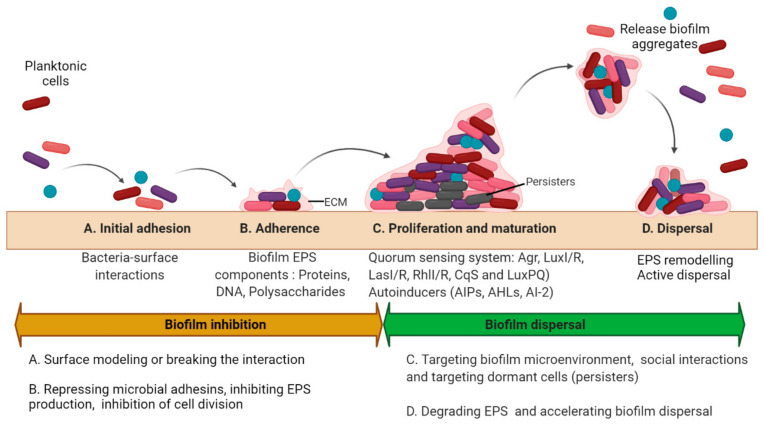
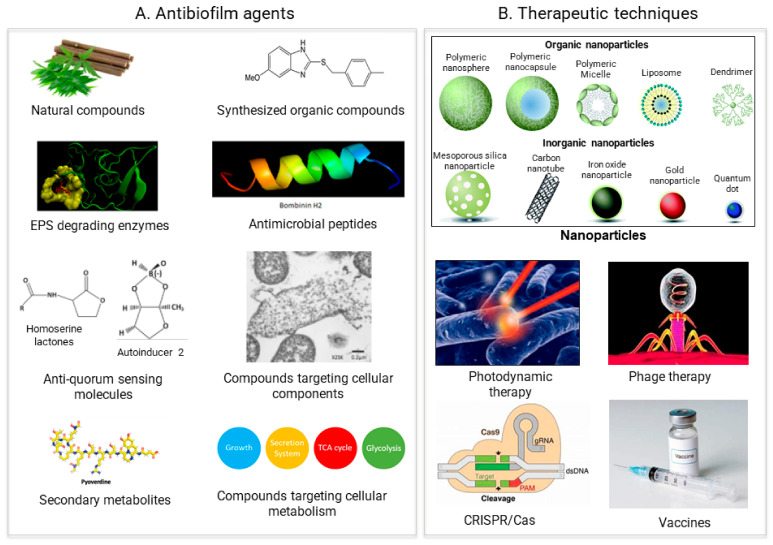
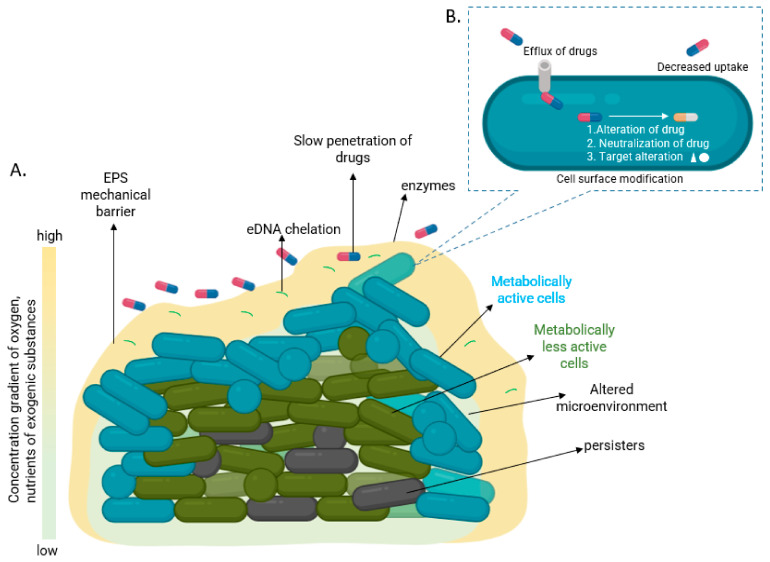
Biofilms are intricate bacterial assemblages that attach to diverse surfaces using an extracellular polymeric substance that protects them from the host immune system and conventional antibiotics. Biofilms cause chronic infections that result in millions of deaths around the world every year. Since the antibiotic tolerance mechanism in biofilm is different than that of the planktonic cells due to its multicellular structure, the currently available antibiotics are inadequate to treat biofilm-associated infections which have led to an immense need to find newer treatment options. Over the years, various novel antibiofilm compounds able to fight biofilms have been discovered. In this review, we have focused on the recent and intensively researched therapeutic techniques and antibiofilm agents used for biofilm treatment and grouped them according to their type and mode of action. We also discuss some therapeutic approaches that have the potential for future advancement.
生物膜是复杂的细菌聚集体,它们利用细胞外聚合物附着在各种表面上,这种聚合物可保护它们免受宿主免疫系统和传统抗生素的影响。生物膜会引发慢性感染,每年在全球导致数百万例死亡。由于生物膜的多细胞结构,其抗生素耐受机制与浮游细胞不同,目前可用的抗生素不足以治疗与生物膜相关的感染,这导致迫切需要寻找新的治疗方案。多年来,已经发现了各种能够对抗生物膜的新型抗生物膜化合物。在这篇综述中,我们重点关注了最近深入研究的用于生物膜治疗的治疗技术和抗生物膜药物,并根据它们的类型和作用方式进行了分类。我们还讨论了一些具有未来发展潜力的治疗方法。