Department of Preclinical Sciences and Pathology, Faculty of Veterinary Medicine, Norwegian University of Life Sciences, Post Box 5003, Ås, Norway.
National Veterinary Institute (SVA), 75189, Uppsala, Sweden.
Acta Vet Scand. 2021 Nov 25;63(1):48. doi: 10.1186/s13028-021-00606-x.
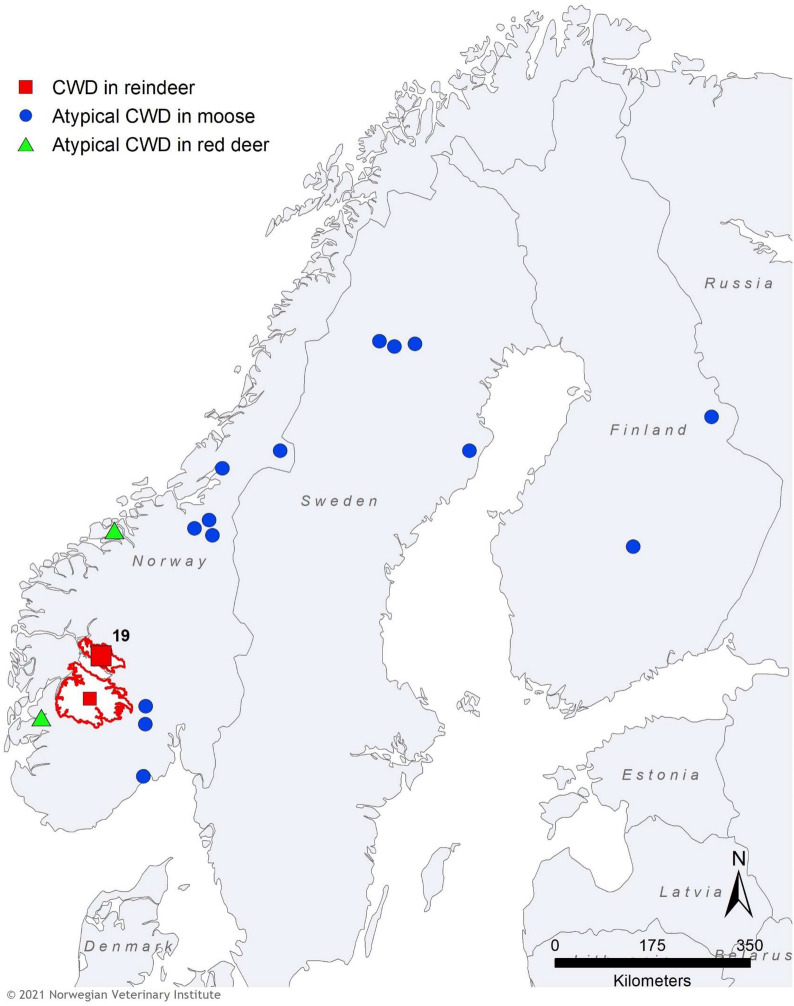
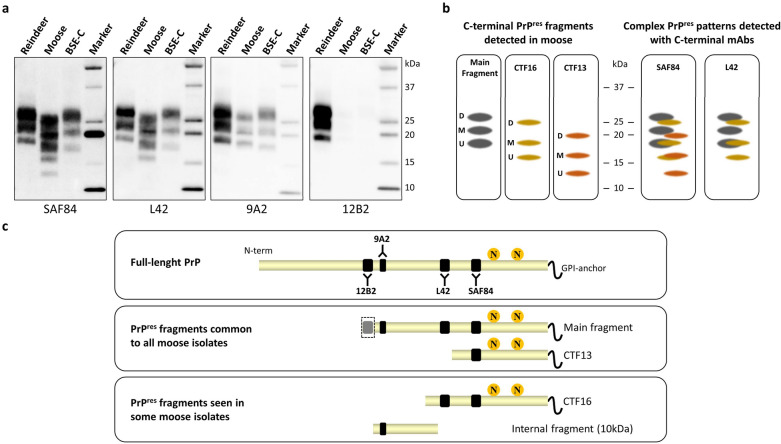
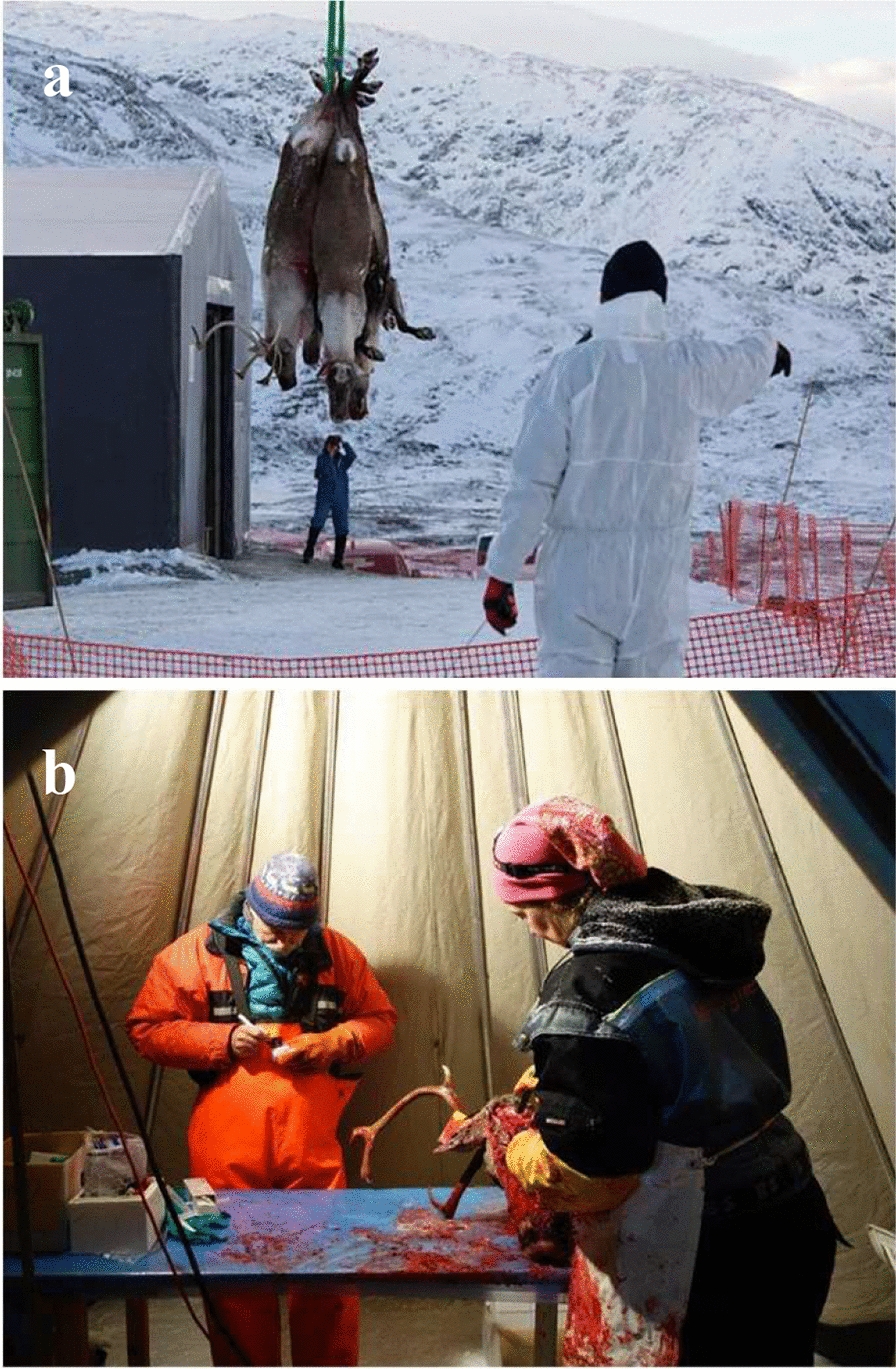
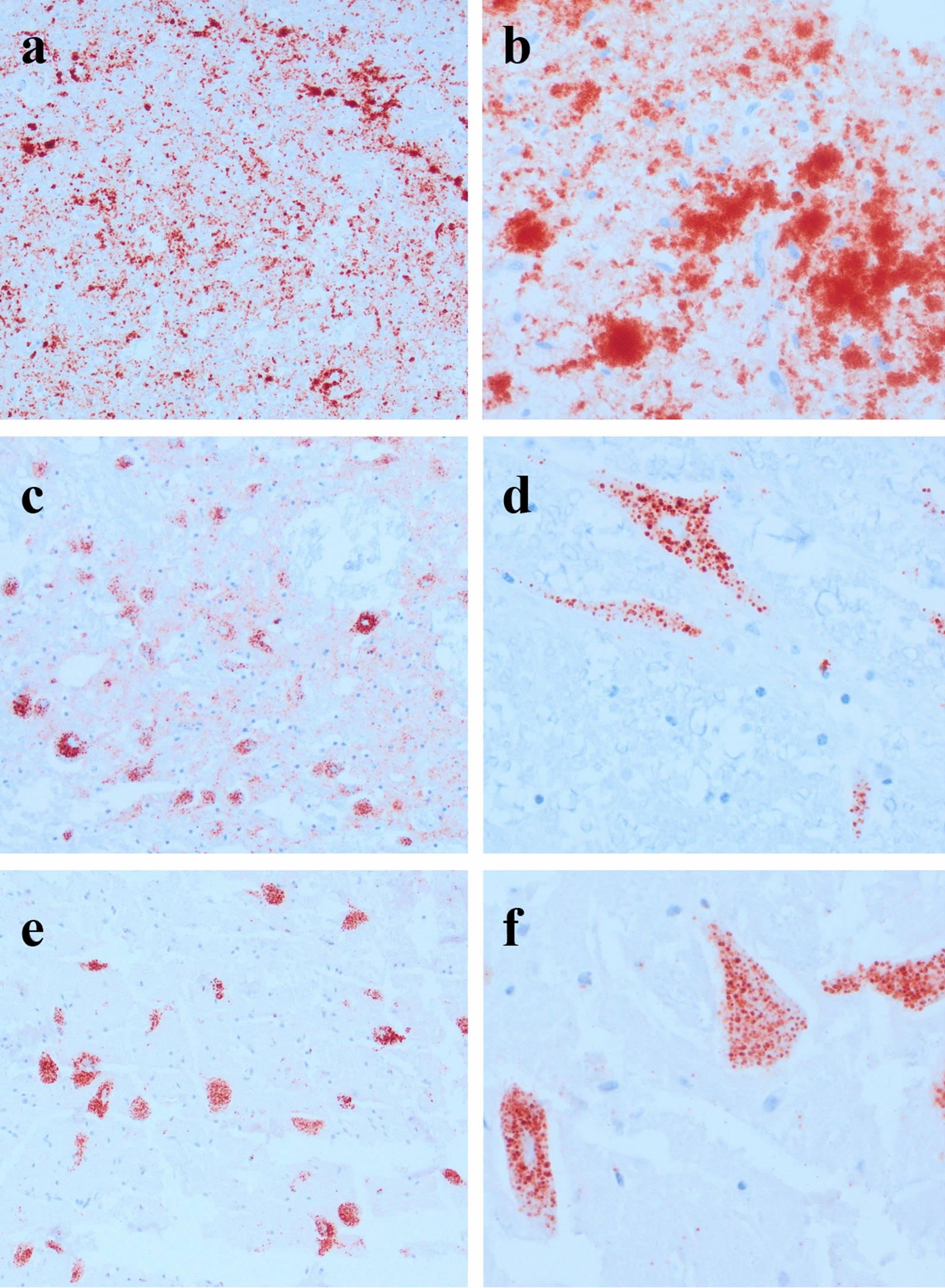
Prion diseases are fatal neurodegenerative disorders with known natural occurrence in humans and a few other mammalian species. The diseases are experimentally transmissible, and the agent is derived from the host-encoded cellular prion protein (PrP), which is misfolded into a pathogenic conformer, designated PrP (scrapie). Aggregates of PrP molecules, constitute proteinaceous infectious particles, known as prions. Classical scrapie in sheep and goats and chronic wasting disease (CWD) in cervids are known to be infectious under natural conditions. In CWD, infected animals can shed prions via bodily excretions, allowing direct host-to-host transmission or indirectly via prion-contaminated environments. The robustness of prions means that transmission via the latter route can be highly successful and has meant that limiting the spread of CWD has proven difficult. In 2016, CWD was diagnosed for the first time in Europe, in reindeer (Rangifer tarandus) and European moose (Alces alces). Both were diagnosed in Norway, and, subsequently, more cases were detected in a semi-isolated wild reindeer population in the Nordfjella area, in which the first case was identified. This population was culled, and all reindeer (approximately 2400) were tested for CWD; 18 positive animals, in addition to the first diagnosed case, were found. After two years and around 25,900 negative tests from reindeer (about 6500 from wild and 19,400 from semi-domesticated) in Norway, a new case was diagnosed in a wild reindeer buck on Hardangervidda, south of the Nordfjella area, in 2020. Further cases of CWD were also identified in moose, with a total of eight in Norway, four in Sweden, and two cases in Finland. The mean age of these cases is 14.7 years, and the pathological features are different from North American CWD and from the Norwegian reindeer cases, resembling atypical prion diseases such as Nor98/atypical scrapie and H- and L-forms of BSE. In this review, these moose cases are referred to as atypical CWD. In addition, two cases were diagnosed in red deer (Cervus elaphus) in Norway. The emergence of CWD in Europe is a threat to European cervid populations, and, potentially, a food-safety challenge, calling for a swift, evidence-based response. Here, we review data on surveillance, epidemiology, and disease characteristics, including prion strain features of the newly identified European CWD agents.
朊病毒病是致命的神经退行性疾病,已知在人类和其他少数几种哺乳动物中自然发生。这些疾病具有实验可传播性,病原体源自宿主编码的细胞朊病毒蛋白 (PrP),该蛋白错误折叠成致病性构象,称为 PrP (瘙痒病)。PrP 分子的聚集体构成了称为朊病毒的蛋白质传染性颗粒。绵羊和山羊中的经典瘙痒病和鹿中的慢性消耗病 (CWD) 在自然条件下已知具有传染性。在 CWD 中,受感染的动物可以通过身体排泄物排出朊病毒,从而实现直接的宿主到宿主传播或间接的通过受朊病毒污染的环境传播。朊病毒的稳健性意味着通过后一种途径传播可以非常成功,这意味着限制 CWD 的传播已被证明很困难。2016 年,CWD 在欧洲首次在驯鹿 (Rangifer tarandus) 和欧洲驼鹿 (Alces alces) 中被诊断出来。这两种疾病均在挪威被诊断出,随后在 Nordfjella 地区一个半隔离的野生驯鹿种群中发现了更多病例,该地区首次发现了病例。该种群被扑杀,所有驯鹿 (约 2400 只) 均接受了 CWD 检测;除了首例诊断病例外,还发现了 18 只阳性动物。在挪威进行了两年左右的 25900 次来自驯鹿的阴性检测(约 6500 次来自野生和 19400 次来自半驯化)后,2020 年在 Hardangervidda 的 Nordfjella 地区以南的一只野生驯鹿雄鹿中再次诊断出该病。在驼鹿中还发现了更多的 CWD 病例,挪威共 8 例,瑞典 4 例,芬兰 2 例。这些病例的平均年龄为 14.7 岁,其病理特征与北美 CWD 不同,也与挪威驯鹿病例不同,类似于非典型朊病毒病,如 Nor98/非典型瘙痒病和 H-和 L 型 BSE。在本综述中,这些驼鹿病例被称为非典型 CWD。此外,在挪威还诊断出 2 例马鹿 (Cervus elaphus) 病例。CWD 在欧洲的出现对欧洲鹿种群构成威胁,并可能对食品安全构成挑战,因此需要迅速、基于证据的应对措施。在这里,我们综述了监测、流行病学和疾病特征方面的数据,包括新发现的欧洲 CWD 病原体的朊病毒株特征。