Gee Gilbert C, Morey Brittany N, Bacong Adrian M, Doan Tran T, Penaia Corina S
Department of Community Health Sciences, University of California Los Angeles, 650 Charles E. Young Drive South, Los Angeles, CA USA.
Department of Health, Society, & Behavior, Program in Public Health, University of California Irvine, 653 E. Peltason Dr., Anteater Instruction and Research Building (AIRB) 2022, Irvine, CA USA.
Curr Epidemiol Rep. 2022;9(2):77-86. doi: 10.1007/s40471-022-00283-y. Epub 2022 Mar 18.
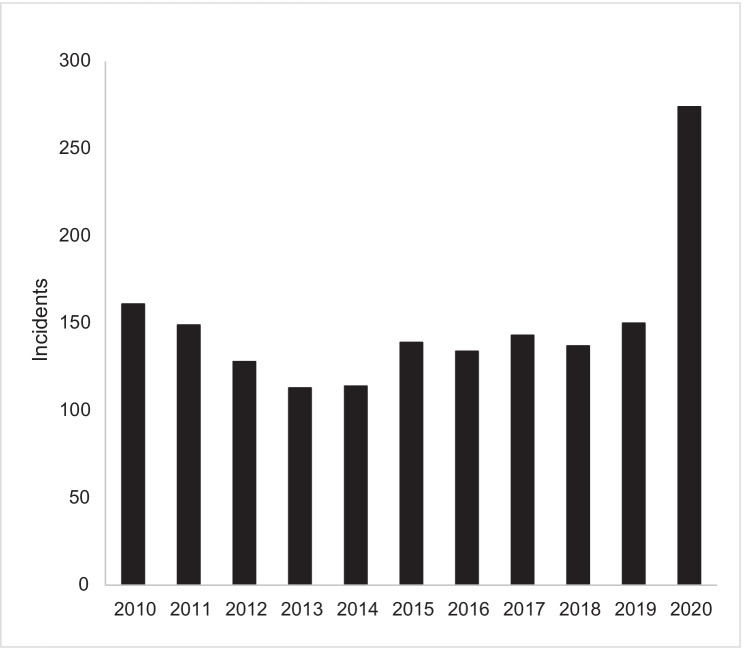
The COVID-19 pandemic has revealed the importance of considering social determinants of health, including factors such as structural racism. This review discusses some of the evidence that triangulates on this issue, including data from hate crime statistics, social media analysis, and survey-based research. It also examines the data needs for Asian Americans, Native Hawaiian, and Pacific Islander (NHPI) communities.
The available data provides evidence that the pandemic has contributed to an increase in anti-Asian sentiment and discriminatory incidents. Many reports have surfaced showing a surge in anti-Chinese discrimination, which has "spilled over" into other Asian communities. Research is beginning to emerge to show that such discrimination may also impact health issues such as psychological distress. Given prior research, we would expect many more studies to emerge in the future. Also, the pandemic has illustrated the major gaps in data available to disentangle the health and social concerns facing Asian Americans and NHPI communities. Significant issues include the lack of systematic reporting of data for these communities both across states, and even among agencies within a state; erroneous aggregation of Asians with NHPIs; and censoring of data. These gaps and issues contribute to bias that obscures objective data and amplifies health inequalities.
The COVID-19 pandemic has had a negative impact on the well-being of Asian American and NHPI communities. It is critical to provide disaggregated data, not only so that we can have accurate reporting, but also to ensure data and health equity.
新冠疫情揭示了考虑健康的社会决定因素的重要性,其中包括结构性种族主义等因素。本综述讨论了围绕这一问题的一些证据,包括来自仇恨犯罪统计数据、社交媒体分析和基于调查的研究的数据。它还研究了亚裔美国人、夏威夷原住民和太平洋岛民(NHPI)社区的数据需求。
现有数据表明,疫情导致反亚裔情绪和歧视事件增加。许多报道显示,反华歧视激增,并“蔓延”到其他亚裔社区。越来越多的研究开始表明,这种歧视也可能影响心理困扰等健康问题。鉴于先前的研究,我们预计未来会出现更多相关研究。此外,疫情还凸显了在梳理亚裔美国人和NHPI社区面临的健康和社会问题时可用数据的重大差距。重大问题包括这些社区的数据在各州甚至州内各机构之间缺乏系统报告;将亚裔与NHPI错误汇总;以及数据审查。这些差距和问题导致偏差,掩盖了客观数据并加剧了健康不平等。
新冠疫情对亚裔美国人和NHPI社区的福祉产生了负面影响。提供分类数据至关重要,这不仅能使我们进行准确报告,还能确保数据和健康公平。