Shi Wenjing, Tang Yongzhe, Lu Jing, Zhuang Yihui, Wang Jie
Department of Breast Diseases, The International Peace Maternity and Child Health Hospital, School of Medicine, Shanghai Jiao Tong University, Shanghai, People's Republic of China.
Shanghai Key Laboratory of Embryo Original Diseases, Hengshan Rd. 910, Shanghai, 200030, China.
Cell Biosci. 2022 Mar 28;12(1):38. doi: 10.1186/s13578-022-00772-z.
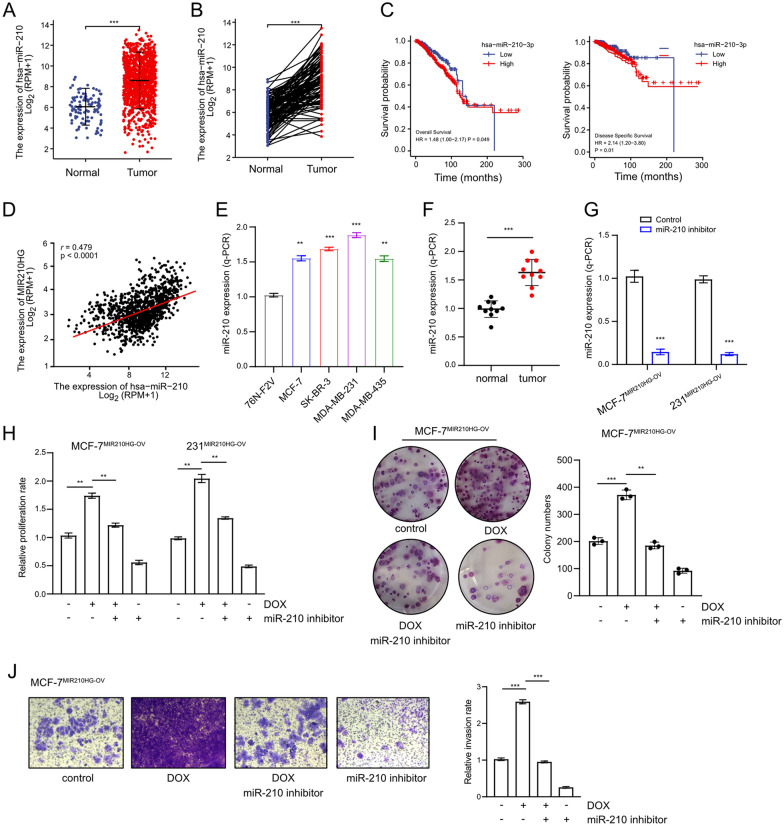
Breast cancer is the most common cancer in women around the world, and the molecular mechanisms of breast cancer progression and metastasis are still unclear. This study aims to clarify the function and N6,2'-O-dimethyladenosine (m6A) regulation of lncRNA MIR210HG in breast cancer.
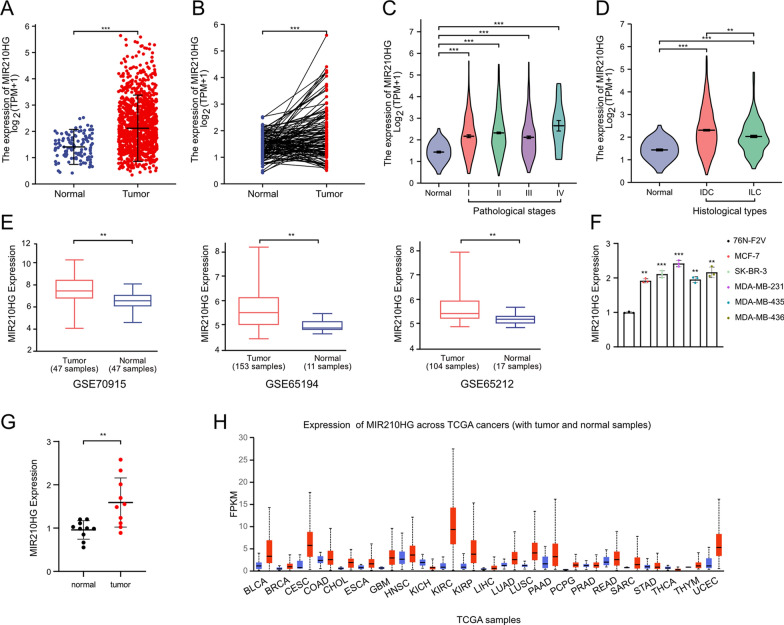
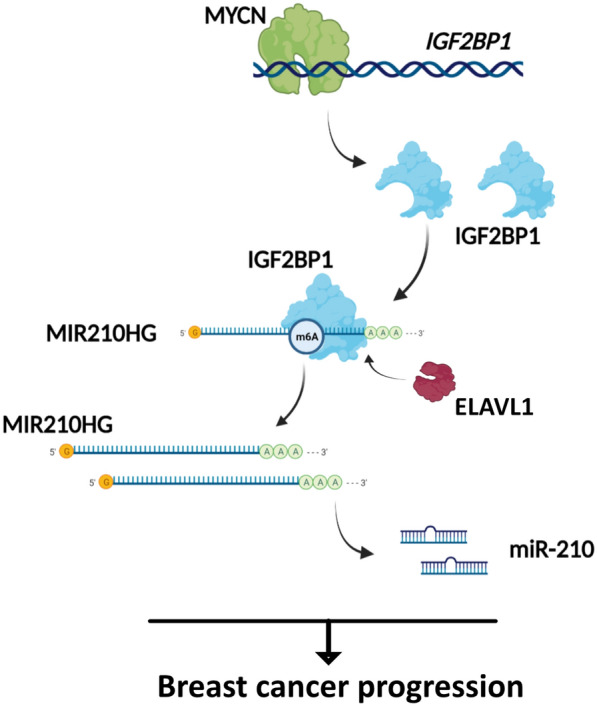
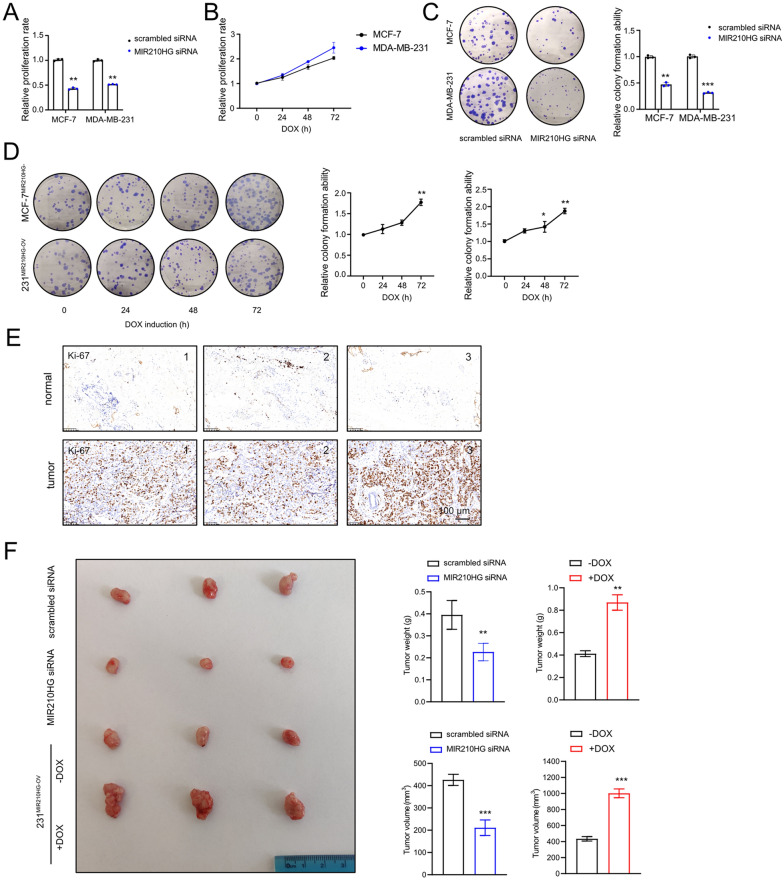
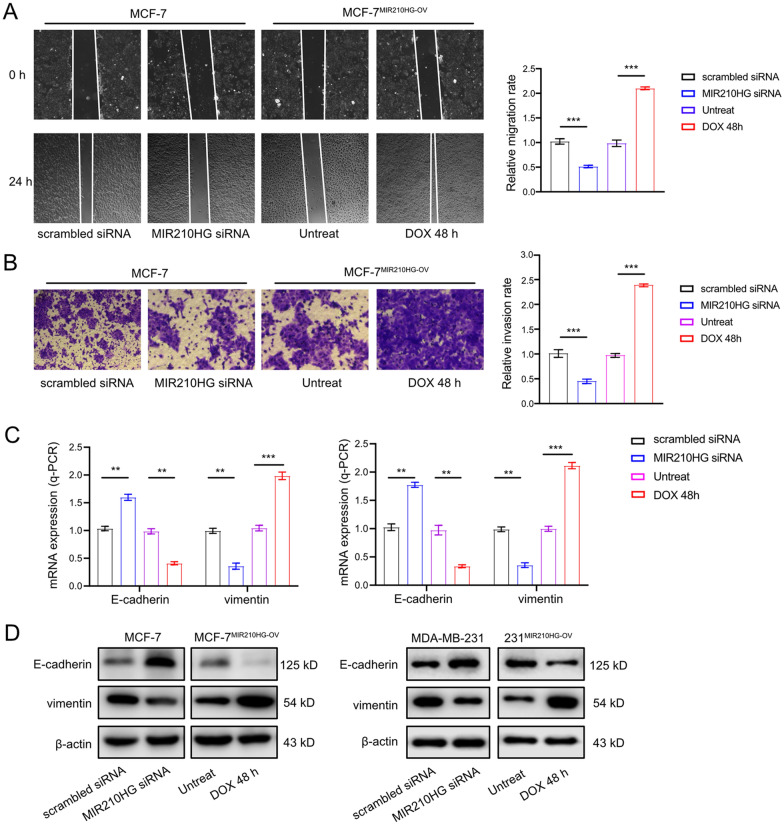
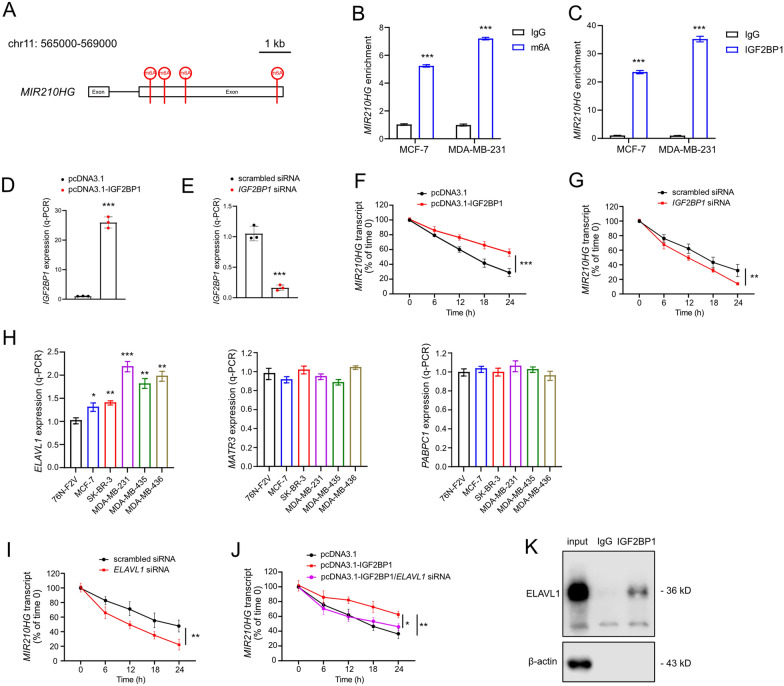
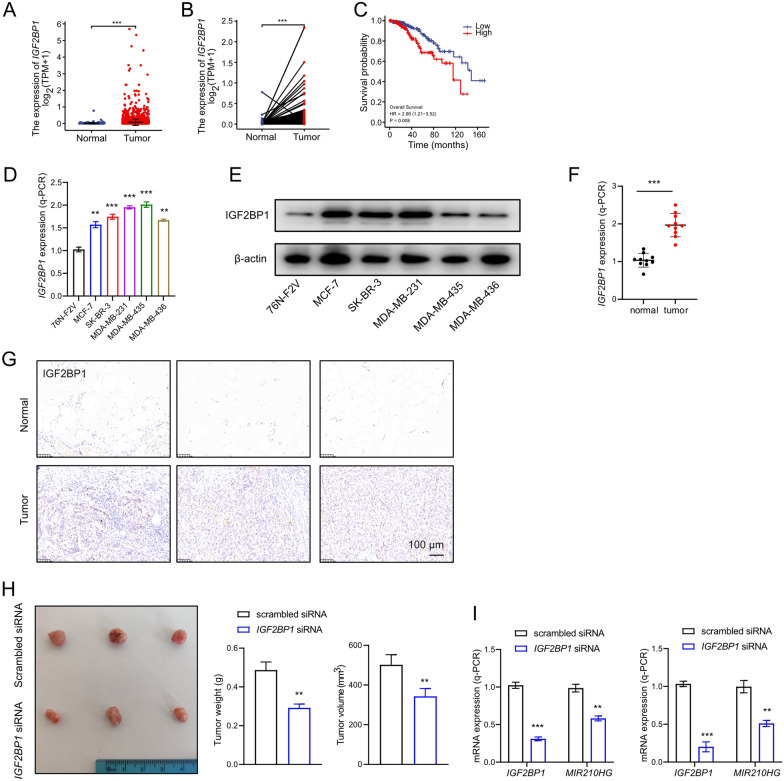
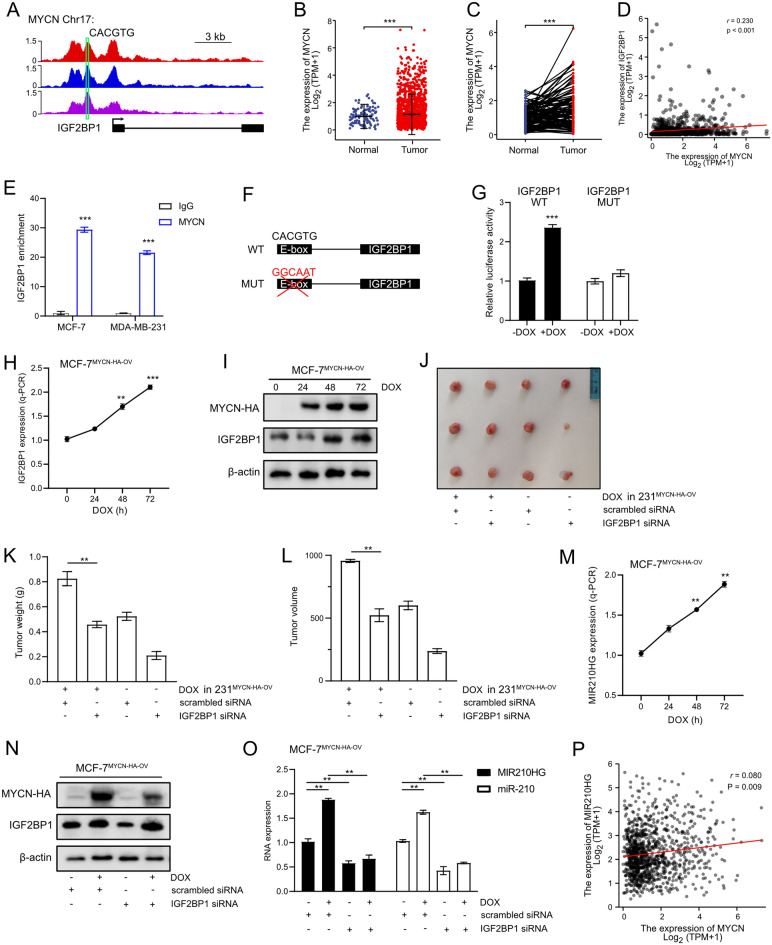
High expression of MIR210HG was confirmed in breast cancer. MIR210HG promoted breast cancer progression, which was mediated by its encoded miR-210. MIR210HG was regulated by IGF2BP1 mediated m6A modification. IGF2BP1 was confirmed highly expressed in breast cancer and induced both MIR210HG and miR-210 expression, which contributed to breast cancer progression. In addition, MIR210HG transcript was stabilized by IGF2BP1 and co-factor ELAVL1. IGF2BP1 was a direct target of MYCN via E-box binding motif. MYCN induced IGF2BP1 expression in breast cancer cells. MIR210HG and miR-210 expressions were also increased by MYCN.
In breast cancer, MIR210HG functions as an oncogenic lncRNA, which is also mediated by its encoded miR-210. In addition, both IGF2BP1 and ELAVL1 enhance the stability of MIR210HG, which contributes to the progression of breast cancer. Interestingly, IGF2BP1 is directly activated by MYCN, which explains the oncogenic role of MYCN. These findings clarify the m6A regulation related molecular mechanism of breast cancer progression. The MYCN/IGF2BP1/MIR210HG axis may serve as an alternative molecular mechanism of breast cancer progression.
乳腺癌是全球女性中最常见的癌症,其进展和转移的分子机制仍不清楚。本研究旨在阐明lncRNA MIR210HG在乳腺癌中的功能及N6,2'-O-二甲基腺苷(m6A)调控机制。
证实MIR210HG在乳腺癌中高表达。MIR210HG促进乳腺癌进展,这是由其编码的miR-210介导的。MIR210HG受IGF2BP1介导的m6A修饰调控。证实IGF2BP1在乳腺癌中高表达,并诱导MIR210HG和miR-210表达,这有助于乳腺癌进展。此外,IGF2BP1和辅助因子ELAVL1使MIR210HG转录本稳定。IGF2BP1是MYCN通过E-box结合基序的直接靶点。MYCN在乳腺癌细胞中诱导IGF2BP1表达。MYCN也增加了MIR210HG和miR-210的表达。
在乳腺癌中,MIR210HG作为一种致癌lncRNA发挥作用,这也由其编码的miR-210介导。此外,IGF2BP1和ELAVL1均增强了MIR210HG的稳定性,这有助于乳腺癌的进展。有趣的是,IGF2BP1直接被MYCN激活,这解释了MYCN的致癌作用。这些发现阐明了与乳腺癌进展相关的m6A调控分子机制。MYCN/IGF2BP1/MIR210HG轴可能是乳腺癌进展的另一种分子机制。