Innovation and Research Department, Salud Digna A.C., Francisco Villa 113 sur, 80000, Culiacán, Sinaloa, Mexico.
Clinical Laboratory Department, Salud Digna, 80000, Culiacán, Sinaloa, Mexico.
Sci Rep. 2022 Mar 28;12(1):5241. doi: 10.1038/s41598-022-09395-3.
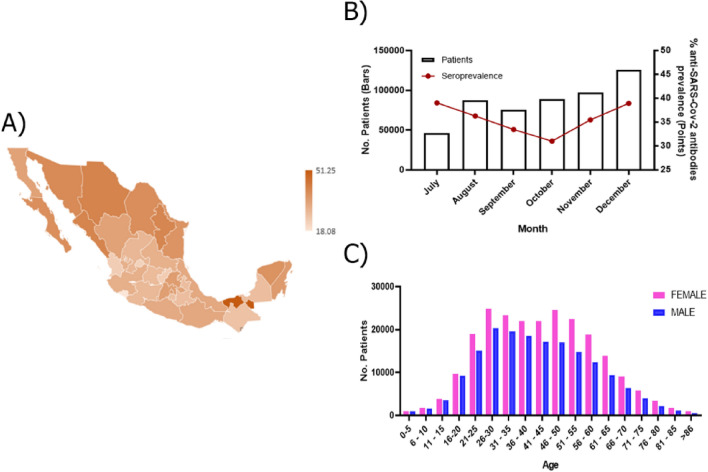
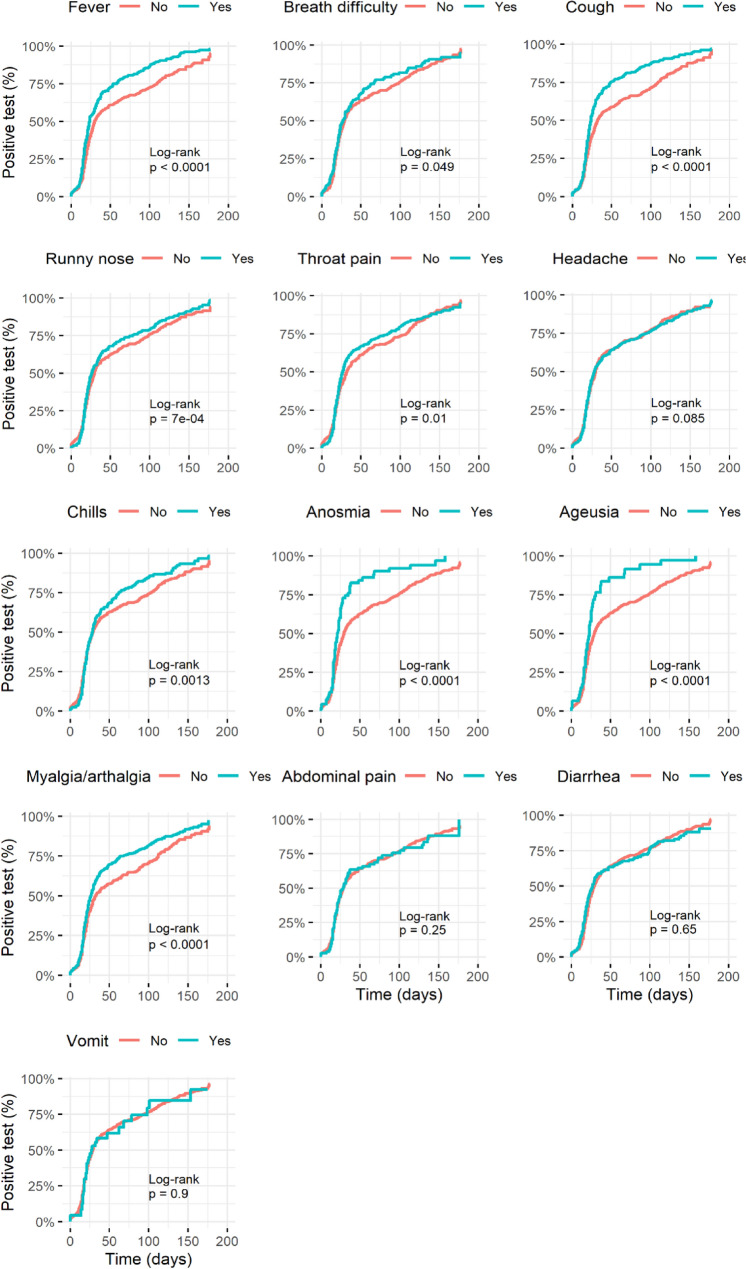
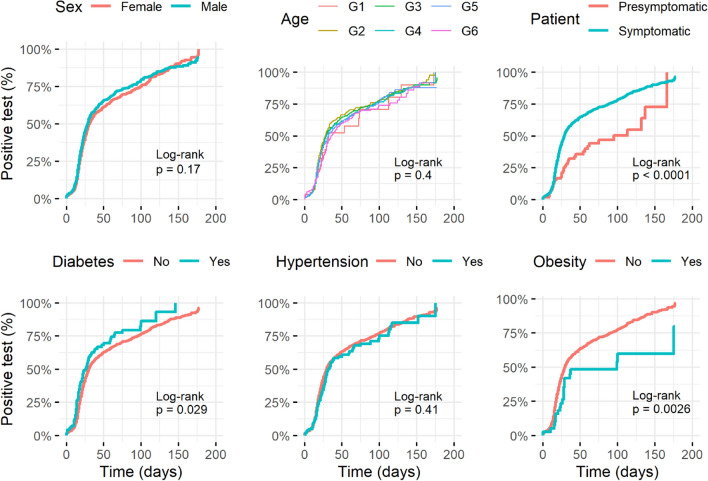
Serosurveillance helps establish reopening guidelines and determine the immunity levels in different populations to reach herd immunity. Then, there is an urgent need to estimate seroprevalence population wide. In Mexico, information about COVID-19 cases and related deaths is scarce. Also, there is no official serosurveillance, limiting our knowledge of the impact of the SARS-CoV-2 pandemic. Here, we report the prevalence of anti-SARS-CoV-2 antibodies in 522,690 unvaccinated people from July 5th to December 31st, 2020. The overall seroprevalence was 32.8% and highest in adults aged 30-39 years (38.5%) than people under 20 years (33.0%) or older (28.9%). Moreover, in a cohort of 1655 individuals confirmed COVID-19 by PCR, we found that symptomatic people (HR = 2.56) increased seroconversion than presymptomatic. Also, we identified that the most discriminative symptoms for COVID-19 that could predict seroconversion were anosmia and ageusia (HR = 1.70), fever, myalgia/arthralgia, and cough (HR = 1.75). Finally, we found that obese people had lower seroconversion (HR = 0.53) than healthy people, but the opposite happens in diabetic people (HR = 1.39). These findings reveal that around one-third of Mexican outpatients had anti-SARS-CoV-2 antibodies before vaccination. Also, some symptoms improve empirically COVID-19 diagnosis and seroconversion. This information could help fine-tune vaccination schemes and the reopening and back-to-work algorithms.
血清学监测有助于制定重新开放的指导方针,并确定不同人群的免疫水平,以达到群体免疫。然后,我们迫切需要估计广泛人群的血清流行率。在墨西哥,关于 COVID-19 病例和相关死亡的信息很少。此外,没有官方的血清学监测,这限制了我们对 SARS-CoV-2 大流行影响的了解。在这里,我们报告了 2020 年 7 月 5 日至 12 月 31 日期间 522690 名未接种疫苗人群中抗 SARS-CoV-2 抗体的流行率。总体血清流行率为 32.8%,年龄在 30-39 岁的成年人(38.5%)最高,而 20 岁以下(33.0%)或年龄较大(28.9%)的人则较低。此外,在一组由 PCR 确诊为 COVID-19 的 1655 名个体中,我们发现有症状的人(HR=2.56)比无症状的人更易发生血清转化。此外,我们发现对于 COVID-19 能够预测血清转化的最具鉴别性的症状是嗅觉丧失和味觉丧失(HR=1.70)、发热、肌痛/关节痛和咳嗽(HR=1.75)。最后,我们发现肥胖人群的血清转化率较低(HR=0.53),而健康人群则相反,但糖尿病患者的情况则相反(HR=1.39)。这些发现表明,在接种疫苗之前,大约三分之一的墨西哥门诊患者已具有抗 SARS-CoV-2 抗体。此外,一些症状可改善 COVID-19 的诊断和血清转化。这些信息可以帮助微调疫苗接种计划以及重新开放和重返工作岗位的算法。