Kim Tae-Se, Min Byung-Hoon, Min Yang Won, Lee Hyuk, Rhee Poong-Lyul, Kim Jae J, Lee Jun Haeng
Department of Medicine, Samsung Medical Center, Sungkyunkwan University School of Medicine, 81 Irwon-ro, Gangnam-gu, Seoul, 06351, Korea.
BMC Gastroenterol. 2022 Mar 29;22(1):157. doi: 10.1186/s12876-022-02235-8.
Primary malignant melanoma of esophagus (PMME) is an extremely rare disease with poor prognosis. We aimed to determine the clinical characteristics and treatment outcomes of patients with PMME.
We retrospectively reviewed 17 patients diagnosed with PMME in Samsung Medical Center between 2000 and 2020 with median 34 months of follow-up. Survival outcomes were analyzed with Kaplan-Meier method.
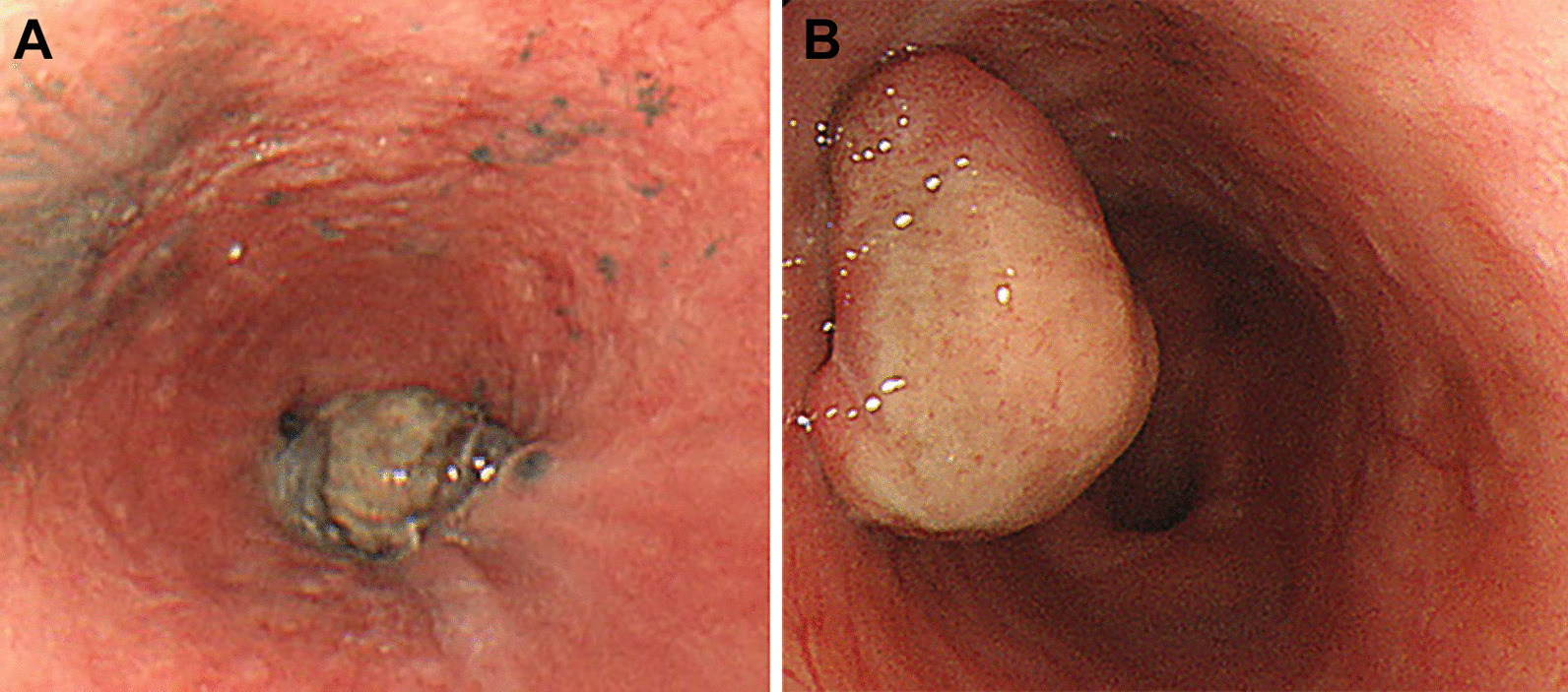
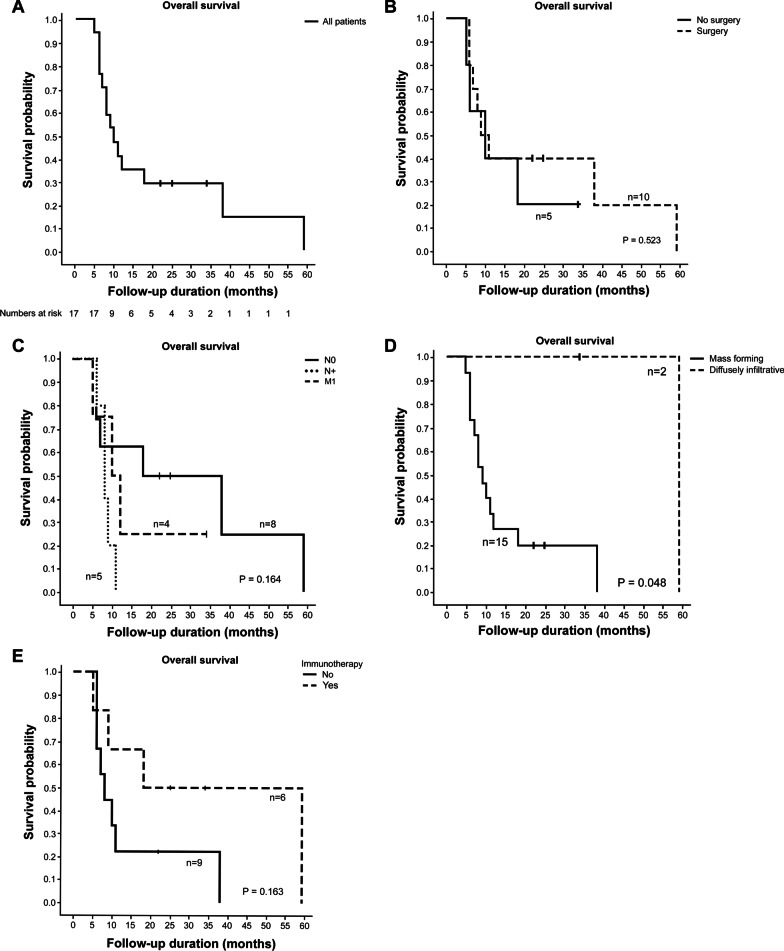
15 patients (88.2%) were male and the most common presenting symptom was dysphagia (9/17, 52.9%). On endoscopy, tumors were mass-forming in 15 patients (88.2%) and diffusely infiltrative in two patients (11.8%). Lesions were melanotic in 13 patients (76.5%) and amelanotic in four patients (23.5%). The most common tumor location was lower esophagus (11/17, 64.7%). The disease was metastatic at the time of diagnosis in four patients (23.5%). As for treatment, 10 patients (58.8%) underwent surgery. In all 17 patients, the median overall survival was 10 months. In surgically treated patients, all patients experienced recurrence and the median disease-free survival was 4 months. There was no statistical difference in overall survival between patients with or without surgery. Patients with diffusely infiltrative tumor morphology had better overall survival compared to those with mass-forming tumor morphology (P = 0.048). Two patients who received immunotherapy as the first-line treatment without surgery showed overall survival of 34 and 18 months, respectively.
As radical resection for patients with PMME does not guarantee favorable treatment outcomes, novel treatment strategy is required. Further large-scale studies are warranted to determine the efficacy of immunotherapy for patients with PMME.
原发性食管恶性黑色素瘤(PMME)是一种极为罕见且预后不良的疾病。我们旨在确定PMME患者的临床特征及治疗效果。
我们回顾性分析了2000年至2020年间在三星医疗中心诊断为PMME的17例患者,中位随访时间为34个月。采用Kaplan-Meier法分析生存结局。
15例患者(88.2%)为男性,最常见的症状是吞咽困难(9/17,52.9%)。在内镜检查中,15例患者(88.2%)的肿瘤呈肿块型,2例患者(11.8%)呈弥漫浸润型。13例患者(76.5%)的病变有黑色素沉着,4例患者(23.5%)无黑色素沉着。最常见的肿瘤部位是食管下段(11/17,64.7%)。4例患者(23.5%)在诊断时已有转移。在治疗方面,10例患者(58.8%)接受了手术。17例患者的中位总生存期为10个月。在接受手术治疗的患者中,所有患者均复发,中位无病生存期为4个月。手术组与非手术组患者的总生存期无统计学差异。弥漫浸润型肿瘤形态的患者总生存期优于肿块型肿瘤形态的患者(P = 0.048)。2例未接受手术而接受免疫治疗作为一线治疗的患者,总生存期分别为34个月和18个月。
由于对PMME患者进行根治性切除并不能保证良好的治疗效果,因此需要新的治疗策略。有必要进行进一步的大规模研究以确定免疫治疗对PMME患者的疗效。