Department of Bioinformatics, Institute of Health Service and Transfusion Medicine, Beijing 100850, China.
Brief Bioinform. 2022 May 13;23(3). doi: 10.1093/bib/bbac106.
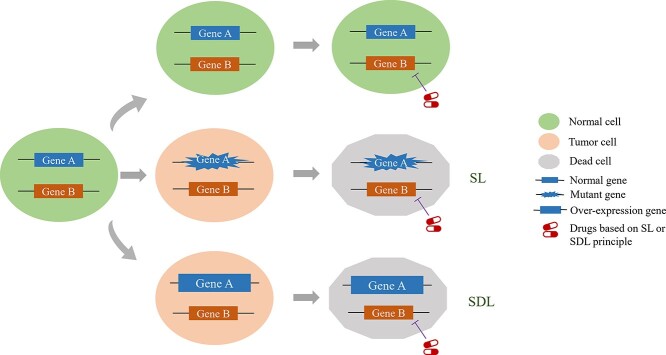
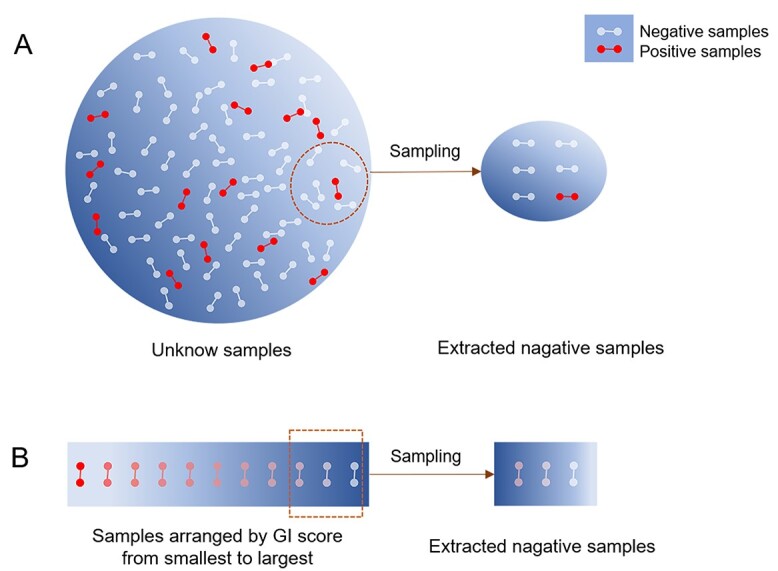
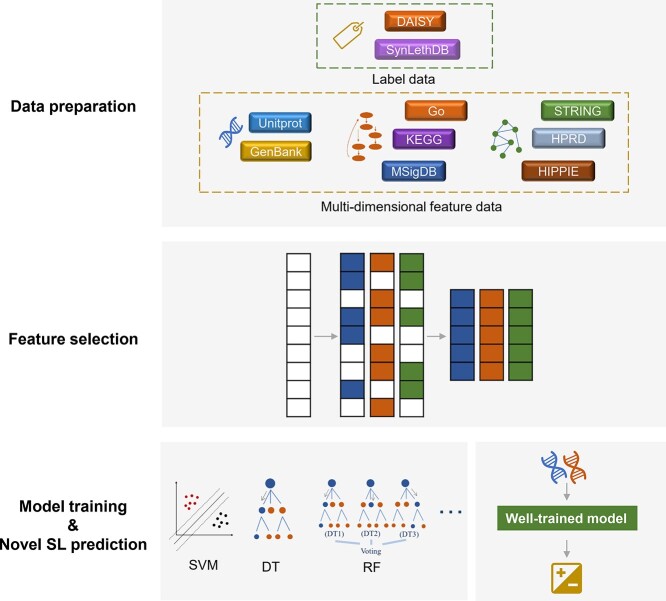
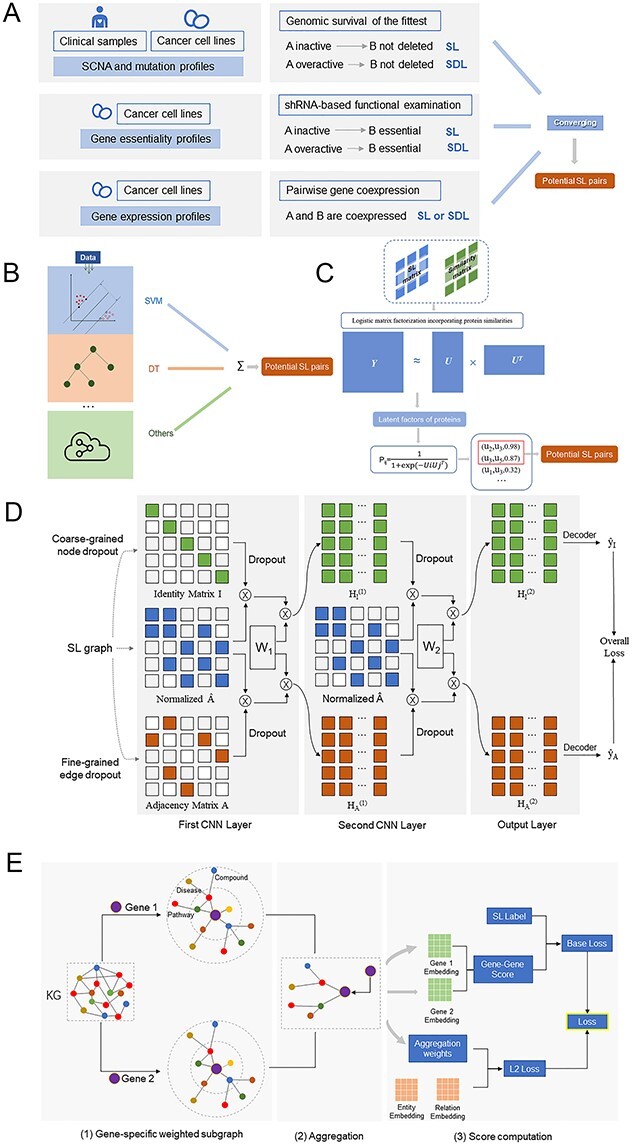
Synthetic lethality (SL) occurs between two genes when the inactivation of either gene alone has no effect on cell survival but the inactivation of both genes results in cell death. SL-based therapy has become one of the most promising targeted cancer therapies in the last decade as PARP inhibitors achieve great success in the clinic. The key point to exploiting SL-based cancer therapy is the identification of robust SL pairs. Although many wet-lab-based methods have been developed to screen SL pairs, known SL pairs are less than 0.1% of all potential pairs due to large number of human gene combinations. Computational prediction methods complement wet-lab-based methods to effectively reduce the search space of SL pairs. In this paper, we review the recent applications of computational methods and commonly used databases for SL prediction. First, we introduce the concept of SL and its screening methods. Second, various SL-related data resources are summarized. Then, computational methods including statistical-based methods, network-based methods, classical machine learning methods and deep learning methods for SL prediction are summarized. In particular, we elaborate on the negative sampling methods applied in these models. Next, representative tools for SL prediction are introduced. Finally, the challenges and future work for SL prediction are discussed.
合成致死性(SL)是指两个基因之间的相互作用,当单独失活其中一个基因时对细胞存活没有影响,但同时失活两个基因会导致细胞死亡。基于 SL 的治疗方法已成为过去十年中最有前途的靶向癌症治疗方法之一,因为 PARP 抑制剂在临床上取得了巨大成功。利用基于 SL 的癌症治疗的关键在于确定稳健的 SL 对。尽管已经开发了许多基于湿实验室的方法来筛选 SL 对,但由于人类基因组合数量庞大,已知的 SL 对不到所有潜在对的 0.1%。计算预测方法补充了基于湿实验室的方法,可有效缩小 SL 对的搜索空间。本文综述了计算方法在 SL 预测中的最新应用和常用数据库。首先,我们介绍了 SL 的概念及其筛选方法。其次,总结了各种与 SL 相关的数据资源。然后,总结了用于 SL 预测的基于统计的方法、基于网络的方法、经典机器学习方法和深度学习方法等计算方法,并详细介绍了这些模型中应用的负采样方法。接下来,介绍了用于 SL 预测的代表性工具。最后,讨论了 SL 预测的挑战和未来工作。