Pinto Raquel, Magalhães Ana, Sousa Mafalda, Melo Lúcia, Lobo Andrea, Barros Pedro, Gomes João R
Molecular Neurobiology Unit, IBMC-Instituto de Biologia Molecular e Celular, Porto, Portugal.
I3S-Instituto de Investigação e Inovação em Saúde, Universidade do Porto, Porto, Portugal.
Front Neurol. 2022 Mar 11;13:846735. doi: 10.3389/fneur.2022.846735. eCollection 2022.
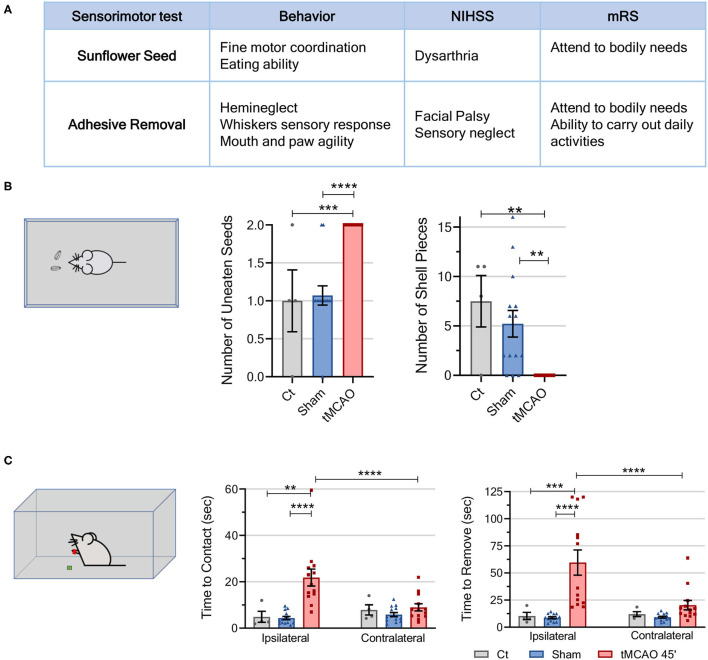
Acute ischemic stroke (AIS) remains a leading cause of mortality, despite significant advances in therapy (endovascular thrombectomy). Failure in developing novel effective therapies is associated with unsuccessful translation from preclinical studies to clinical practice, associated to inconsistent and highly variable infarct areas and lack of relevant post-stroke functional evaluation in preclinical research. To outreach these limitations, we optimized the intraluminal transient middle cerebral occlusion, a widely used mouse stroke model, in two key parameters, selection of appropriate occlusion filaments and time of occlusion, which show a significant variation in the literature. We demonstrate that commercially available filaments with short coating length (1-2 mm), together with 45-min occlusion, results in a consistent affected brain region, similar to what is observed in most patients with AIS. Importantly, a dedicated post-stroke care protocol, based on clinical practice applied to patients who had stroke, resulted in lower mortality and improved mice welfare. Finally, a battery of tests covering relevant fine motor skills, sensory functions, and learning/memory behaviors revealed a significant effect of tMCAO brain infarction, which is parallel to patient symptomatology as measured by relevant clinical scales (NIH Stroke Scale, NIHSS and modified Rankin Scale, mRS). Thus, in order to enhance translation to clinical practice, future preclinical stroke research must consider the methodology described in this study, which includes improved reproducible surgical procedure, postoperative care, and the battery of functional tests. This will be a major step s closing the gap from bench to bedside, rendering the development of novel effective therapeutic approaches.
尽管在治疗(血管内血栓切除术)方面取得了重大进展,但急性缺血性卒中(AIS)仍然是主要的死亡原因。新型有效疗法研发失败与从临床前研究到临床实践的转化不成功有关,这与梗死面积不一致且高度可变以及临床前研究中缺乏相关的卒中后功能评估有关。为了克服这些局限性,我们在两个关键参数(合适的闭塞丝选择和闭塞时间)上对广泛使用的小鼠卒中模型——腔内短暂性大脑中动脉闭塞进行了优化,这两个参数在文献中显示出显著差异。我们证明,涂层长度短(1 - 2毫米)的市售丝材与45分钟的闭塞时间相结合,会导致受影响的脑区一致,类似于大多数AIS患者中观察到的情况。重要的是,基于应用于卒中患者的临床实践制定的专门的卒中后护理方案降低了死亡率并改善了小鼠的健康状况。最后,一系列涵盖相关精细运动技能、感觉功能和学习/记忆行为的测试揭示了大脑中动脉闭塞性脑梗死的显著影响,这与通过相关临床量表(美国国立卫生研究院卒中量表,NIHSS和改良Rankin量表,mRS)测量的患者症状学情况相似。因此,为了加强向临床实践的转化,未来的临床前卒中研究必须考虑本研究中描述的方法,包括改进的可重复手术程序、术后护理以及一系列功能测试。这将是缩小从实验台到病床差距的重要一步,有助于开发新型有效治疗方法。