Štambuk Petra, Šikuten Iva, Karoglan Kontić Jasminka, Maletić Edi, Preiner Darko, Tomaz Ivana
Department of Viticulture and Enology, Faculty of Agriculture, University of Zagreb, Zagreb, Croatia.
Centre of Excellence for Biodiversity and Molecular Plant Breeding, Zagreb, Croatia.
Front Plant Sci. 2022 Mar 11;13:836318. doi: 10.3389/fpls.2022.836318. eCollection 2022.
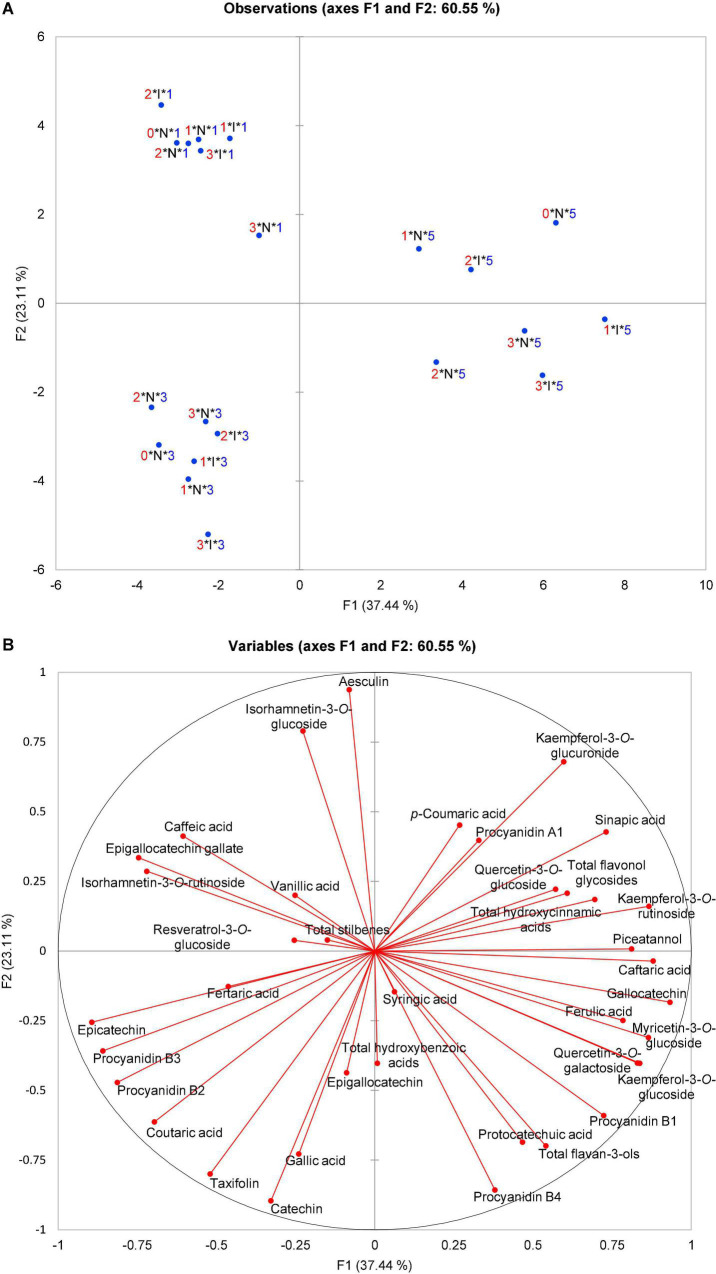
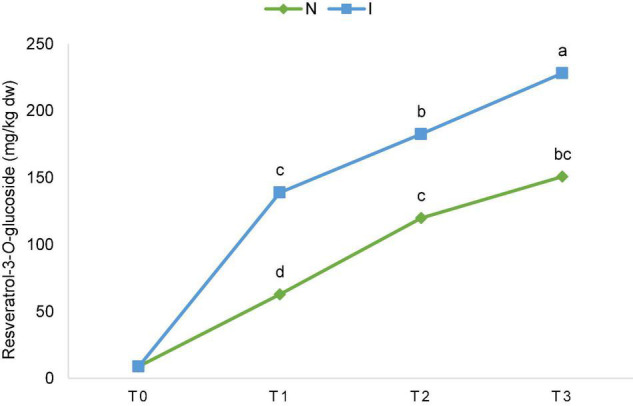
Since grapevine is highly susceptible to various pathogens, enormous amounts of pesticides are applied each season to achieve profitable production. One of the most destructive grapevine diseases is downy mildew, and their interaction has been in the spotlight for more than a decade. When it comes to a metabolome level, phenolic compounds are relevant to investigate due to their involvement in the plant immune system and known antifungal properties. Croatian grapevine germplasm is highly heterogeneous due to its long history of cultivation in diversified geographical regions. Since it has been found that native varieties react differently to the infection of , the intention of this study is to define if the chemical background of the leaves, i.e., polyphenolic composition, is responsible for these dissimilarities. Therefore, the leaves of 17 genotypes, among which 14 were native and 3 were controls, were analyzed using high-performance liquid chromatography (HPLC) in four terms: before inoculation and 24, 48, and 96 h post inoculation (hpi). During this early phase, significant differences were found neither between the terms nor between the non-inoculated and inoculated samples, except for resveratrol-3--glucoside. By applying principal component analysis (PCA) using initial leaf polyphenolic composition, varieties of were clearly separated into three different groups corresponding to their International Organization of Vine and Wine (OIV) classes of susceptibility to . Results obtained in this research suggest that the initial constitutive polyphenolic composition of the cultivar leaves has a crucial influence on their susceptibility to , and this finding can be used to improve the success of grapevine breeding programs toward downy mildew resistance.
由于葡萄极易受到各种病原体的侵害,因此每个季节都要施用大量农药以实现盈利生产。最具破坏性的葡萄病害之一是霜霉病,它们之间的相互作用已成为十多年来的研究热点。在代谢组水平上,酚类化合物因其参与植物免疫系统和已知的抗真菌特性而值得研究。克罗地亚的葡萄种质由于其在不同地理区域的悠久种植历史而高度异质。由于已发现本地品种对[具体病害名称未给出]的感染反应不同,本研究的目的是确定叶片的化学背景,即多酚组成,是否是造成这些差异的原因。因此,使用高效液相色谱法(HPLC)对17个基因型的叶片进行了分析,其中14个是本地品种,3个是对照品种,分四个阶段进行:接种前以及接种后24、48和96小时(hpi)。在这个早期阶段,除了白藜芦醇 - 3 - [此处化学结构不完整] - 葡萄糖苷外,在不同阶段之间以及未接种和接种样品之间均未发现显著差异。通过使用初始叶片多酚组成进行主成分分析(PCA),[具体品种未给出]的品种被明显分为三个不同的组,对应于它们对[具体病害名称未给出]的国际葡萄与葡萄酒组织(OIV)易感性类别。本研究获得的结果表明,品种叶片的初始组成型多酚组成对其对[具体病害名称未给出]的易感性具有关键影响,这一发现可用于提高葡萄抗霜霉病育种计划的成功率。