Oyibo Kiemute, Morita Plinio Pelegrini
School of Public Health Sciences, University of Waterloo, Waterloo, ON, Canada.
Front Digit Health. 2022 Mar 11;4:842661. doi: 10.3389/fdgth.2022.842661. eCollection 2022.
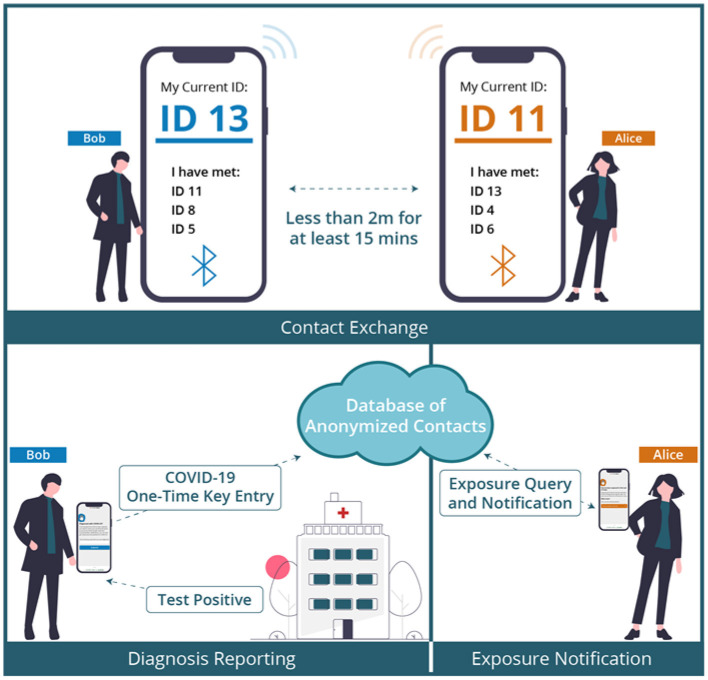
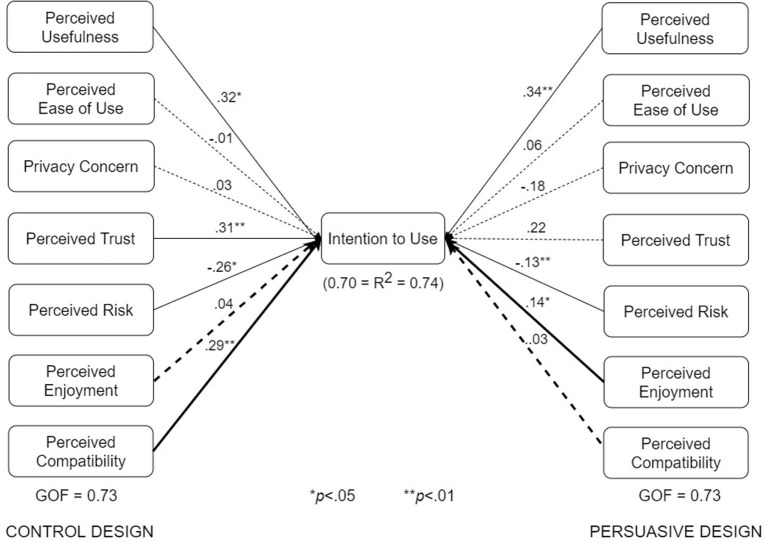
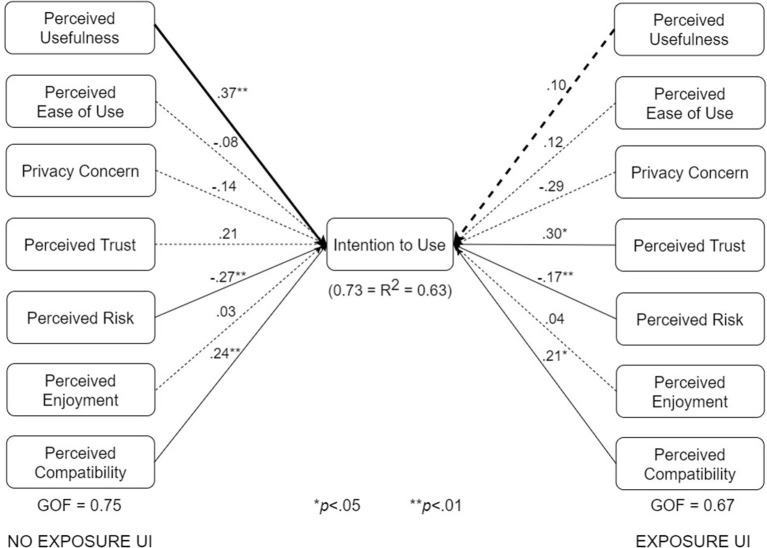
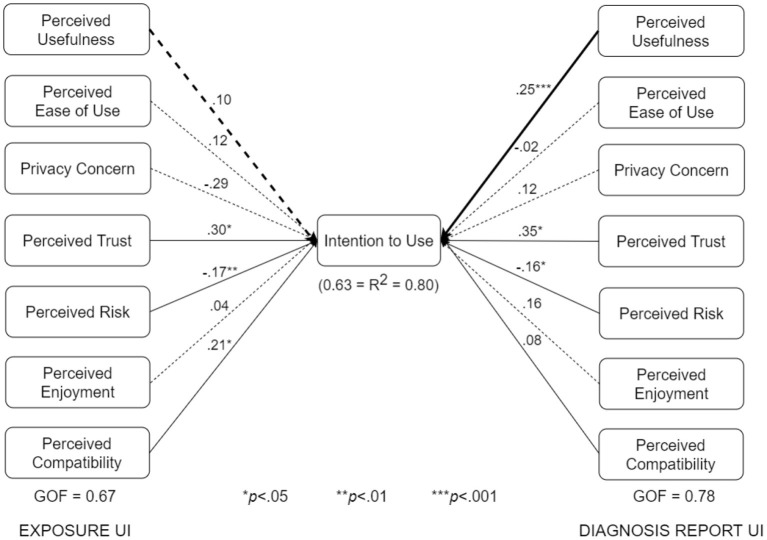
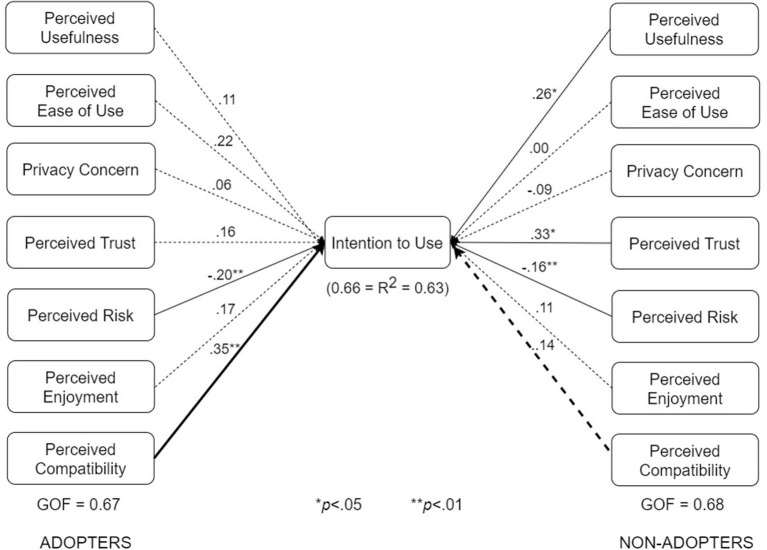
The continued emergence of new variants of COVID-19 such as the Delta and Omicron variants, which can cause breakthrough infections, indicates that contact tracing and exposure notification apps (ENAs) will continue to be useful for the long haul. However, there is limited work to uncover the strongest factors that influence their adoption. Using Canada's "COVID Alert" as a case study, we conducted an empirical, technology-acceptance study to investigate the key factors that account for users' intention to use ENAs and the moderating effect of important human and design factors. Our path model analysis shows that four factors significantly influence the adoption of COVID Alert among Canadian residents: perceived risk, perceived usefulness, perceived trust, and perceived compatibility. The overall model explains over 60% of intention to use, with type of design, use case (functional interface), and adoption status moderating the strength of the relationships between the four factors and intention to use. We discuss these findings and make recommendations for the design of future ENAs.
新冠病毒新变种(如德尔塔和奥密克戎变种)不断出现,这些变种可能导致突破性感染,这表明接触者追踪和暴露通知应用程序(ENAs)在长期内仍将发挥作用。然而,目前对于影响这些应用程序采用的最关键因素的研究较少。我们以加拿大的“新冠警报”应用程序为例,进行了一项实证性技术接受度研究,以调查影响用户使用ENAs意愿的关键因素,以及重要的人为因素和设计因素的调节作用。我们的路径模型分析表明,有四个因素对加拿大居民采用“新冠警报”应用程序有显著影响:感知风险、感知有用性、感知信任和感知兼容性。整体模型解释了超过60%的使用意愿,其中设计类型、用例(功能界面)和采用状态对这四个因素与使用意愿之间关系的强度起到调节作用。我们讨论了这些研究结果,并对未来ENAs的设计提出了建议。