Yang Jie, Hao Junli, Lin Yapeng, Guo Yijia, Liao Ke, Yang Min, Cheng Hang, Yang Ming, Chen Kejie
Department of Neurology, Sichuan Provincial People's Hospital, University of Electronic Science and Technology of China, Chengdu, China.
Department of Neurology, Clinical Medical College, The First Affiliated Hospital of Chengdu Medical College, Chengdu, China.
Front Genet. 2022 Mar 14;13:810974. doi: 10.3389/fgene.2022.810974. eCollection 2022.
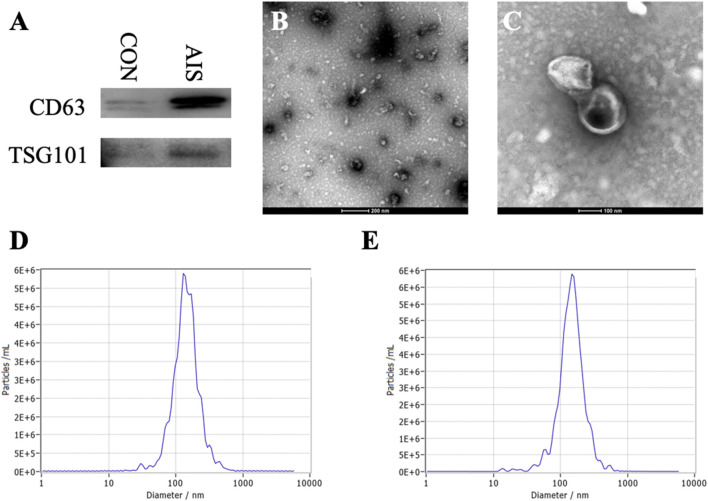
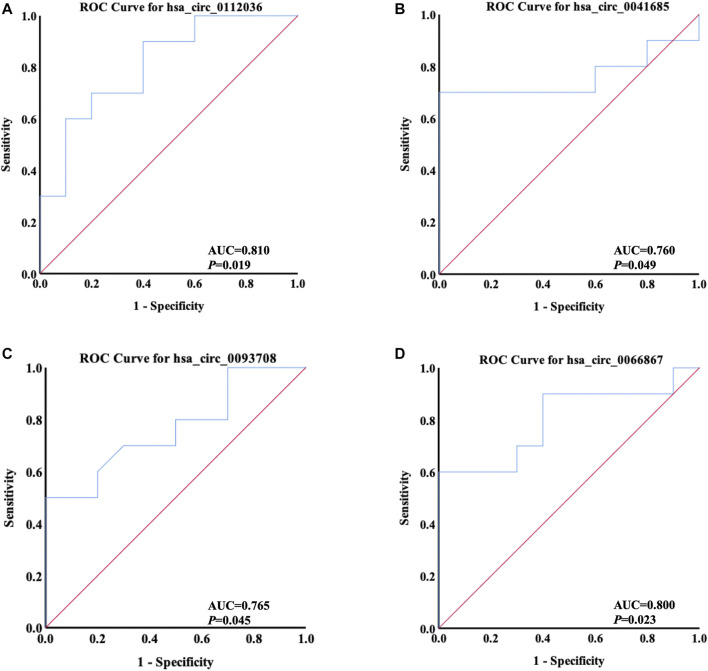
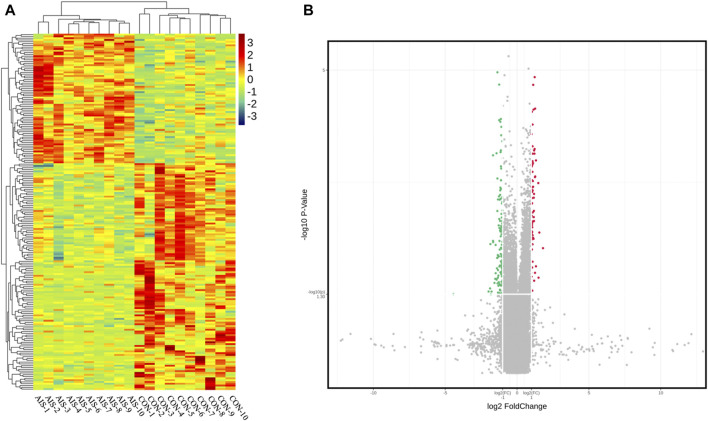
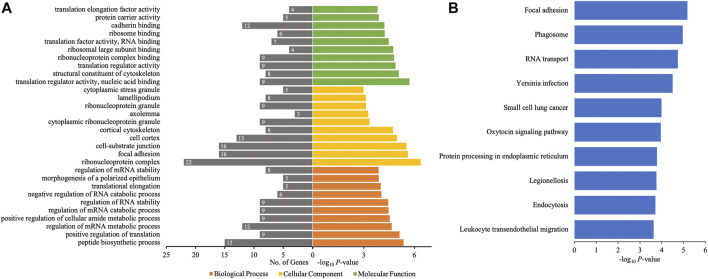
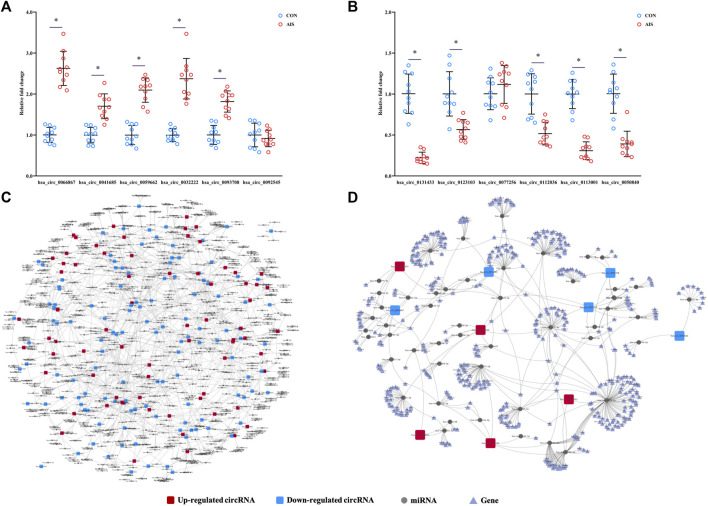
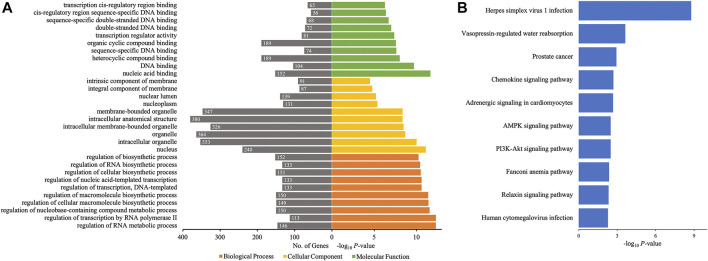
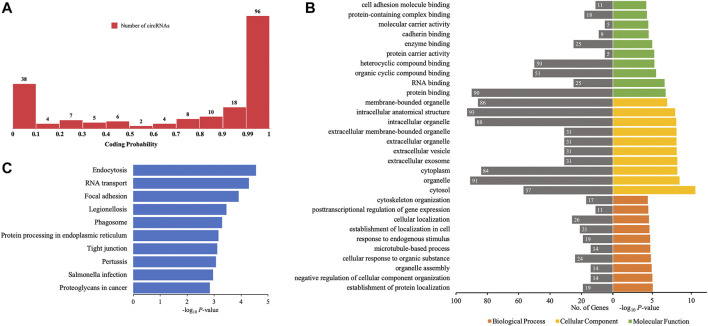
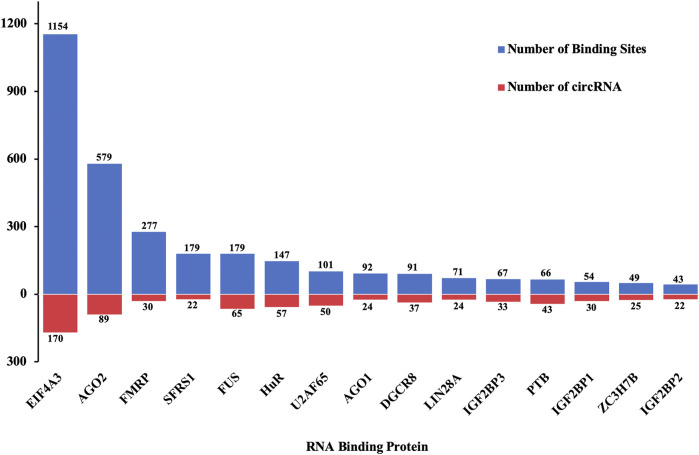
Stroke is one of the major causes of death and long-term disability, of which acute ischemic stroke (AIS) is the most common type. Although circular RNA (circRNA) expression profiles of AIS patients have been reported to be significantly altered in blood and peripheral blood mononuclear cells, the role of exosome-containing circRNAs after AIS is still unknown. Plasma exosomes from 10 AIS patients and 10 controls were isolated, and through microarray and bioinformatics analysis, the profile and putative function of circRNAs in the plasma exosomes were studied. A total of 198 circRNAs were differentially quantified (|log2 fold change| ≥ 1.00, < 0.05) between AIS patients and controls. The levels of 12 candidate circRNAs were verified by qRT-PCR, and the quantities of 10 of these circRNAs were consistent with the data of microarray. The functions of host genes of differentially quantified circRNAs, including RNA and protein process, focal adhesion, and leukocyte transendothelial migration, were associated with the development of AIS. As a miRNA sponge, differentially quantified circRNAs had the potential to regulate pathways related to AIS, like PI3K-Akt, AMPK, and chemokine pathways. Of 198 differentially quantified circRNAs, 96 circRNAs possessing a strong translational ability could affect cellular structure and activity, like focal adhesion, tight junction, and endocytosis. Most differentially quantified circRNAs were predicted to bind to EIF4A3 and AGO2-two RNA-binding proteins (RBPs)-and to play a role in AIS. Moreover, four of ten circRNAs with verified levels by qRT-PCR (hsa_circ_0112036, hsa_circ_0066867, hsa_circ_0093708, and hsa_circ_0041685) were predicted to participate in processes of AIS, including PI3K-Akt, AMPK, and chemokine pathways as well as endocytosis, and to be potentially useful as diagnostic biomarkers for AIS. In conclusion, plasma exosome-derived circRNAs were significantly differentially quantified between AIS patients and controls and participated in the occurrence and progression of AIS by sponging miRNA/RBPs or translating into proteins, indicating that circRNAs from plasma exosomes could be crucial molecules in the pathogenesis of AIS and promising candidates as diagnostic biomarkers and therapeutic targets for the condition.
中风是导致死亡和长期残疾的主要原因之一,其中急性缺血性中风(AIS)是最常见的类型。尽管已有报道称AIS患者血液和外周血单核细胞中的环状RNA(circRNA)表达谱发生了显著改变,但AIS后含外泌体circRNA的作用仍不清楚。分离了10例AIS患者和10例对照的血浆外泌体,并通过微阵列和生物信息学分析,研究了血浆外泌体中circRNA的谱和潜在功能。AIS患者和对照之间共有198种circRNA差异定量(|log2倍数变化|≥1.00,<0.05)。通过qRT-PCR验证了12种候选circRNA的水平,其中10种circRNA的量与微阵列数据一致。差异定量circRNA的宿主基因功能,包括RNA和蛋白质加工、粘着斑和白细胞跨内皮迁移,与AIS的发生发展相关。作为一种miRNA海绵,差异定量的circRNA有可能调节与AIS相关的信号通路,如PI3K-Akt、AMPK和趋化因子信号通路。在198种差异定量的circRNA中,96种具有较强翻译能力的circRNA可影响细胞结构和活性,如粘着斑、紧密连接和内吞作用。大多数差异定量的circRNA被预测与两种RNA结合蛋白(RBP)EIF4A3和AGO2结合,并在AIS中发挥作用。此外,qRT-PCR验证水平的10种circRNA中的4种(hsa_circ_0112036、hsa_circ_0066867、hsa_circ_0093708和hsa_circ_0041685)被预测参与AIS的过程,包括PI3K-Akt、AMPK和趋化因子信号通路以及内吞作用,并有可能作为AIS的诊断生物标志物。总之,AIS患者和对照之间血浆外泌体来源的circRNA存在显著差异定量,并通过结合miRNA/RBP或翻译成蛋白质参与AIS的发生和发展,表明血浆外泌体中的circRNA可能是AIS发病机制中的关键分子,有望成为该疾病的诊断生物标志物和治疗靶点。