Department of Development and Molecular Biology, Albert Einstein College of Medicine, Bronx, NY 10461.
Institute for Aging Studies, Albert Einstein College of Medicine, Bronx, NY 10461.
Proc Natl Acad Sci U S A. 2022 Apr 5;119(14):e2121133119. doi: 10.1073/pnas.2121133119. Epub 2022 Apr 1.
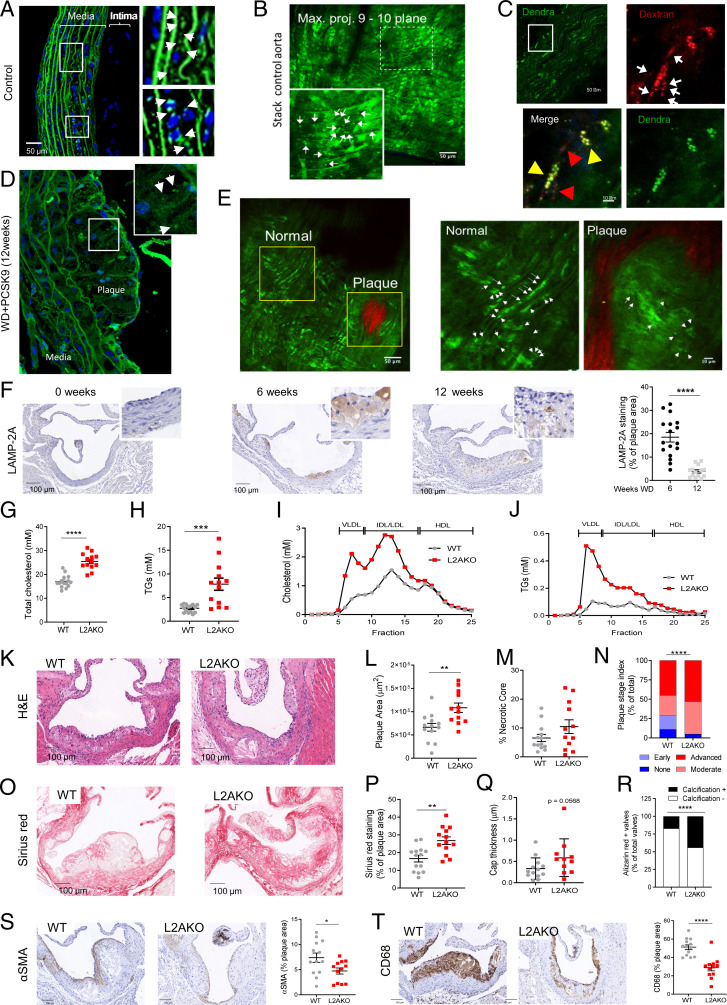
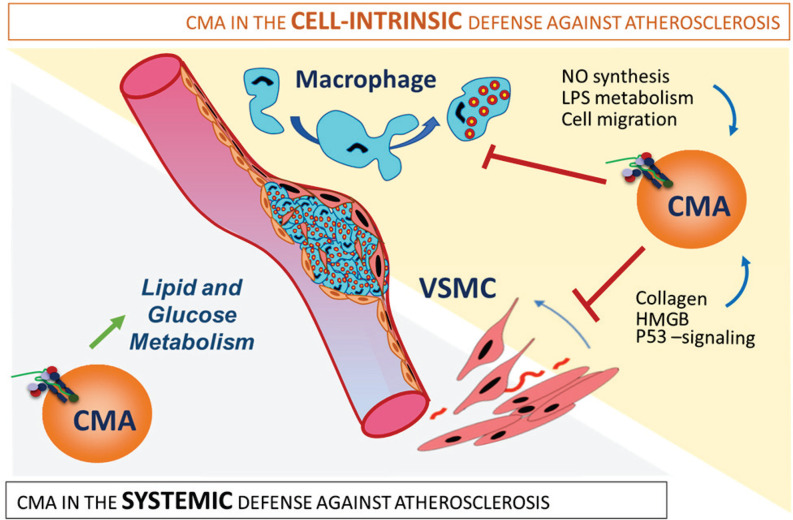
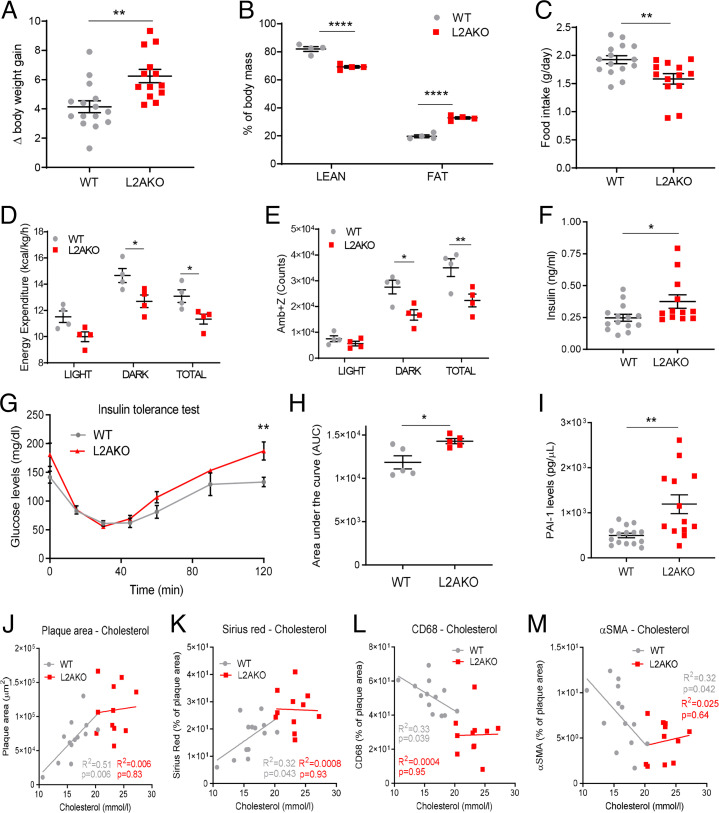
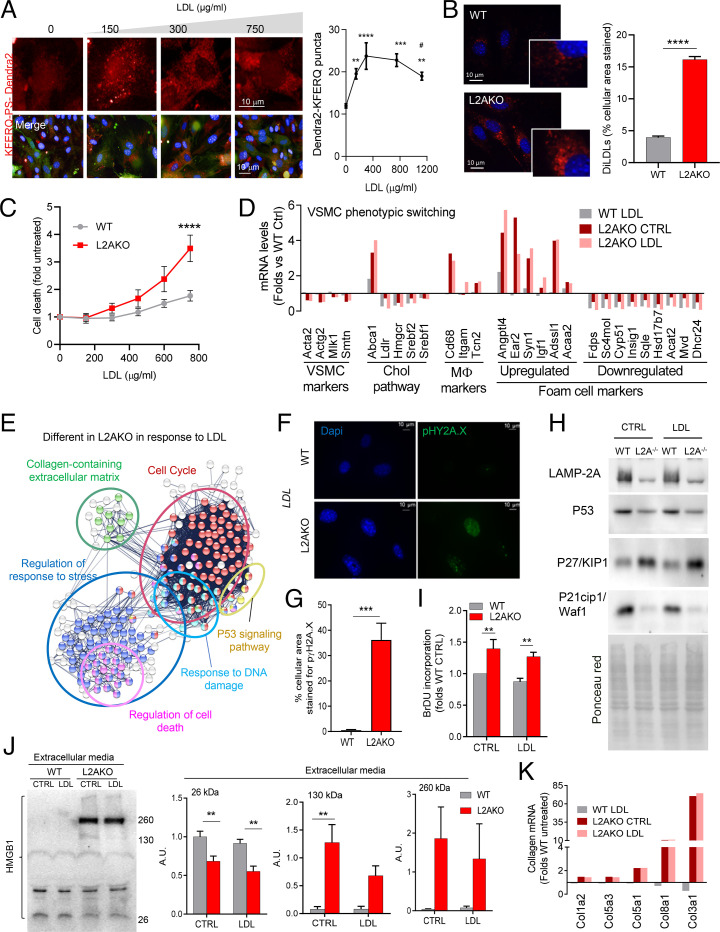
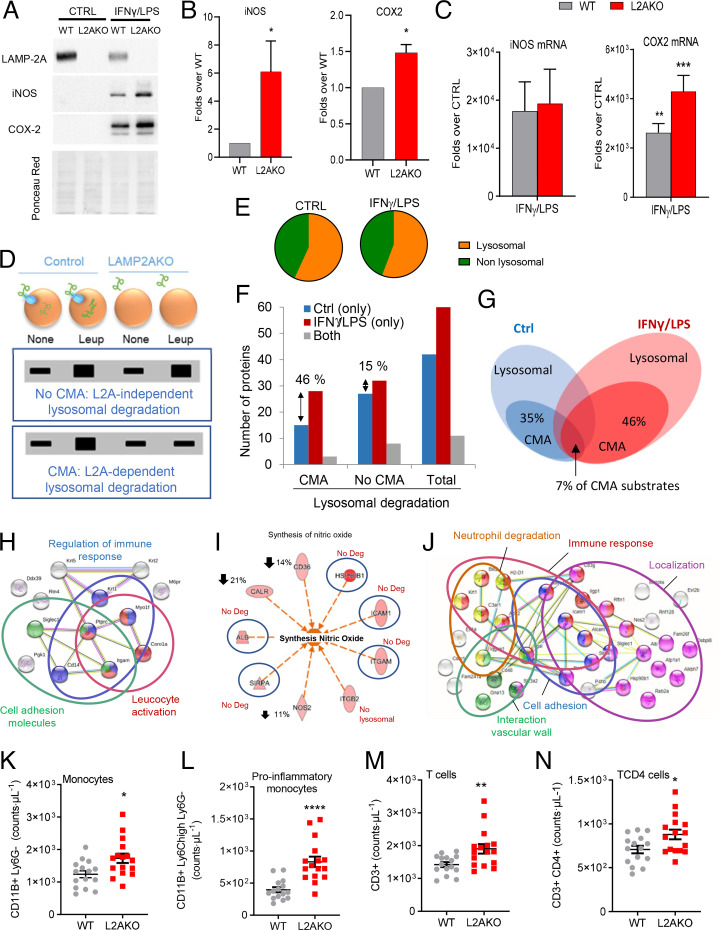
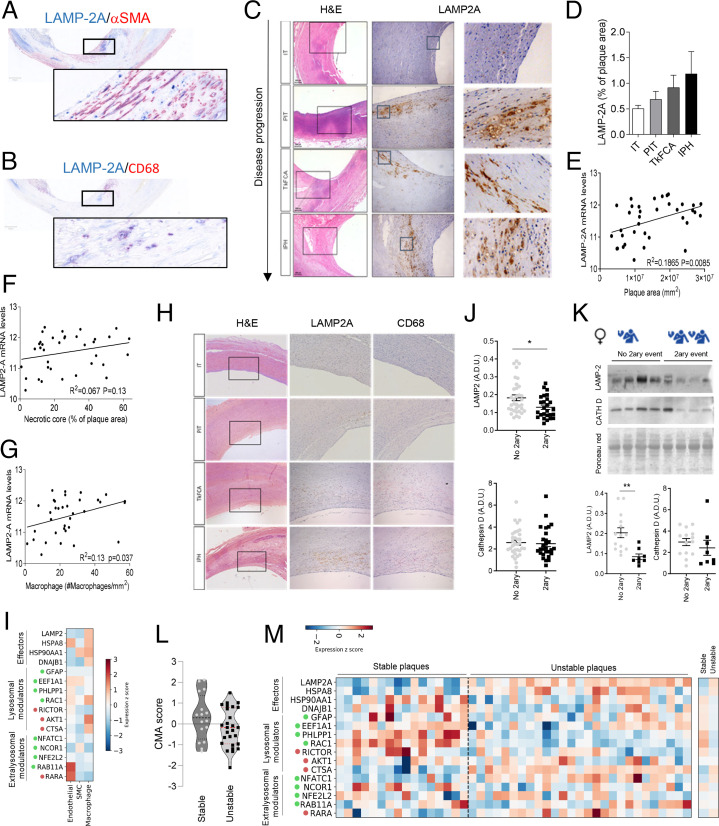
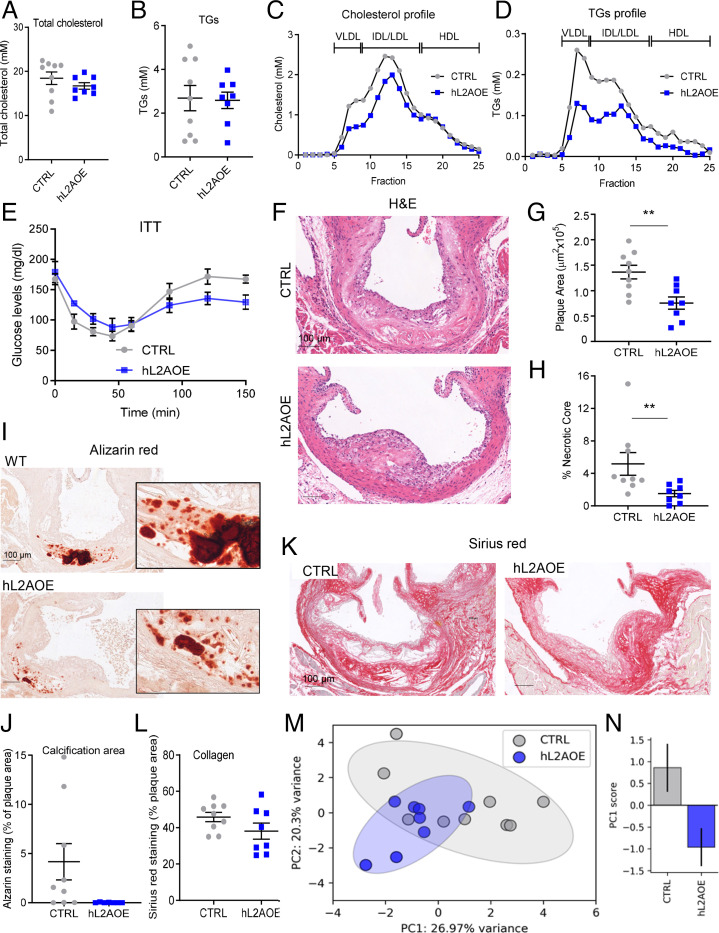
Chaperone-mediated autophagy (CMA) contributes to regulation of energy homeostasis by timely degradation of enzymes involved in glucose and lipid metabolism. Here, we report reduced CMA activity in vascular smooth muscle cells and macrophages in murine and human arteries in response to atherosclerotic challenges. We show that in vivo genetic blockage of CMA worsens atherosclerotic pathology through both systemic and cell-autonomous changes in vascular smooth muscle cells and macrophages, the two main cell types involved in atherogenesis. CMA deficiency promotes dedifferentiation of vascular smooth muscle cells and a proinflammatory state in macrophages. Conversely, a genetic mouse model with up-regulated CMA shows lower vulnerability to proatherosclerotic challenges. We propose that CMA could be an attractive therapeutic target against cardiovascular diseases.
伴侣蛋白介导的自噬 (CMA) 通过及时降解参与葡萄糖和脂质代谢的酶来有助于调节能量稳态。在这里,我们报告了在响应动脉粥样硬化挑战时,在小鼠和人类动脉中的血管平滑肌细胞和巨噬细胞中 CMA 活性降低。我们表明,在体内通过血管平滑肌细胞和巨噬细胞中的系统性和细胞自主变化来阻断 CMA 会使动脉粥样硬化病理恶化,这两种细胞类型均参与动脉粥样硬化的发生。CMA 缺乏会促进血管平滑肌细胞去分化和巨噬细胞的促炎状态。相反,具有上调 CMA 的基因敲入小鼠模型对动脉粥样硬化前的挑战的敏感性较低。我们提出 CMA 可能是一种有吸引力的心血管疾病治疗靶点。