Groat R G, Schultz J E, Zychlinsky E, Bockman A, Matin A
J Bacteriol. 1986 Nov;168(2):486-93. doi: 10.1128/jb.168.2.486-493.1986.
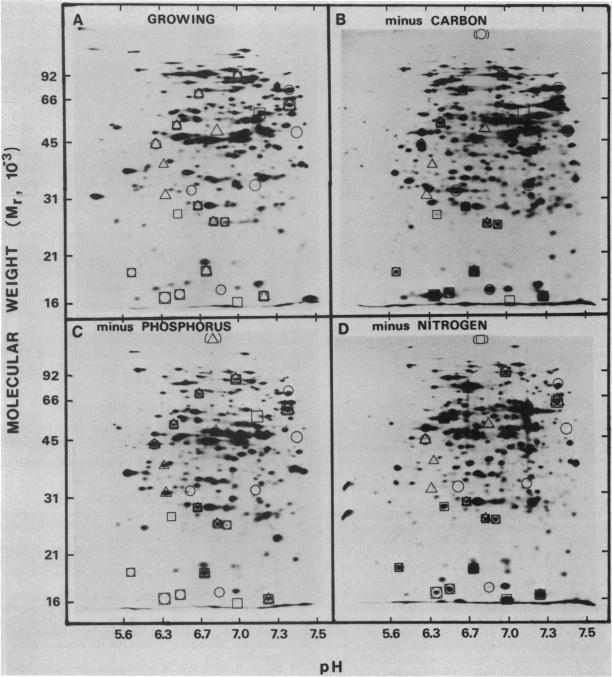
Starvation proteins synthesized by Escherichia coli at the onset of carbon starvation (R. G. Groat and A. Matin, J. Indust. Microbiol. 1:69-73, 1986) exhibited four temporal classes of synthesis in response to glucose or succinate starvation, indicating sequential expression of carbon starvation response (cst) genes. A cst mutant of E. coli showed greatly impaired carbon starvation survival. Thus, it appears that E. coli undergoes a significant molecular realignment in response to starvation, which increases its resistance to this stress. New polypeptides were also synthesized by E. coli in response to phosphate or nitrogen starvation. Some of these polypeptides were unique to a given starvation regimen, but at least 13 appeared to be synthesized regardless of the nutrient deprivation causing the starvation.
大肠杆菌在碳饥饿开始时合成的饥饿蛋白(R.G.格罗特和A.马丁,《工业微生物学杂志》1:69 - 73,1986年)在应对葡萄糖或琥珀酸盐饥饿时表现出四个时间合成类别,表明碳饥饿反应(cst)基因的顺序表达。大肠杆菌的一个cst突变体在碳饥饿存活方面表现出极大受损。因此,似乎大肠杆菌在应对饥饿时会经历显著的分子重新排列,这增加了它对这种压力的抵抗力。大肠杆菌在应对磷酸盐或氮饥饿时也会合成新的多肽。这些多肽中的一些是特定饥饿方案所特有的,但至少有13种似乎无论导致饥饿的营养剥夺情况如何都会被合成。