College of Pharmacy, Federal University of Goiás (UFG), 74605-170, Brazil.
Institute of Chemistry, Federal University of Goiás (UFG), 74690-900, Brazil.
Oxid Med Cell Longev. 2022 Mar 23;2022:1992039. doi: 10.1155/2022/1992039. eCollection 2022.
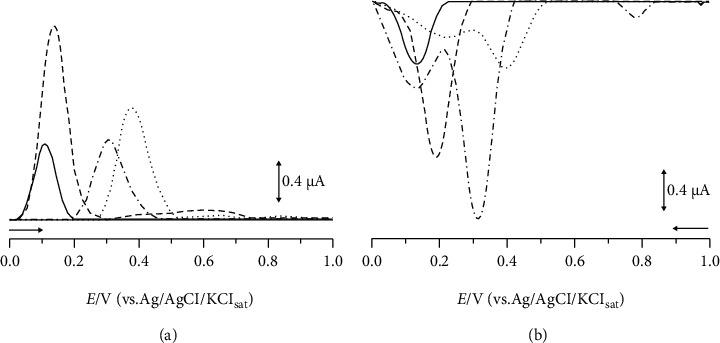
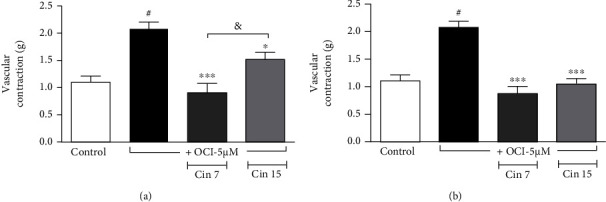
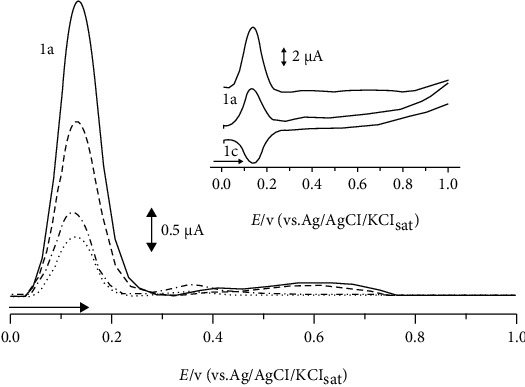
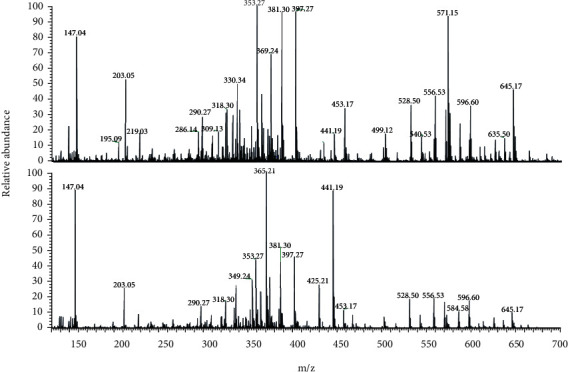
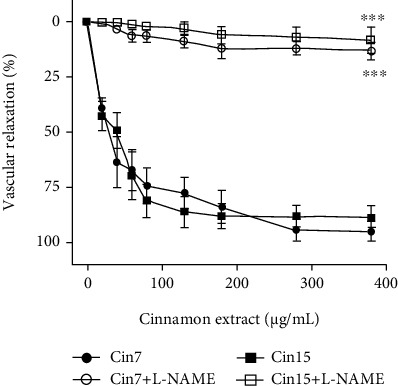
Growing concerns on free radicals are the oxidative processes associated with physiological damage. The consumption of functional foods and use of plants with antioxidant capacity are widespread. Given the importance of determining antioxidant capacity in relation to the therapeutic effect, this study was aimed at evaluating cinnamon extract ( sp.) in commercial samples by spectrophotometric and voltammetric methods and assessing the vascular activity of some samples. The spectrophotometric methods performed were DPPH (1,1-diphenyl-2-picrihydrazine), ABTS (2,21-azinobis-(3-ethylbenzothiazoline-6-sulfonic acid)), and Folin-Ciocalteu radical sequestration assays. For the electrochemical experiments, a three-electrode system was used, consisting of carbon paste electrode, platinum wire, and Ag/AgCl/KCl, representing the working, auxiliary, and reference electrodes, respectively. The electroanalytical methods used were differential pulse, square wave, and cyclic voltammetries. The extracts were prepared in hydroalcoholic solution. A calibration curve with gallic acid was calculated to quantify their equivalent amounts in the analyzed extract. The correlation between the electrochemical approach and the total phenols calculated by the ABTS, DPPH, and Folin-Ciocalteu methods was 0.63, 0.7, and 0.73, respectively, with 1 being an ideal directly proportional correlation. The correlation between spectrophotometric methods was 0.83. A biosensor was developed in a carbon paste electrode using the enzyme laccase, obtained by the fungus . It was observed that the antioxidant profile of the cinnamon samples had an analytical sign improvement of up to 4 times when compared with the electrode without the modification. The samples were analyzed by mass spectrometer, and the main chemical markers found were coumarin, cinnamaldehyde, and eugenol. Pharmacological trials showed that these samples also induce a significant vasorelaxant effect associated to antioxidant potential on vascular injury induced by oxidative stress. Thus, cinnamon showed a high antioxidant capacity, in agreement with the results obtained in other studies, emphasizing its importance as a functional food.
人们越来越关注自由基,这些自由基与生理损伤有关的氧化过程有关。因此,人们广泛地消费具有抗氧化能力的功能性食品和植物。鉴于确定抗氧化能力与治疗效果之间关系的重要性,本研究旨在通过分光光度法和伏安法评估商业肉桂提取物(sp.)的抗氧化能力,并评估一些样品的血管活性。所进行的分光光度法测定方法包括 DPPH(1,1-二苯基-2-苦肼基)、ABTS(2,21-联氮双(3-乙基苯并噻唑啉-6-磺酸))和 Folin-Ciocalteu 自由基清除测定法。对于电化学实验,使用了三电极系统,由碳糊电极、铂丝和 Ag/AgCl/KCl 组成,分别代表工作电极、辅助电极和参比电极。所使用的电化学方法包括差分脉冲、方波和循环伏安法。提取物在水醇溶液中制备。计算了与没食子酸的校准曲线,以定量分析提取物中的等效物。电化学方法与 ABTS、DPPH 和 Folin-Ciocalteu 方法计算的总酚之间的相关性分别为 0.63、0.7 和 0.73,1 为理想的直接比例相关性。分光光度法之间的相关性为 0.83。在碳糊电极中使用真菌 获得的漆酶开发了生物传感器。观察到肉桂样品的抗氧化谱与未经修饰的电极相比,分析信号提高了 4 倍。对样品进行质谱分析,发现的主要化学标志物为香豆素、肉桂醛和丁香酚。药理试验表明,这些样品还可诱导与抗氧化潜力相关的显著血管舒张作用,对氧化应激引起的血管损伤具有保护作用。因此,肉桂表现出高抗氧化能力,与其他研究结果一致,强调了其作为功能性食品的重要性。