Farahi Sara, Hosseini Sara, Ghanbarian Hossein, Hashemi Seyed Mahmoud, Salehi Mohammad, Hosseini Samaneh
Department of Medical Biotechnology, School of Advanced Technologies in Medicine, Shahid Beheshti University of Medical Sciences, Tehran, Iran.
MOM Fertility & Infertility Research and Innovation Center, Tehran, Iran.
Stem Cells Int. 2022 Feb 15;2022:9346767. doi: 10.1155/2022/9346767. eCollection 2022.
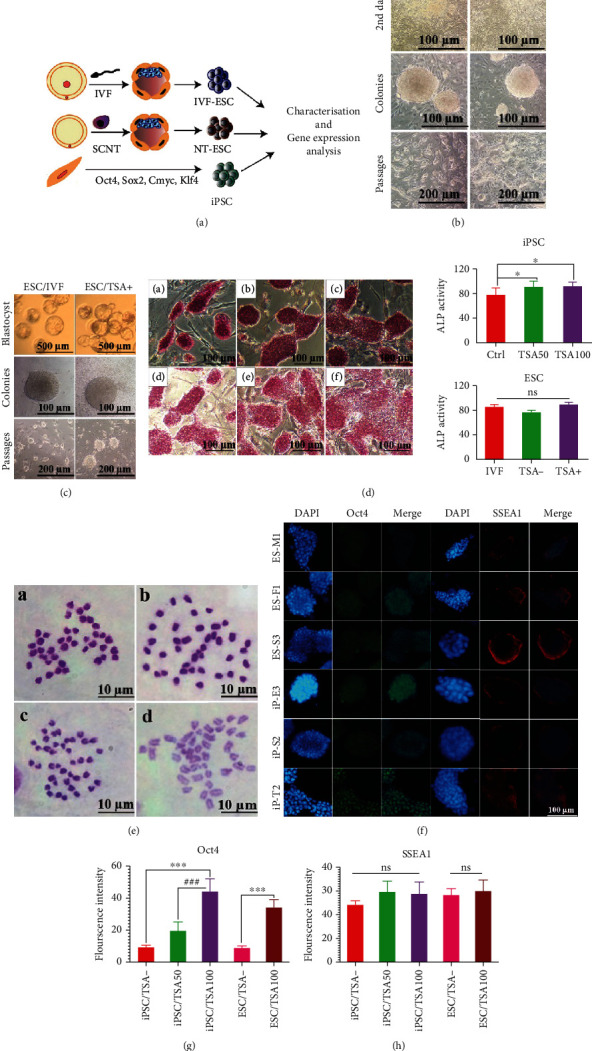
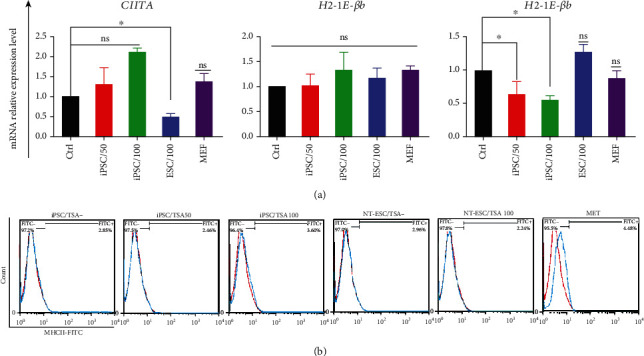
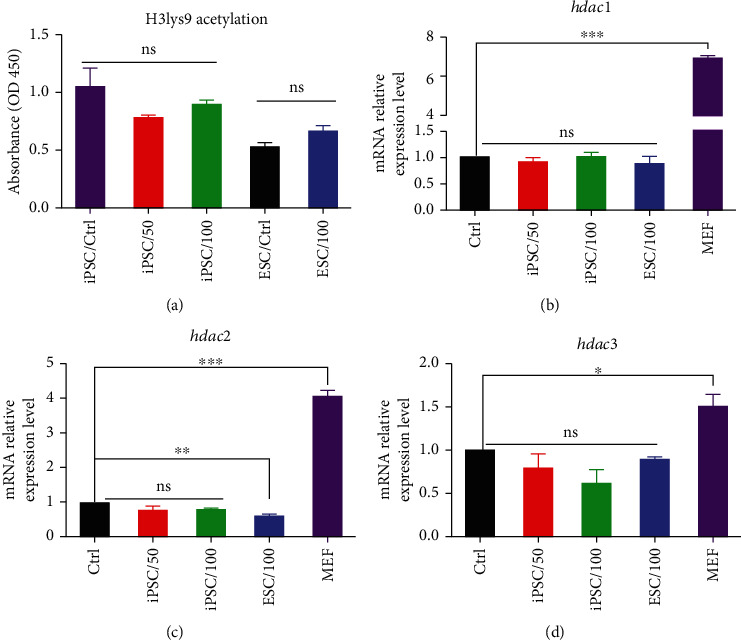
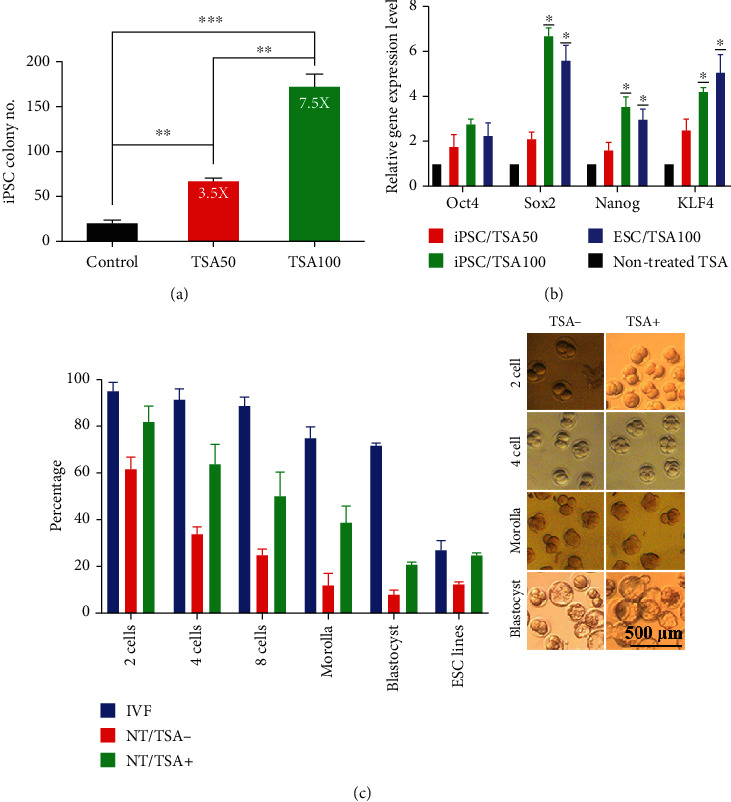
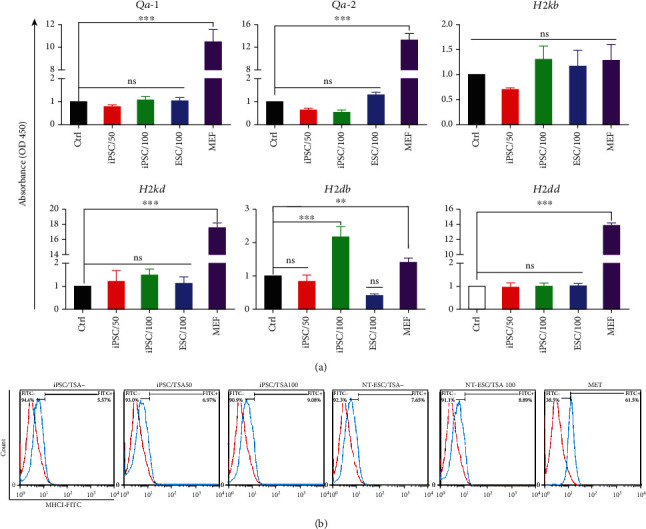
Pluripotent stem cells (PSCs) are considered as a potent tool for use in regenerative medicine. Highly efficient generation of PSCs through chromatin modulators such as trichostatin A (TSA) might change their MHC molecule expression profile. The efficiency of PSC generation and their immunogenicity is major obstacles for clinical use. Hence, we aim to investigate whether the use of TSA during PSC generation affects MHC expression level. Three PSC lines were generated by iPSCs, NT-ESCs, and IVF-ESCs' reprogramming methods from B6D2F1 mouse embryonic fibroblast cells. Established PSC lines were characterized by alkaline phosphatase assay (ALP) and immunocytochemistry. Their chromosome fidelity was checked by karyotyping. The expression level of pluripotent genes (), HDACs (), and immune-related genes (including , , , , , , , , ) in iPSC and ESC lines were assessed by real-time PCR analysis. The presence of MHC molecules on the surface of pluripotent stem cells was also checked by flow cytometry technique. Significant increase of pluripotency markers, , , , and , was observed in 100 nM TSA-treated samples. 100 nM TSA induced significant upregulation of in generated iPSCs. was remarkably downregulated in 50 and 100 nM TSA-treated iPSC lines. The expression level of other immune-related genes was not greatly affected by TSA in iPSC and NT-ESC lines. It is concluded that the use of short-term and low concentration of TSA during reprogramming in PSC generation procedure significantly increases PSC generation efficiency, but do not affect the MHC expression in established cell lines, which is in the benefit of cell transplantation in regenerative medicine.
多能干细胞(PSCs)被认为是再生医学中一种强大的工具。通过诸如曲古抑菌素A(TSA)等染色质调节剂高效生成PSCs可能会改变其MHC分子表达谱。PSCs的生成效率及其免疫原性是临床应用的主要障碍。因此,我们旨在研究在PSCs生成过程中使用TSA是否会影响MHC表达水平。通过诱导多能干细胞(iPSCs)、核移植胚胎干细胞(NT - ESCs)和体外受精胚胎干细胞(IVF - ESCs)的重编程方法,从B6D2F1小鼠胚胎成纤维细胞中生成了三种PSCs系。通过碱性磷酸酶测定(ALP)和免疫细胞化学对建立的PSCs系进行表征。通过核型分析检查它们的染色体保真度。通过实时PCR分析评估iPSC和ESC系中多能基因( )、组蛋白去乙酰化酶(HDACs)( )和免疫相关基因(包括 、 、 、 、 、 、 、 、 )的表达水平。还通过流式细胞术技术检查多能干细胞表面MHC分子的存在情况。在100 nM TSA处理的样品中观察到多能性标志物 、 、 、 和 显著增加。100 nM TSA诱导生成的iPSCs中 显著上调。在50 nM和100 nM TSA处理的iPSC系中 显著下调。在iPSC和NT - ESC系中,其他免疫相关基因的表达水平未受到TSA的显著影响。得出的结论是,在PSCs生成过程的重编程中使用短期和低浓度的TSA可显著提高PSCs的生成效率,但不影响已建立细胞系中的MHC表达,这有利于再生医学中的细胞移植。