Department of Psychology, University of Liverpool, Liverpool, UK.
Department of Psychology, Edge Hill University, Ormskirk, UK.
Obes Rev. 2022 Aug;23(8):e13447. doi: 10.1111/obr.13447. Epub 2022 Apr 5.
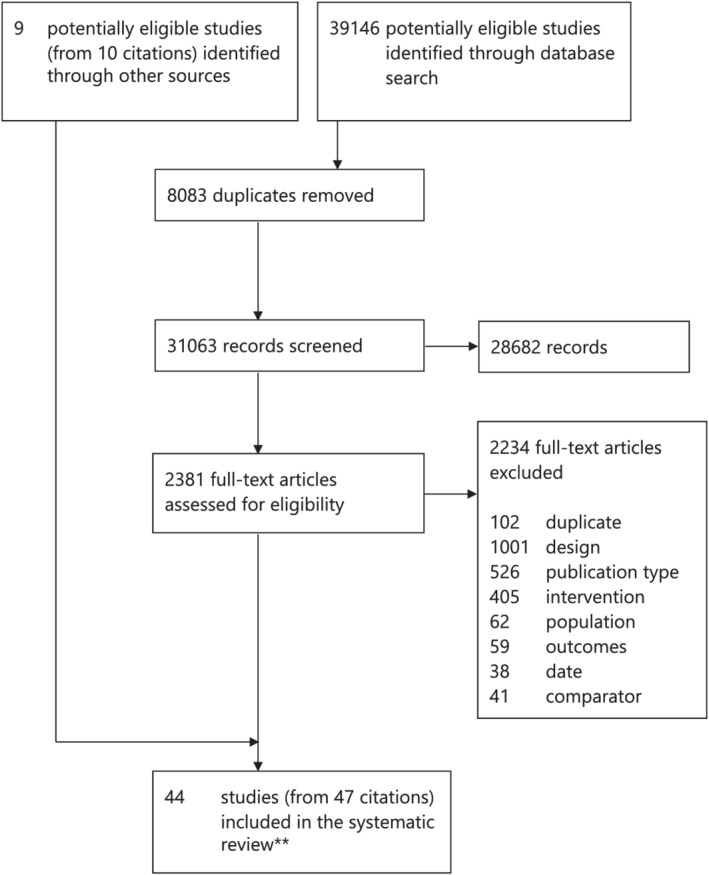
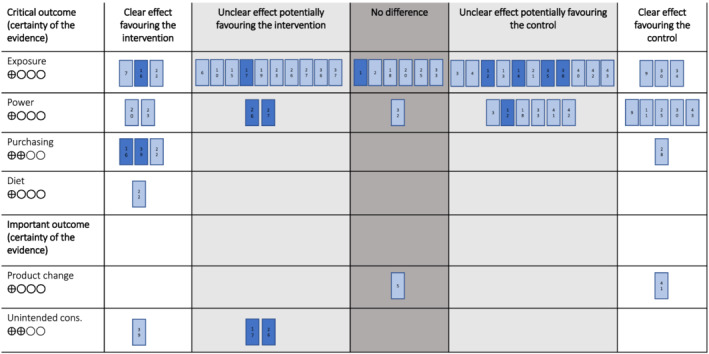
This systematic review examined the effectiveness of policies restricting the marketing of foods and/or non-alcoholic beverages to children to inform updated World Health Organization (WHO) guidelines. Databases were searched to March 2020. Inclusion criteria were primary studies of any design assessing implemented policies to restrict food marketing to children (0-19 years). Critical outcomes were exposure to and power of marketing, dietary intake, choice, preference, and purchasing. Important outcomes were purchase requests, dental caries, body weight, diet-related noncommunicable diseases, product change, and unintended consequences. Forty-four observational studies met inclusion criteria; most were moderate quality. Pooling was conducted using vote counting by direction of effect, and GRADE was used to judge evidence certainty. Evidence suggests food marketing policies may result in reduced purchases of unhealthy foods and in unintended consequences favorable for public health. Desirable or potentially desirable (for public health) effects of policies on food marketing exposure and power were also found. Evidence on diet and product change was very limited. The certainty of evidence was very low for four outcomes (exposure, power, dietary intake, and product change) and low for two (purchasing and unintended consequences). Policies can effectively limit food marketing to children; policymakers should prioritize mandatory approaches aligned with WHO recommendations.
本系统评价旨在审查限制食品和/或非酒精饮料向儿童营销的政策的有效性,以为世界卫生组织(WHO)最新指南提供信息。研究人员对截至 2020 年 3 月的数据库进行了检索。纳入标准为评估限制儿童食品营销政策实施情况的任何设计的原始研究(0-19 岁)。关键结果是营销的暴露程度和力度、饮食摄入、选择、偏好和购买情况。重要结果是购买请求、龋齿、体重、与饮食相关的非传染性疾病、产品变化和意外后果。有 44 项观察性研究符合纳入标准,其中大多数研究的质量为中等。通过效果方向的票数计数进行汇总,并使用 GRADE 来判断证据确定性。有证据表明,食品营销政策可能会减少不健康食品的购买,并产生有利于公共健康的意外后果。还发现了政策对食品营销的暴露程度和力度具有理想或潜在理想(对公共健康有利)的影响。关于饮食和产品变化的证据非常有限。四项结果(暴露、力度、饮食摄入和产品变化)的证据确定性非常低,两项结果(购买和意外后果)的证据确定性低。政策可以有效限制向儿童营销食品;政策制定者应优先采取符合世卫组织建议的强制性方法。