Department of Medical and Surgical Sciences for Children and Adults, University of Modena and Reggio Emilia School of Medicine, Modena, Italy.
Infectious Diseases Clinics, Azienda Ospedaliera-Universitaria (AOU) Policlinico and University of Modena and Reggio Emilia, Modena, Italy.
Front Immunol. 2022 Mar 21;13:842150. doi: 10.3389/fimmu.2022.842150. eCollection 2022.
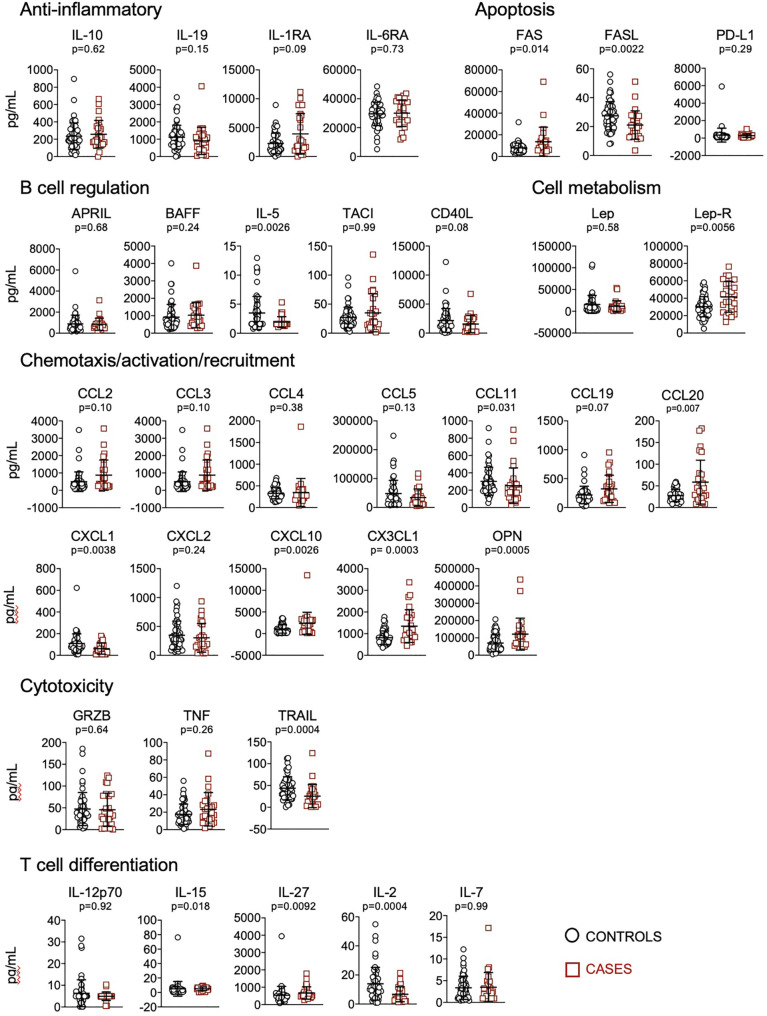
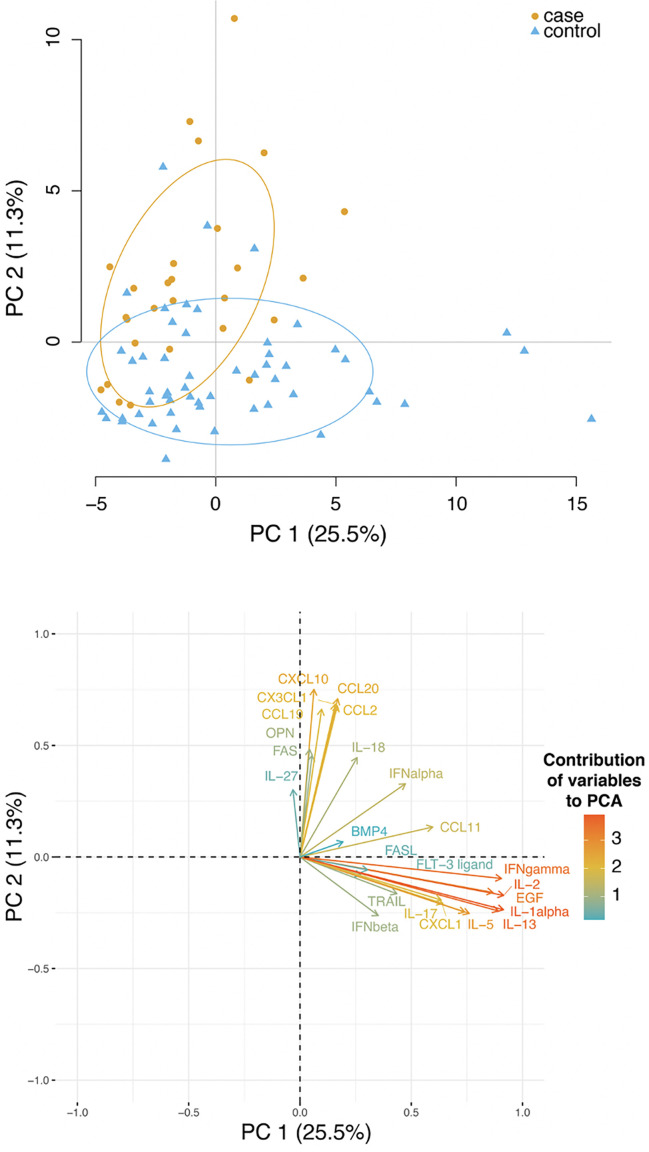
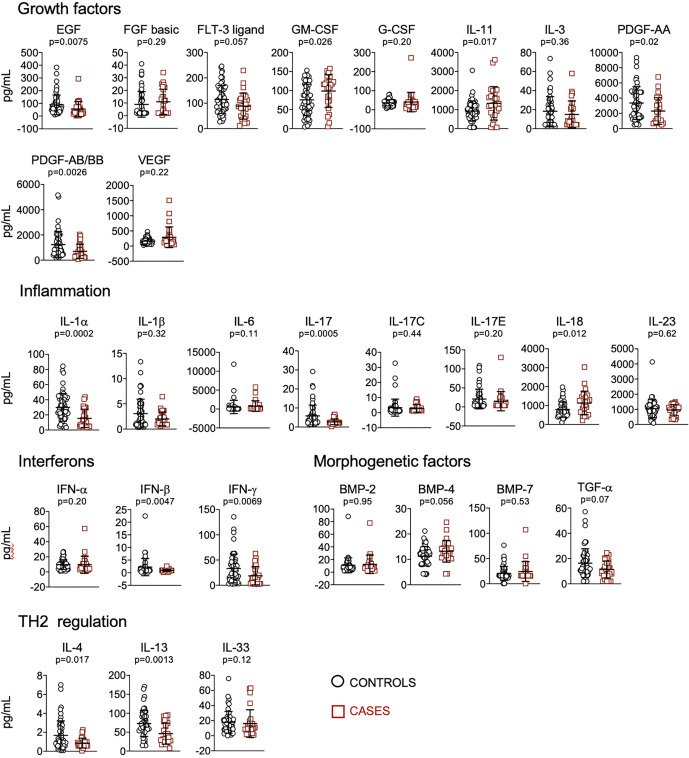
Although it is now widely accepted that host inflammatory response contributes to COVID-19 immunopathogenesis, the pathways and mechanisms driving disease severity and clinical outcome remain poorly understood. In the effort to identify key soluble mediators that characterize life-threatening COVID-19, we quantified 62 cytokines, chemokines and other factors involved in inflammation and immunity in plasma samples, collected at hospital admission, from 80 hospitalized patients with severe COVID-19 disease who were stratified on the basis of clinical outcome (mechanical ventilation or death by day 28). Our data confirm that age, as well as neutrophilia, lymphocytopenia, procalcitonin, D-dimer and lactate dehydrogenase are strongly associated with the risk of fatal COVID-19. In addition, we found that cytokines related to TH2 regulations (IL-4, IL-13, IL-33), cell metabolism (lep, lep-R) and interferons (IFNα, IFNβ, IFNγ) were also predictive of life-threatening COVID-19.
虽然现在人们普遍认为宿主炎症反应有助于 COVID-19 的发病机制,但导致疾病严重程度和临床结果的途径和机制仍知之甚少。为了确定能够描述危及生命的 COVID-19 的关键可溶性介质,我们定量检测了入院时采集的 80 名住院 COVID-19 重症患者的血浆样本中的 62 种细胞因子、趋化因子和其他炎症和免疫相关因子,这些患者根据临床结果(第 28 天机械通气或死亡)进行了分层。我们的数据证实,年龄以及中性粒细胞增多、淋巴细胞减少、降钙素原、D-二聚体和乳酸脱氢酶与致命 COVID-19 的风险密切相关。此外,我们还发现与 TH2 调节(IL-4、IL-13、IL-33)、细胞代谢(lep、lep-R)和干扰素(IFNα、IFNβ、IFNγ)相关的细胞因子也可预测危及生命的 COVID-19。