Department of Immunology, School of Basic Medicine, Tongji Medical College, Huazhong University of Science and Technology, Wuhan, China.
Department of Hepatology Ningbo Huamei Hospital, University of Chinese Academy of Sciences, Ningbo, China.
Bioengineered. 2022 Apr;13(4):9548-9563. doi: 10.1080/21655979.2022.2061295.
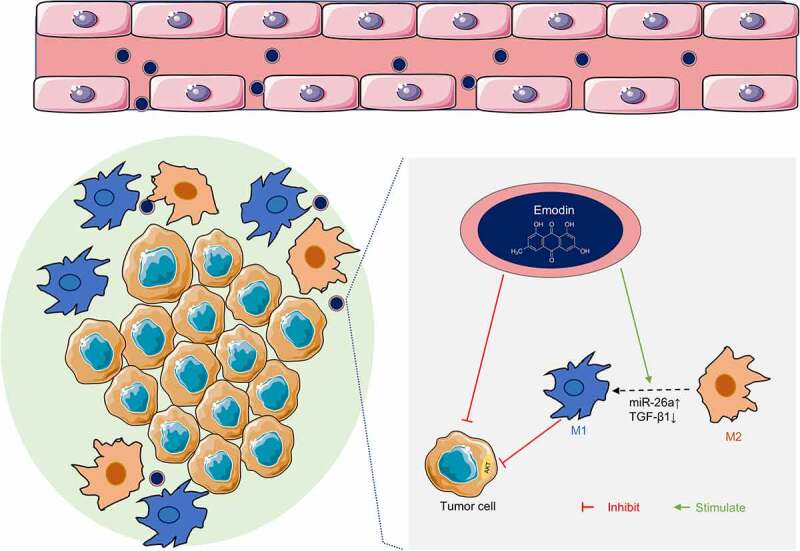
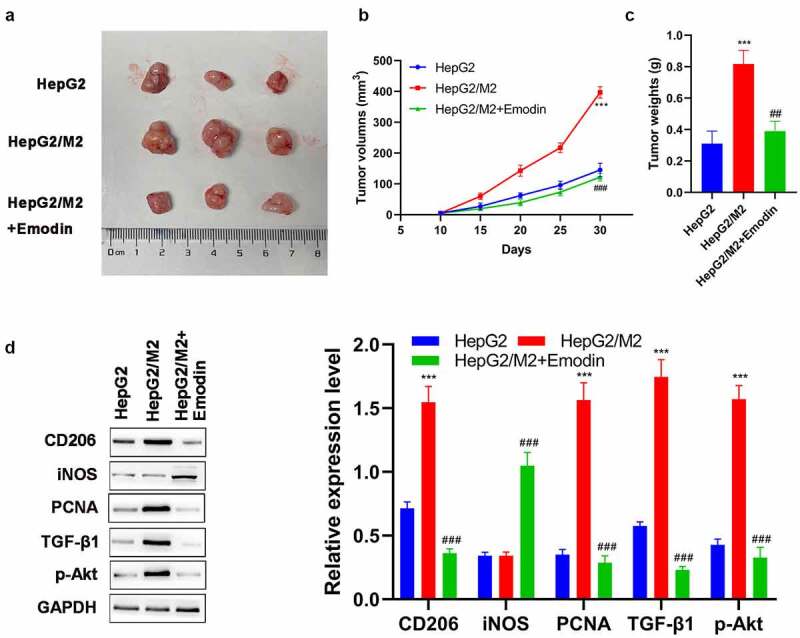
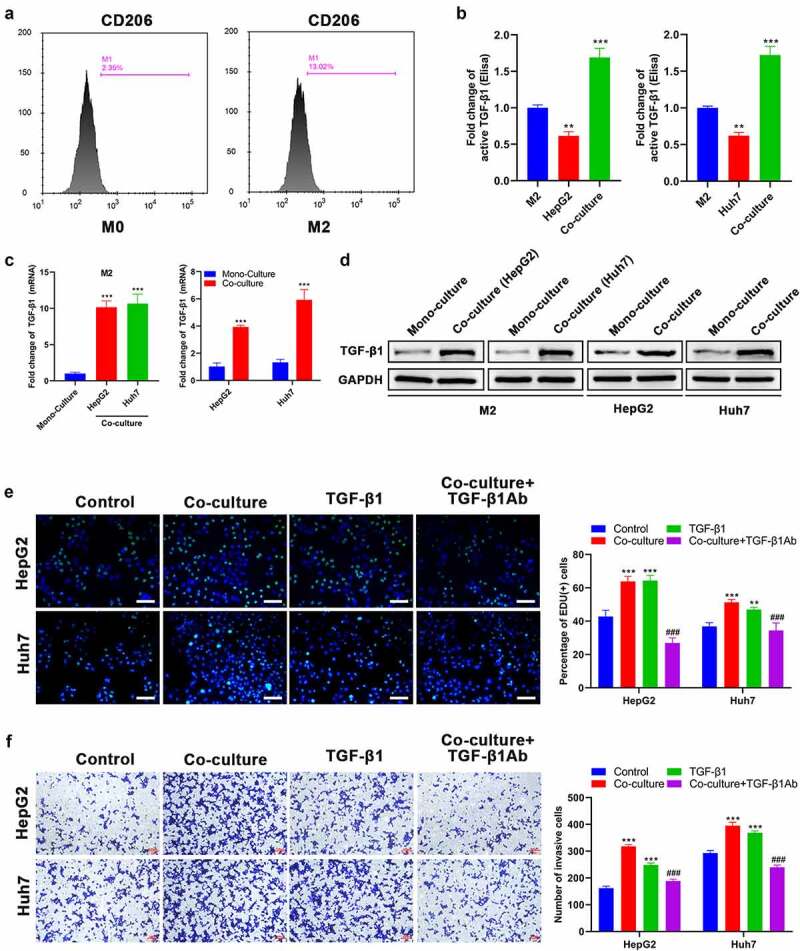
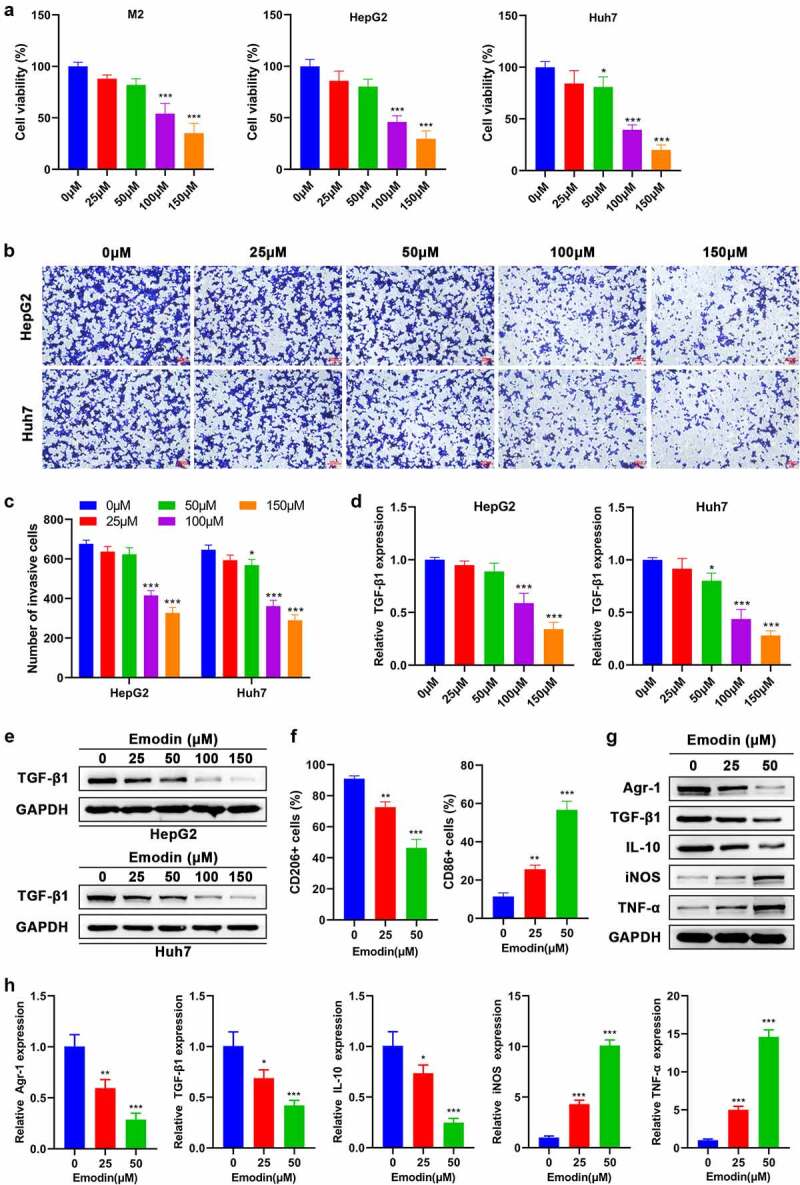
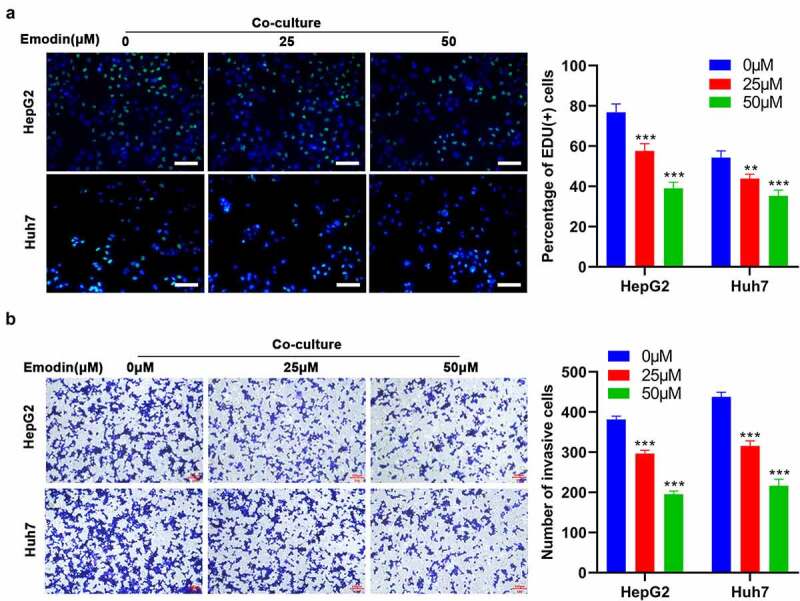
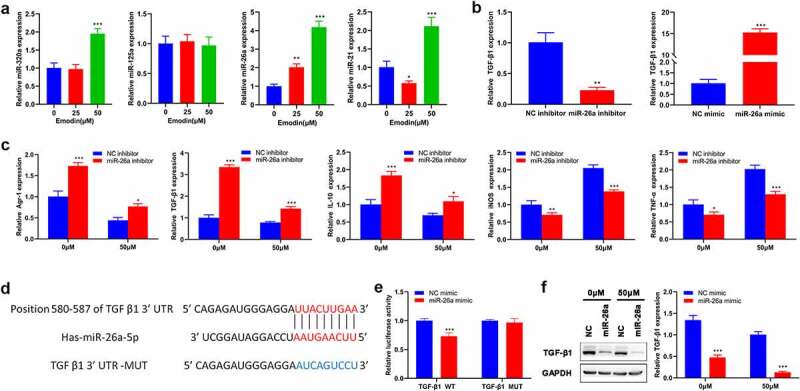
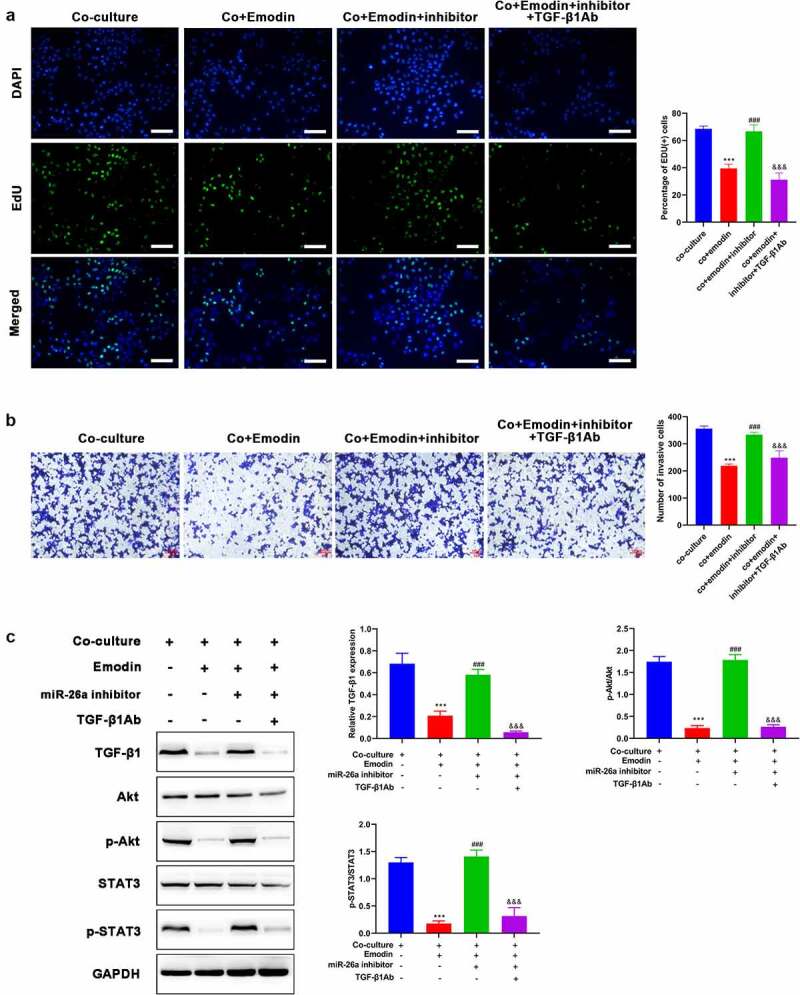
Accumulating evidence has demonstrated that M2 macrophages contribute to the progression of hepatocellular carcinoma (HCC). Emodin is an anti-tumor agent and potentially regulates macrophage polarization. This study aims to explore the effect of emodin on M2 polarization in HCC and its underlying mechanism. After co-culture systems of M2 macrophages and HCC (HepG2 and Huh7) cells were established, it was shown that co-culture with M2 macrophages could promote both the proliferation and invasion of HepG2 and Huh7 cells. Emodin induces the transformation of M2 to M1 macrophages, thereby inhibiting the proliferation and invasion of HepG2 and Huh7 cells mediated by co-culturing with M2 macrophages. Based on bioinformatics analysis and in vitro validation, it was found that the effect of emodin on M2 polarization was regulated by the microRNA-26a (miR-26)/Transforming growth factor beta 1 (TGF-β1)/Protein kinase B (Akt) axis. analysis showed that co-culturing with M2 macrophages markedly facilitated the growth of HepG2 cells, which was significantly inhibited by emodin. Western blot analysis on xenografts confirmed that emodin could induce transformation of M2 to M1 macrophages and reverse the up-regulation of PCNA, TGF-β1, and p-Akt induced by M2 macrophages. In summary, our findings uncover a novel mechanism behind the anti-tumor effects of emodin that regulates M2 polarization via miR-26a/TGF-β1/Akt to suppress HCC growth.
越来越多的证据表明,M2 巨噬细胞促进了肝细胞癌(HCC)的进展。大黄素是一种抗肿瘤药物,可能调节巨噬细胞极化。本研究旨在探讨大黄素对 HCC 中 M2 极化的影响及其潜在机制。在建立 M2 巨噬细胞和 HCC(HepG2 和 Huh7)细胞共培养系统后,结果表明与 M2 巨噬细胞共培养可促进 HepG2 和 Huh7 细胞的增殖和侵袭。大黄素诱导 M2 向 M1 巨噬细胞转化,从而抑制 M2 巨噬细胞共培养介导的 HepG2 和 Huh7 细胞的增殖和侵袭。基于生物信息学分析和体外验证,发现大黄素对 M2 极化的作用受 microRNA-26a(miR-26)/转化生长因子β 1(TGF-β1)/蛋白激酶 B(Akt)轴的调节。 分析表明,与 M2 巨噬细胞共培养显著促进了 HepG2 细胞的生长,而大黄素显著抑制了这一作用。异种移植的 Western blot 分析证实,大黄素可诱导 M2 向 M1 巨噬细胞转化,并逆转 M2 巨噬细胞诱导的 PCNA、TGF-β1 和 p-Akt 的上调。总之,我们的研究结果揭示了大黄素抗肿瘤作用的新机制,即通过 miR-26a/TGF-β1/Akt 调节 M2 极化,抑制 HCC 生长。