School of Clinical and Basic Medical Sciences, Medical Science and Technology Innovation Center, Shandong Provincial Hospital, Shandong First Medical University & Shandong Academy of Medical Sciences, Jinan, 250000, People's Republic of China.
State Key Laboratory of Stem Cell and Reproductive Biology, Institute of Zoology, Chinese Academy of Sciences, Beijing, 100101, People's Republic of China.
Int J Nanomedicine. 2024 Sep 10;19:9333-9349. doi: 10.2147/IJN.S473463. eCollection 2024.
Immunotherapy has led to a paradigm shift in reinvigorating treatment of cancer. Nevertheless, tumor associated macrophages (TAMs) experience functional polarization on account of the generation of suppressive metabolites, contributing to impaired antitumor immune responses.
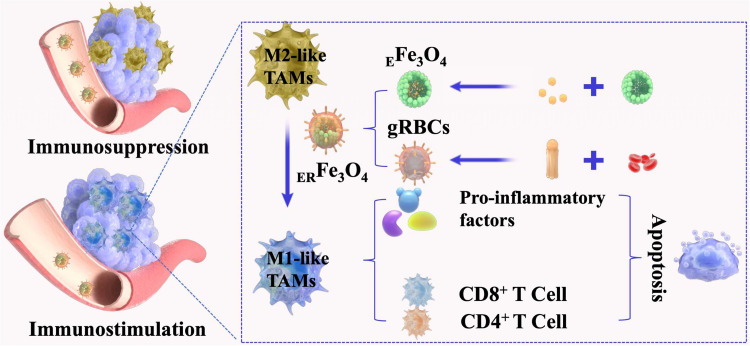
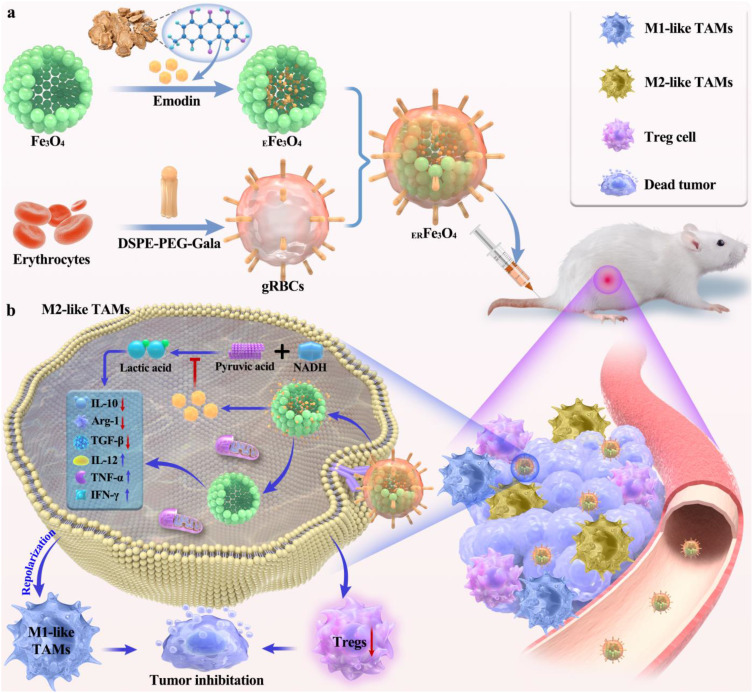
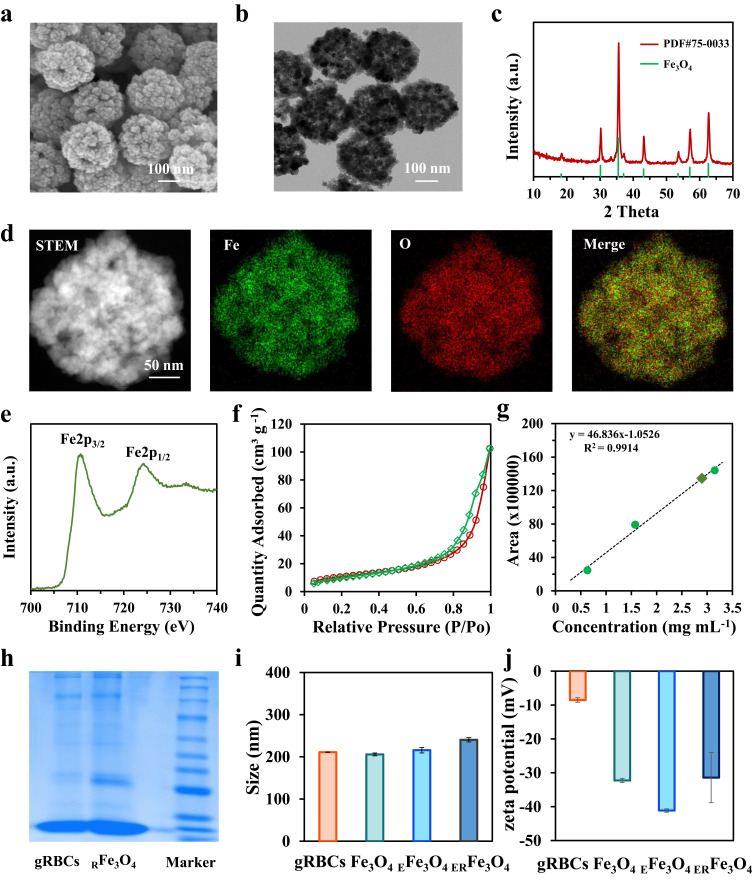
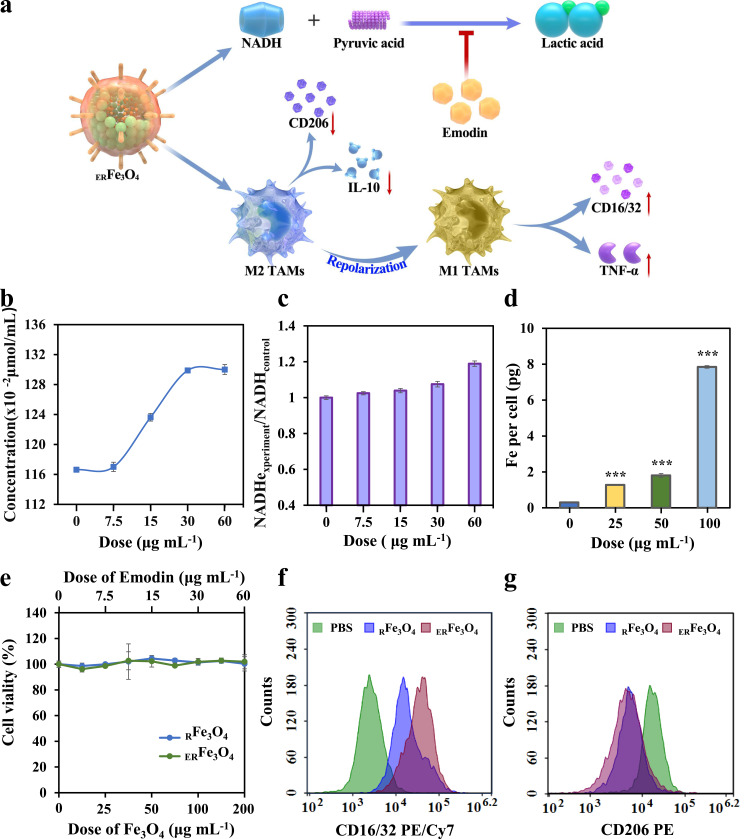
Hence, metabolic reprogramming of tumor microenvironment (TME) can synergistically improve the efficacy of anti-tumor immunotherapy. Herein, we engineered an iron-based nanoplatform termed FeO NPs. This platform features hollow FeO nanoparticles loaded with the natural product emodin, the outer layer is coated with red blood cell membrane (mRBCs) inserted with DSPE-PEG2000-galactose. This effectively modulates lactate production, thereby reversing the tumor immune suppressive microenvironment (TIME).
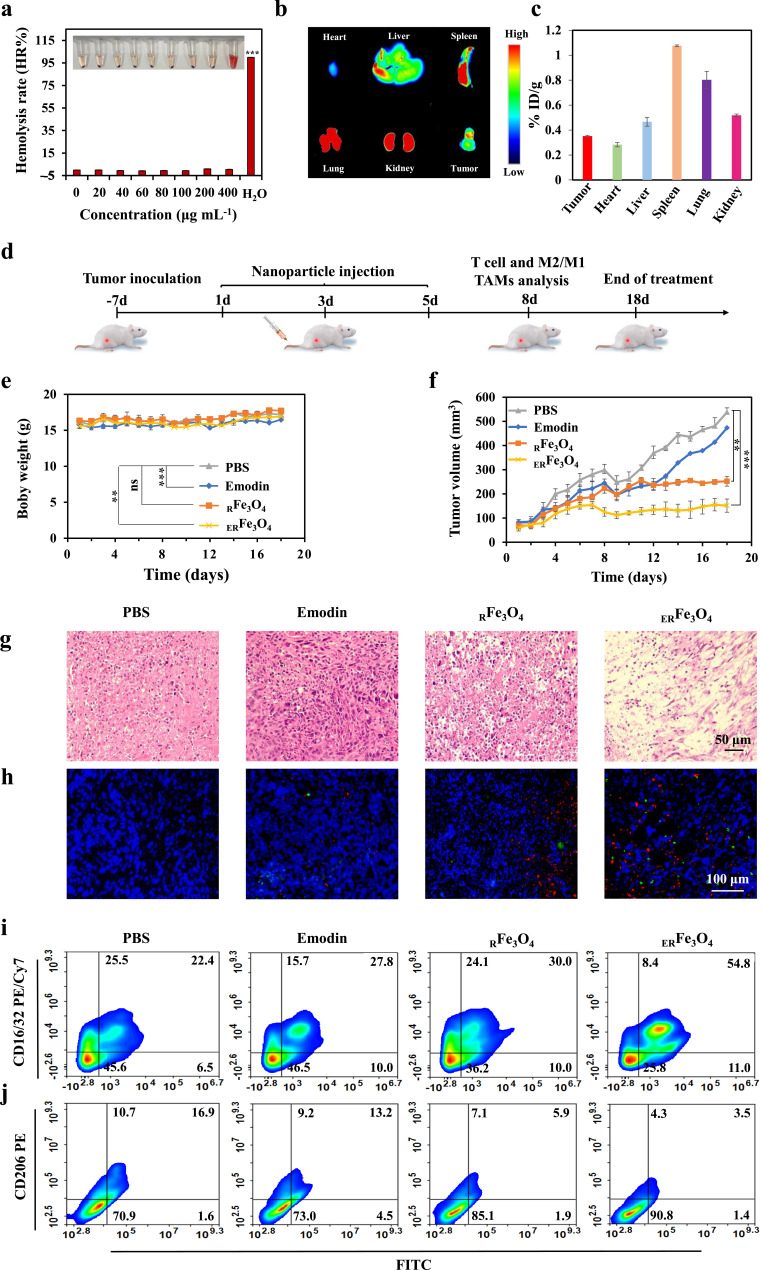
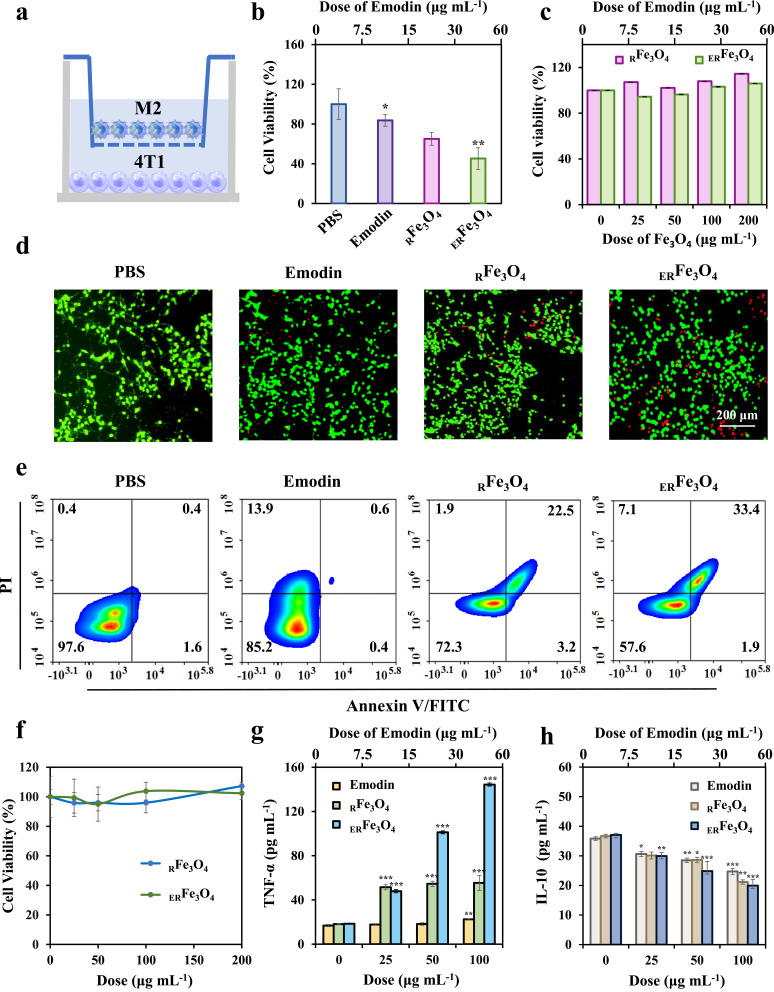
The FeO NPs actively targeted TAMs on account of their ability to bind to M2-like TAMs with high expression of galectin (Mgl). FeO NPs achieved efficient ability to reverse TIME via the production of reducing lactate and prompting enrichment iron of high concentrations. Furthermore, FeO NPs resulted in heightened expression of CD16/32 and enhanced TNF-α release, indicating promotion of M1 TAMs polarization. In vitro in vivo experiments revealed that FeO NPs induced significant apoptosis of tumor cells and antitumor immune response.
This study combines Traditional Chinese Medicine (TCM) with nanomaterials to synergistically reprogram TAMs and reverse TIME, opening up new ideas for improving anti-tumor immunotherapy.
免疫疗法在重新激活癌症治疗方面带来了范式转变。然而,肿瘤相关巨噬细胞(TAMs)由于产生抑制性代谢物而经历功能极化,导致抗肿瘤免疫反应受损。
因此,肿瘤微环境(TME)的代谢重编程可以协同提高抗肿瘤免疫疗法的疗效。在这里,我们设计了一种名为 FeO NPs 的铁基纳米平台。该平台的特点是负载天然产物大黄素的中空 FeO 纳米颗粒,外层包覆插入了 DSPE-PEG2000-半乳糖的红细胞膜(mRBCs)。这有效地调节了乳酸的产生,从而逆转了肿瘤免疫抑制微环境(TIME)。
FeO NPs 能够主动靶向 M2 样 TAMs,因为它们能够与高表达半乳糖凝集素(Mgl)的 M2 样 TAMs 结合。FeO NPs 通过产生还原乳酸和促进高浓度铁的富集,实现了高效逆转 TIME 的能力。此外,FeO NPs 导致 CD16/32 的表达增加和 TNF-α 的释放增强,表明促进了 M1 TAMs 的极化。体内外实验表明,FeO NPs 诱导肿瘤细胞显著凋亡和抗肿瘤免疫反应。
本研究将中药与纳米材料相结合,协同重编程 TAMs 并逆转 TIME,为改善抗肿瘤免疫疗法开辟了新思路。