Department of Emergency & Disaster Management, School of Public Health, Faculty of Medicine, Tel-Aviv University, Tel-Aviv-Yafo, Israel.
National Center for Trauma & Emergency Medicine Research, The Gertner Institute for Epidemiology & Health Policy Research, Sheba Medical Center, Tel-HaShomer, Israel.
J Nurs Scholarsh. 2023 Jan;55(1):262-271. doi: 10.1111/jnu.12778. Epub 2022 Apr 7.
The study aims to examine the factors that impact vaccination uptake and additional protective behavior during the fourth wave of the pandemic in Israel, whereas the "pandemic fatigue" phenomenon has been identified as a hurdle to adherence to protective health behaviors against coronavirus disease 2019 (COVID-19).
A cross-sectional, structured questionnaire was utilized for this investigation in September 2021, during the fourth wave of the pandemic.
A sample of the adult (18+) Israeli population was employed for the study. Recruiting participants for the study was conducted through an online internet panel company that consists of over 100,000 members, representing all geographic and demographic sectors of the Israeli population.
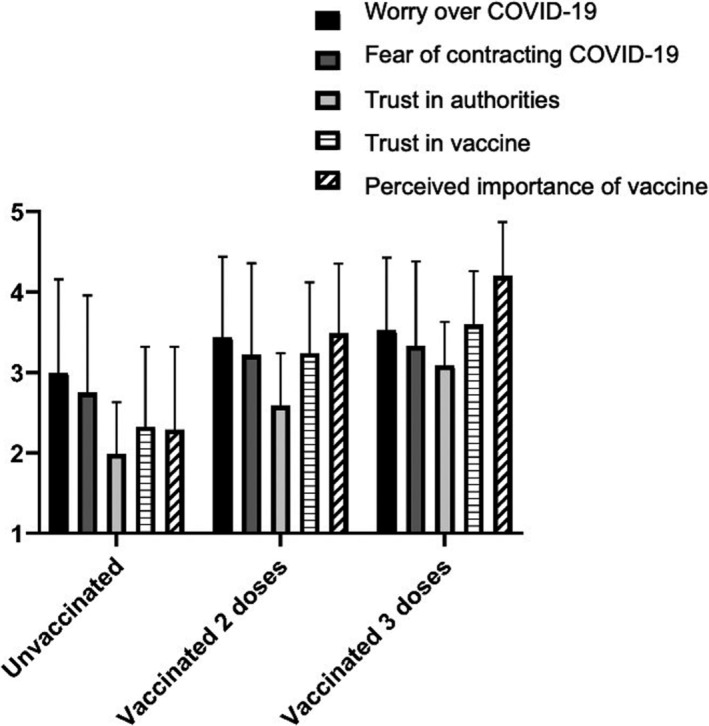
Our findings indicate that pandemic fatigue has begun to have cascading effects on vaccination efforts. In particular, this study found that at this stage of the COVID-19 pandemic, trust in authorities, and even threat perception components, such as concern and fear of contracting the disease, are incapable of predicting vaccination uptake. Instead, perception of the importance of the vaccine and its effectiveness are predictive of vaccination uptake.
The findings indicate that at this stage of the pandemic, focusing on the robustness of the science behind the vaccine is more important than trying to regain public trust. The findings also suggest that risk communication employing fear tactics is losing its capacity to generate motivation for vaccination.
The findings of this study reveal lessons learned from the COVID-19 global pandemic. Specifically, the study reveals how in times of prolonged crisis, we can currently and, in the future, prepare improved strategies for public communication in order to promote uptake of protective health behavior, such as vaccination.
本研究旨在探讨在以色列第四波大流行期间影响疫苗接种率和额外保护性行为的因素,而“大流行疲劳”现象已被确定为人们遵守针对 2019 年冠状病毒病(COVID-19)的保护健康行为的障碍。
本研究于 2021 年 9 月在第四波大流行期间采用横断面、结构问卷调查进行。
本研究采用了 18 岁以上的以色列成年人样本。通过一个由超过 100,000 名成员组成的在线互联网小组公司来招募研究参与者,该公司代表了以色列人口的所有地理和人口统计学领域。
我们的研究结果表明,大流行疲劳已经开始对疫苗接种工作产生连锁反应。特别是,这项研究发现,在 COVID-19 大流行的现阶段,对当局的信任,甚至包括对疾病的担忧和恐惧等威胁感知因素,都无法预测疫苗接种率。相反,对疫苗重要性及其有效性的认知是预测疫苗接种率的因素。
研究结果表明,在现阶段的大流行中,关注疫苗背后的科学稳健性比试图重新获得公众信任更为重要。研究结果还表明,使用恐惧策略的风险沟通正在失去激发疫苗接种动机的能力。
本研究结果揭示了从全球 COVID-19 大流行中吸取的经验教训。具体来说,该研究揭示了在长期危机时期,我们目前以及未来如何为公共传播制定改进策略,以促进保护健康行为(如接种疫苗)的采纳。