Singapore University of Social Sciences, Singapore, Singapore.
Nanyang Technological University, Singapore, Singapore.
Sci Rep. 2022 Apr 7;12(1):5888. doi: 10.1038/s41598-022-09783-9.
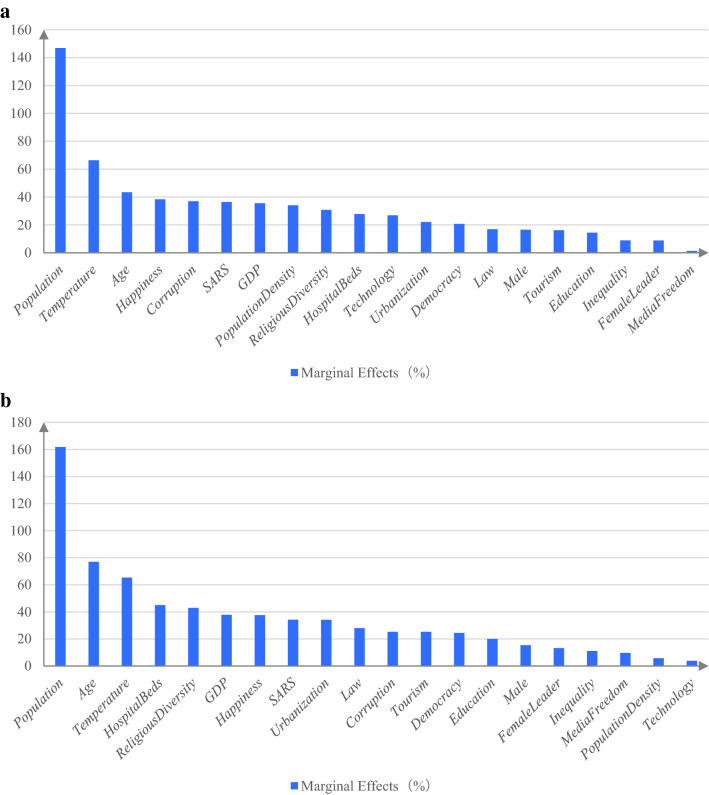
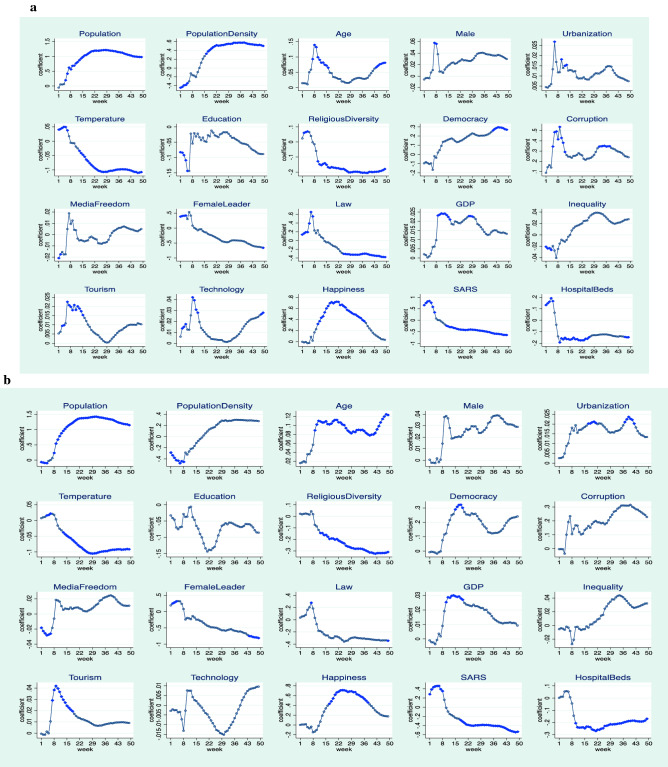
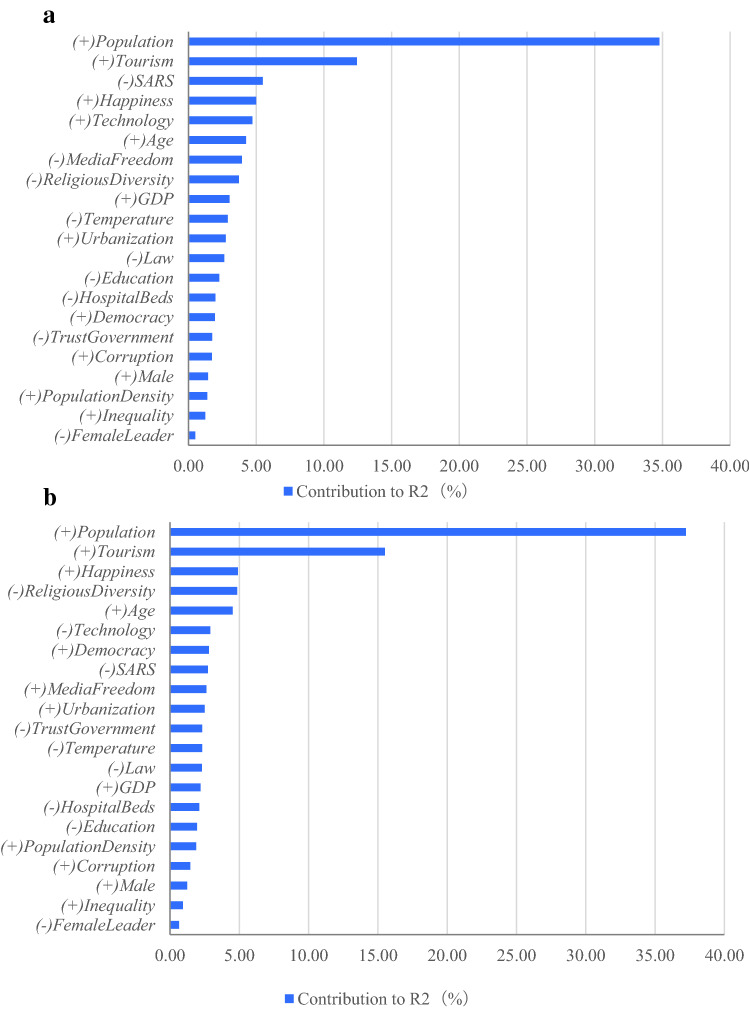
We identify 21 predetermined country-level factors that explain marked variations in weekly COVID-19 morbidity and mortality across 91 countries between January and the end of 2020. Besides factors commonly associated with infectious diseases (e.g., population and tourism activities), we discover a list of country characteristics that shape COVID-19 outcomes. Among demographic-geographic factors, the male-to-female ratio, population density, and urbanization aggravate the severity of COVID-19, while education, temperature, and religious diversity mitigate the impact of the pandemic on morbidity and mortality. For the political-legal dimension, democracy and political corruption are aggravating factors. In contrast, female leadership, the strength of legal systems, and public trust in government significantly reduce infections and deaths. In terms of socio-economic aspects, GDP per capita, income inequality, and happiness (i.e., life satisfaction) lead to worse COVID-19 outcomes. Interestingly, technology advancement increases morbidity but reduces mortality. For healthcare factors, SARS (severe acute respiratory syndrome) experience and healthcare infrastructure help countries perform better in combating the pandemic.
我们确定了 21 个预先设定的国家层面因素,这些因素解释了 2020 年 1 月至年底期间 91 个国家每周 COVID-19 发病率和死亡率的显著差异。除了与传染病相关的常见因素(如人口和旅游活动)之外,我们还发现了一系列塑造 COVID-19 结果的国家特征。在人口地理因素中,男女性别比、人口密度和城市化加剧了 COVID-19 的严重程度,而教育、温度和宗教多样性减轻了大流行对发病率和死亡率的影响。在政治法律层面,民主和政治腐败是加剧因素。相比之下,女性领导、法律制度的强度和公众对政府的信任显著降低了感染和死亡人数。在社会经济方面,人均国内生产总值、收入不平等和幸福感(即生活满意度)导致 COVID-19 结果恶化。有趣的是,技术进步增加了发病率,但降低了死亡率。在医疗保健因素方面,SARS(严重急性呼吸系统综合征)的经验和医疗保健基础设施有助于各国在抗击大流行方面表现更好。