MRC Human Genetics Unit and CRUK Scotland Centre, Institute of Genetics and Cancer, University of Edinburgh, Western General Hospital Campus, EH4 2XU, Edinburgh, UK.
Dis Model Mech. 2022 May 1;15(5). doi: 10.1242/dmm.049401. Epub 2022 May 9.
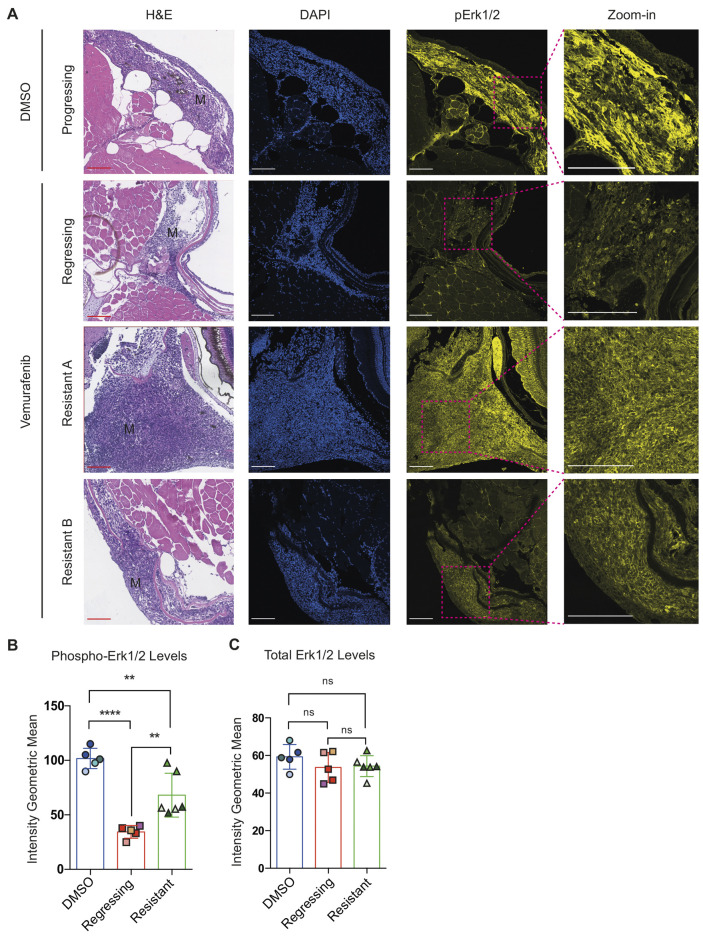
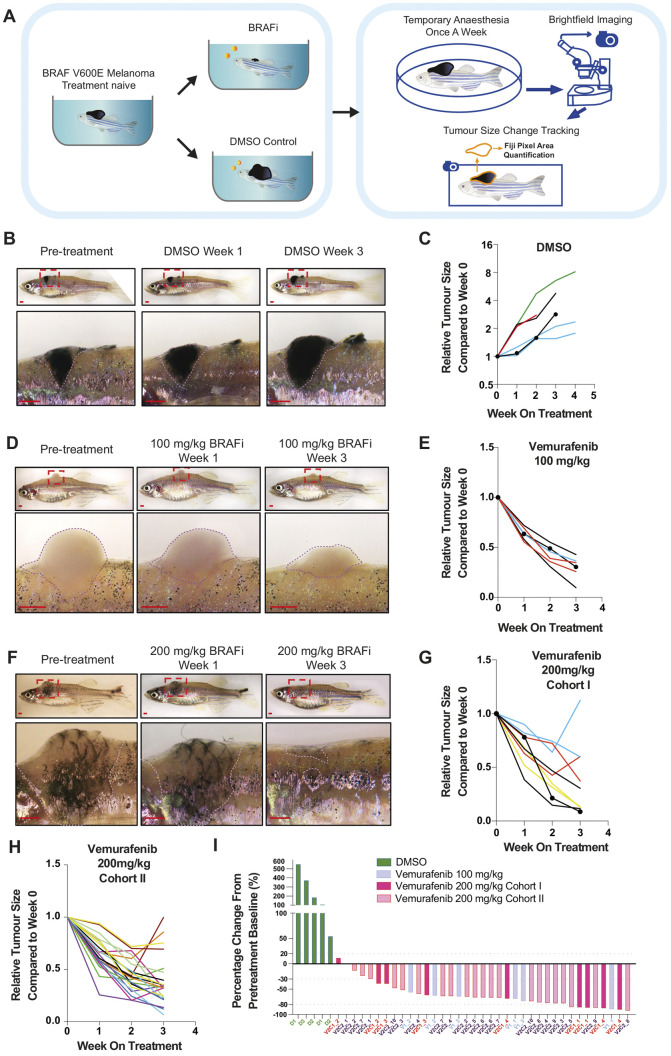
Zebrafish embryos are widely used for drug discovery, however, administering drugs to adult zebrafish is limited by current protocols that can cause stress. Here, we developed a drug formulation and administration method for adult zebrafish by producing food-based drug pellets that are consumed voluntarily. We applied this to zebrafish with BRAF-mutant melanoma, a model that has significantly advanced our understanding of melanoma progression, but not of drug resistance due to the limitations of current treatment methods. Zebrafish with melanomas responded to short-term, precise and daily dosing with drug pellets made with the BRAFV600E inhibitor, vemurafenib. On-target drug efficacy was determined by phospho-Erk staining. Continued drug treatment led to the emergence, for the first time in zebrafish, of acquired drug resistance and melanoma relapse, modelling the responses seen in melanoma patients. This method presents a controlled, non-invasive approach that permits long-term drug studies and can be widely applied to adult zebrafish models.
斑马鱼胚胎被广泛用于药物研发,然而,由于现行的给药方案可能会给成年斑马鱼带来应激,因此对成年斑马鱼给药受到了限制。在这里,我们通过制作可自愿食用的基于食物的药物丸,开发了一种用于成年斑马鱼的药物配方和给药方法。我们将该方法应用于具有 BRAF 突变型黑色素瘤的斑马鱼,该模型极大地促进了我们对黑色素瘤进展的理解,但由于目前治疗方法的限制,无法理解药物耐药性。BRAFV600E 抑制剂 vemurafenib 制成的药物丸可进行短期、精确和每日给药,对具有黑色素瘤的斑马鱼产生了应答。通过磷酸化-Erk 染色确定了靶标药物的疗效。持续的药物治疗导致斑马鱼首次出现获得性耐药和黑色素瘤复发,模拟了黑色素瘤患者的反应。这种方法提供了一种可控的、非侵入性的方法,可进行长期药物研究,并可广泛应用于成年斑马鱼模型。