CIISA-Centre for Interdisciplinary Research in Animal Health, Faculty of Veterinary Medicine, University of Lisbon, Lisbon, Portugal.
LEAF-Linking Landscape, Environment, Agriculture and Food, Higher Institute of Agronomy, University of Lisbon, Lisbon, Portugal.
Sci Rep. 2022 Apr 9;12(1):6012. doi: 10.1038/s41598-022-10059-5.
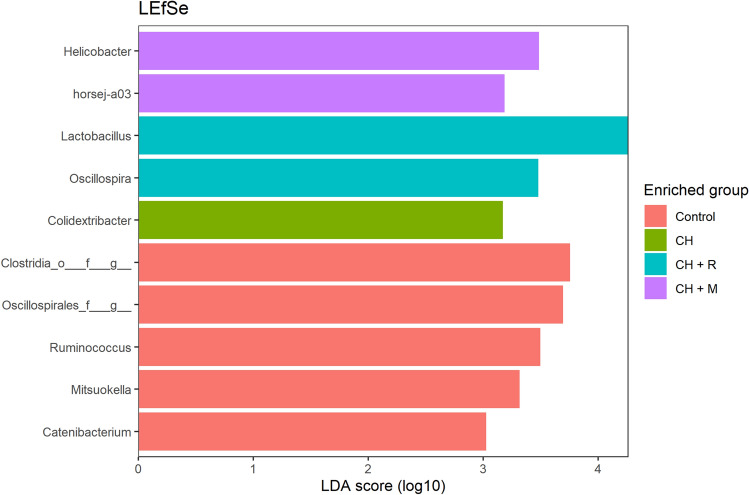
The purpose of this study was to evaluate the impact of Chlorella vulgaris (5% in the diet), supplemented or not with two exogenous carbohydrase mixtures on piglets' performance, nutrient digestibility and gut morphology, fermentation products and microbiota. Forty-four male piglets weaned at 28 days of age, with 11.2 ± 0.46 kg of live weight, were used and assigned to 1 of 4 dietary treatments: cereal and soybean meal based-diet (control, n = 11), control diet with 5% of C. vulgaris (CH, n = 10), CH diet supplemented with 0.005% of Rovabio Excel AP (CH + R, n = 10) and CH diet supplemented with 0.01% of a recombinant 4-carbohydrase mixture (CH + M, n = 11). Growth performance was not changed by the of C. vulgaris inclusion during 21 days of trial. However, total tract apparent digestibility of nutritional fractions was negatively impacted by the inclusion. In addition, the viscosity of duodenum plus jejunum contents slightly increased in all groups fed with the microalga. In contrast, dietary microalga increased duodenum villus height and promoted a healthier gut microbiota, with higher abundance of some specific bacterial taxa (Colidextribacter, Oscillospira and Lactobacillus). This study indicates that the dietary inclusion of 5% C. vulgaris improves piglets' gut health without impairing performance. Data also indicate that C. vulgaris reduces nutrient digestibility but promotes compensatory developments of gut mucosa and prebiotic effects. Dietary supplementation with exogenous carbohydrases does not seem to be necessary for this inclusion level. Therefore, the incorporation of CH as a sustainable feed ingredient in piglets' nutrition is a viable alternative approach.
本研究旨在评估小球藻(饮食中添加 5%)补充或不补充两种外源碳水化合物混合物对仔猪生产性能、养分消化率和肠道形态、发酵产物和微生物区系的影响。44 头 28 日龄断奶、体重 11.2±0.46kg 的雄性仔猪被用于本试验,并被分配到以下 4 种饮食处理组之一:以谷物和大豆粉为基础的饮食(对照组,n=11)、含有 5%小球藻的对照饮食(CH 组,n=10)、添加 0.005% Rovabio Excel AP 的 CH 饮食(CH+R 组,n=10)和添加 0.01%重组 4 种碳水化合物混合酶的 CH 饮食(CH+M 组,n=11)。在 21 天的试验期间,小球藻的添加并未改变生长性能。然而,所有添加小球藻的试验组营养物质的全肠道表观消化率均呈负向变化。此外,添加小球藻的所有试验组的十二指肠加空肠内容物的黏度略有增加。相反,日粮中的小球藻增加了十二指肠绒毛高度,并促进了更健康的肠道微生物群,一些特定细菌分类群(柯林斯氏菌属、颤螺旋体属和乳杆菌属)的丰度更高。本研究表明,日粮中添加 5%的小球藻可改善仔猪的肠道健康,而不会损害生产性能。数据还表明,小球藻降低了养分消化率,但促进了肠道黏膜的代偿性发育和益生元效应。对于这种添加水平,膳食补充外源碳水化合物似乎不是必需的。因此,将小球藻作为可持续饲料成分纳入仔猪营养是一种可行的替代方法。