Diagnostic- and Research Center for Molecular Biomedicine, Diagnostic- and Research Institute of Pathology, Medical University of Graz, Graz, Austria.
Diagnostic- and Research Center for Molecular Biomedicine, Diagnostic- and Research Institute of Pathology, Medical University of Graz, Graz, Austria.
N Biotechnol. 2022 Sep 25;70:19-27. doi: 10.1016/j.nbt.2022.04.001. Epub 2022 Apr 8.
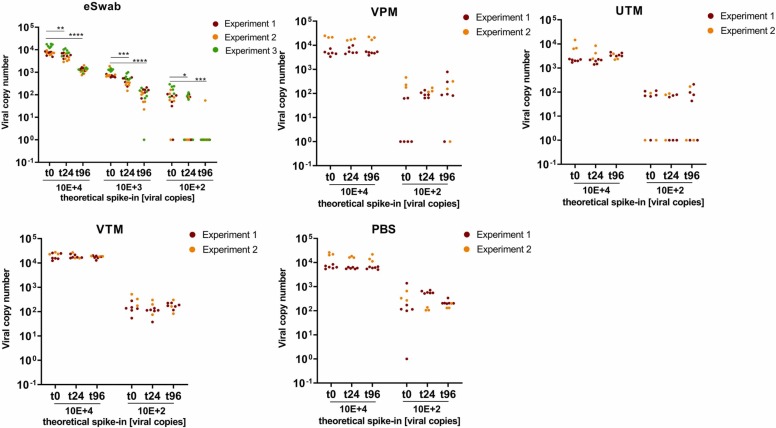
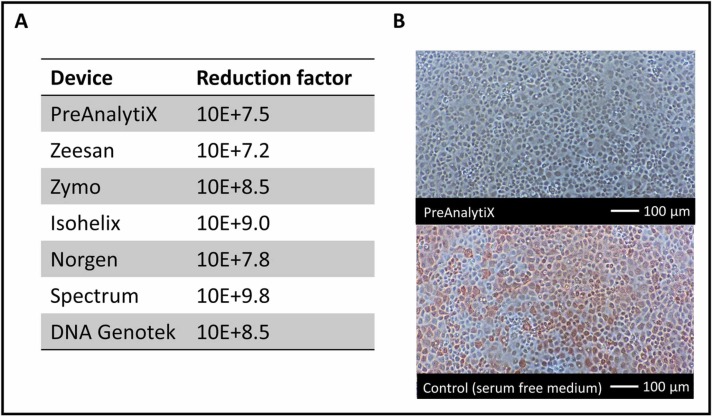
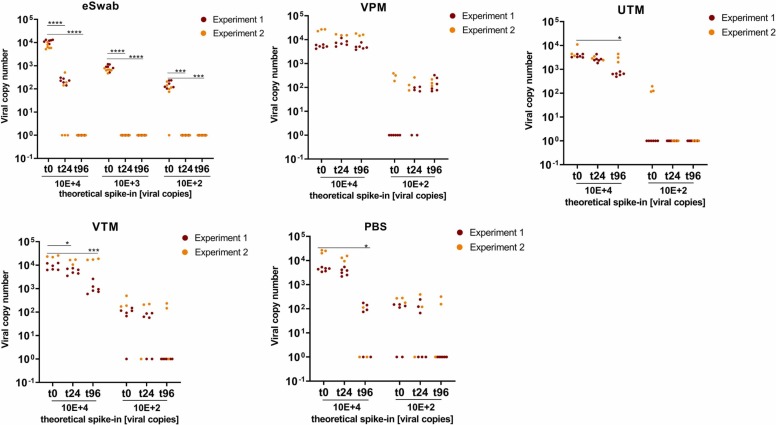
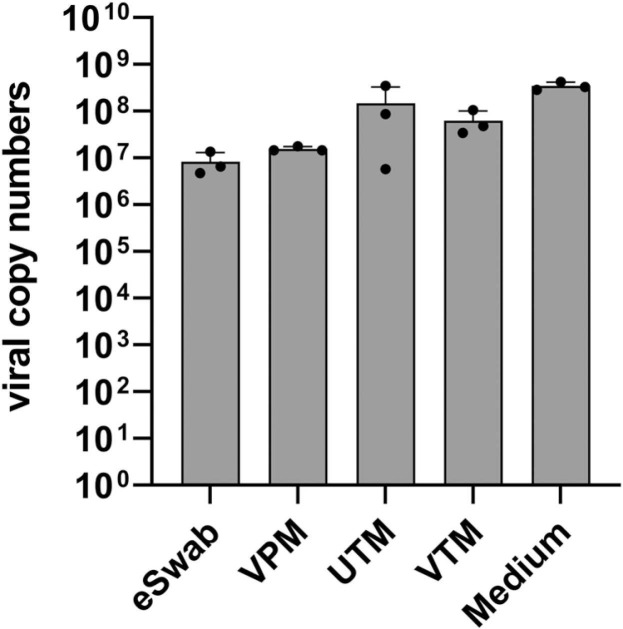
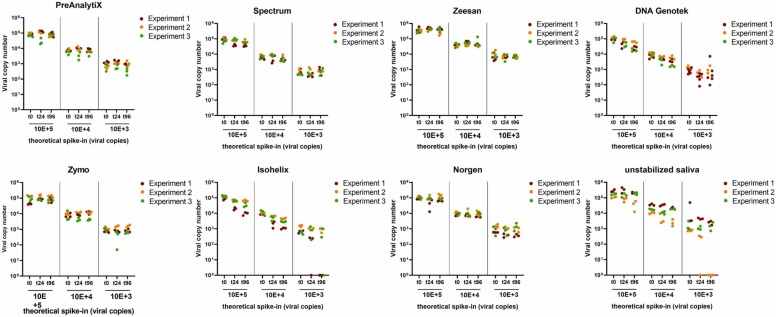
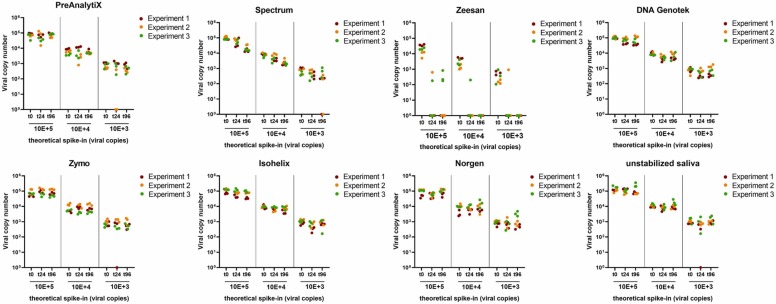
The outbreak of the SARS-CoV-2 pandemic created an unprecedented requirement for diagnostic testing, challenging not only healthcare workers and laboratories, but also providers. Quantitative RT-PCR of various specimen types is considered the diagnostic gold standard for the detection of SARS-CoV-2, both in terms of sensitivity and specificity. The pre-analytical handling of patient specimens is a critical factor to ensure reliable and valid test results. Therefore, the effect of storage duration and temperature on SARS-CoV-2 RNA copy number stability was examined in various commercially available specimen collection, transport and storage devices for naso/oropharyngeal swabs and saliva. The swab specimen transport and storage devices tested showed no significant alteration of viral RNA copy numbers when stored at room temperature, except for one system when stored for up to 96 h. However, at 37 °C a significant reduction of detectable RNA was found in 3 out of 4 of the swab solutions tested. It was also found that detectability of viral RNA remained unchanged in all 7 saliva devices as well as in unstabilized saliva when stored for 96 h at room temperature, but one device showed marked RNA copy number loss at 37 °C. All tested saliva collection devices inhibited SARS-CoV-2 infectivity immediately, whereas SARS-CoV-2 remained infectious in the swab transport systems examined, which are designed to be used for viral or bacterial growth in cell culture systems.
SARS-CoV-2 大流行的爆发对诊断检测提出了前所未有的要求,不仅对医护人员和实验室构成了挑战,也对提供者提出了挑战。各种标本类型的定量 RT-PCR 被认为是检测 SARS-CoV-2 的诊断金标准,无论是在灵敏度还是特异性方面。患者标本的预分析处理是确保可靠和有效检测结果的关键因素。因此,研究了不同市售的鼻咽拭子和唾液标本采集、运输和储存装置中储存时间和温度对 SARS-CoV-2 RNA 拷贝数稳定性的影响。当在室温下储存时,测试的拭子标本运输和储存装置中病毒 RNA 拷贝数没有明显改变,除了一个系统在储存 96 小时时。然而,在 37°C 时,在测试的 4 种拭子溶液中有 3 种发现可检测 RNA 显著减少。研究还发现,在室温下储存 96 小时时,所有 7 种唾液装置以及未稳定的唾液中,病毒 RNA 的检测能力保持不变,但有一个装置在 37°C 时显示出明显的 RNA 拷贝数损失。所有测试的唾液采集装置都立即抑制了 SARS-CoV-2 的感染性,而在拭子运输系统中 SARS-CoV-2 仍然具有传染性,这些系统旨在用于病毒或细菌在细胞培养系统中的生长。