Picciotto Sabrina, Santonicola Pamela, Paterna Angela, Rao Estella, Raccosta Samuele, Romancino Daniele Paolo, Noto Rosina, Touzet Nicolas, Manno Mauro, Di Schiavi Elia, Bongiovanni Antonella, Adamo Giorgia
Cell-Tech HUB and Institute for Research and Biomedical Innovation, National Research Council of Italy (CNR), Palermo, Italy.
Department of Biological, Chemical and Pharmaceutical Sciences and Technologies, University of Palermo, Palermo, Italy.
Front Bioeng Biotechnol. 2022 Mar 24;10:830189. doi: 10.3389/fbioe.2022.830189. eCollection 2022.
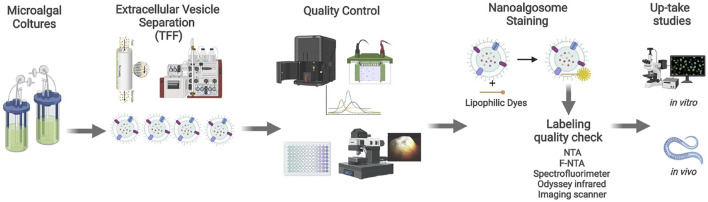
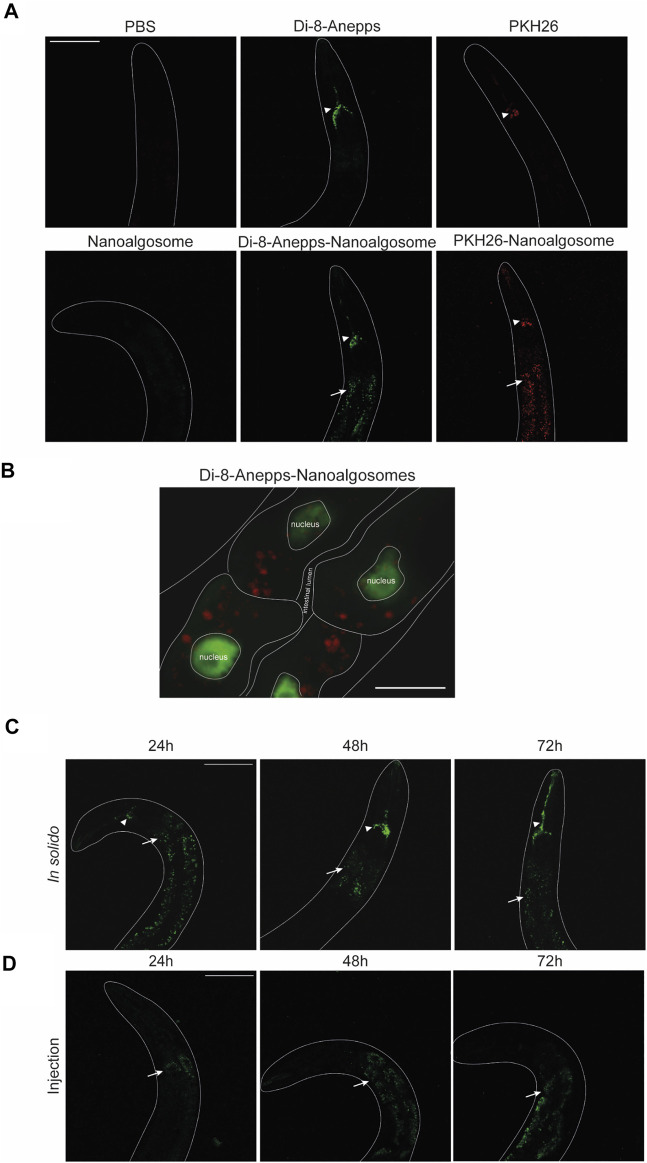
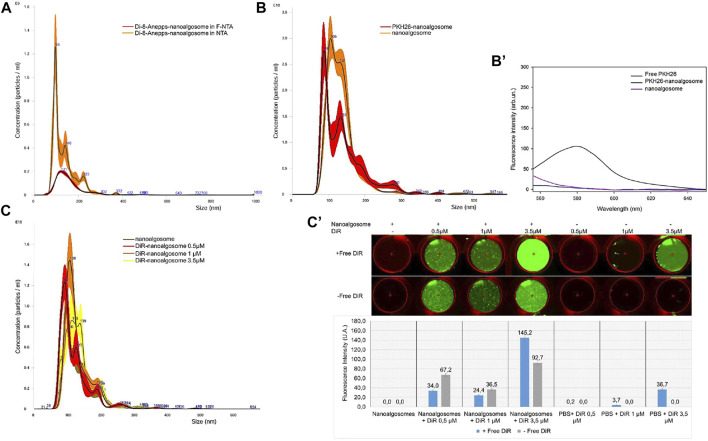
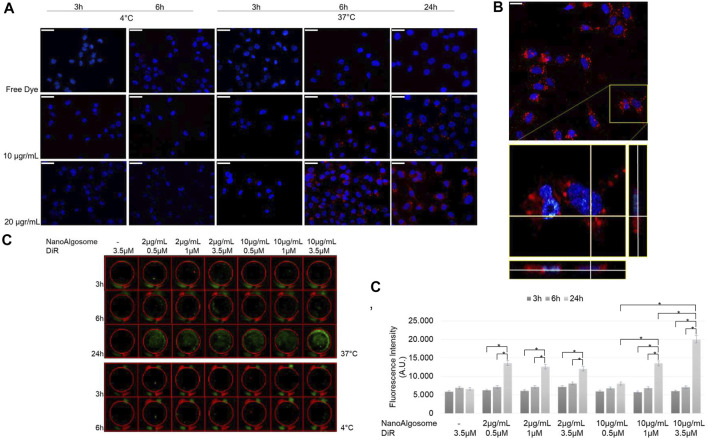
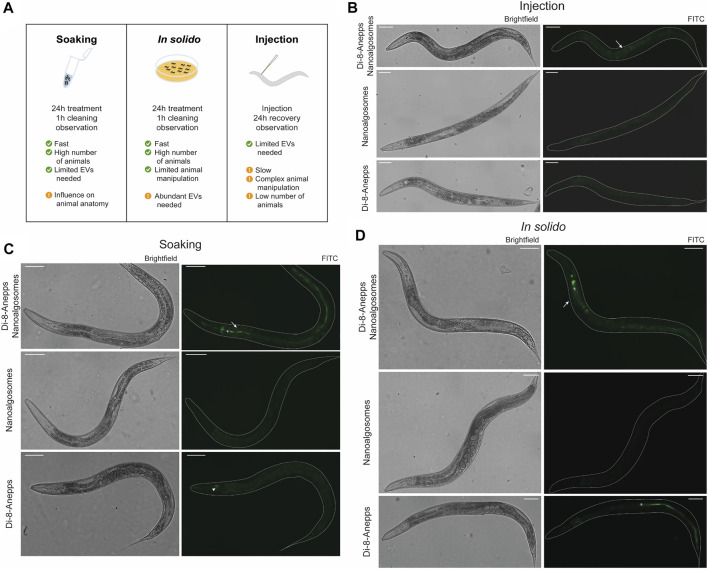
Extracellular vesicles (EVs) are lipid membrane nano-sized vesicles secreted by various cell types for intercellular communication, found in all kingdoms of life. Nanoalgosomes are a subtype of EVs derived from microalgae with a sustainable biotechnological potential. To explore the uptake, distribution and persistence of nanoalgosomes in cells and living organisms, we separated them from a culture of the chlorophyte cells by tangential flow filtration (TFF), labelled them with different lipophilic dyes and characterized their biophysical attributes. Then we studied the cellular uptake of labelled nanoalgosomes in human cells and in , demonstrating that they enter the cells through an energy dependent mechanism and are localized in the cytoplasm of specific cells, where they persist for days. Our data confirm that nanoalgosomes are actively uptaken by human cells and by cells, supporting their exploitation as potential nanocarriers of bioactive compounds for theranostic applications.
细胞外囊泡(EVs)是由各种细胞类型分泌的用于细胞间通讯的脂质膜纳米级囊泡,存在于所有生命王国中。纳米藻泡是源自微藻的一种细胞外囊泡亚型,具有可持续的生物技术潜力。为了探索纳米藻泡在细胞和生物体中的摄取、分布和持久性,我们通过切向流过滤(TFF)从绿藻细胞培养物中分离出它们,用不同的亲脂性染料对其进行标记,并表征其生物物理特性。然后我们研究了标记的纳米藻泡在人类细胞和[此处缺失内容]中的细胞摄取情况,证明它们通过能量依赖机制进入细胞,并定位在特定细胞的细胞质中,在那里它们会持续存在数天。我们的数据证实,纳米藻泡可被人类细胞和[此处缺失内容]细胞主动摄取,支持它们作为生物活性化合物的潜在纳米载体用于治疗诊断应用的开发。