Fatima Syeda Warisul, Alam Shahenvaz, Khare Sunil K
Enzyme and Microbial Biochemistry Laboratory,Department of Chemistry,Indian Institute of Technology Delhi, New Delhi 110016, India.
Phytomed Plus. 2022 May;2(2):100241. doi: 10.1016/j.phyplu.2022.100241. Epub 2022 Feb 12.
Over million people have been infected with SARS-CoV-2 virus worldwide, with around 3% reported deaths till date. A few conventional antiviral treatments have been tried to mitigate the coronavirus. However, many alternative therapeutics are being evaluated worldwide. In the present study, we investigated traditional Indian medicinal compounds antiviral potencies as an effective drug for targeting SARS-CoV-2E. SARS-CoV-2 E protein plays a key role in coronavirus life cycle and is an interesting target for the development of anti-SARS-CoV-2 E drugs.
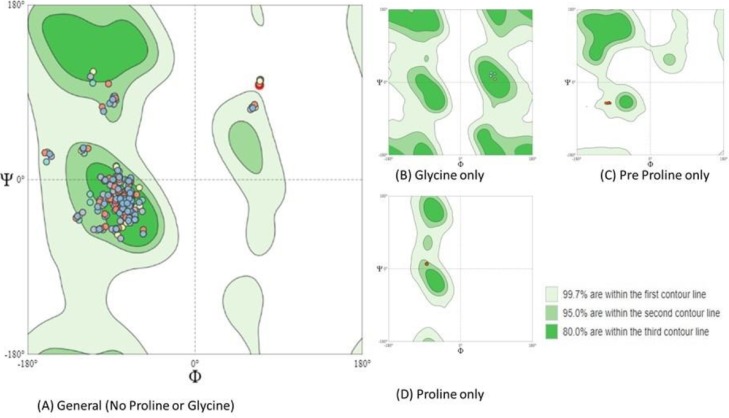
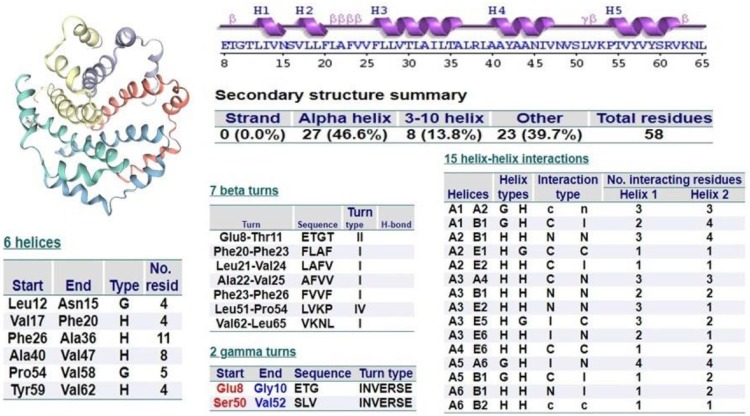
Molecular docking studies of medicinal compounds possessing wide range of pharmacological and antiviral activities against enveloped viruses were evaluated with the computer-aided drug design screening software; PyRx. Twelve medicinal compounds isolated from plants were screened and visualized on Biovia Discovery-Studio. Moreover, SARS-CoV-2 E protein's secondary structural insights were deciphered using Swiss Model and ProFunc web server.
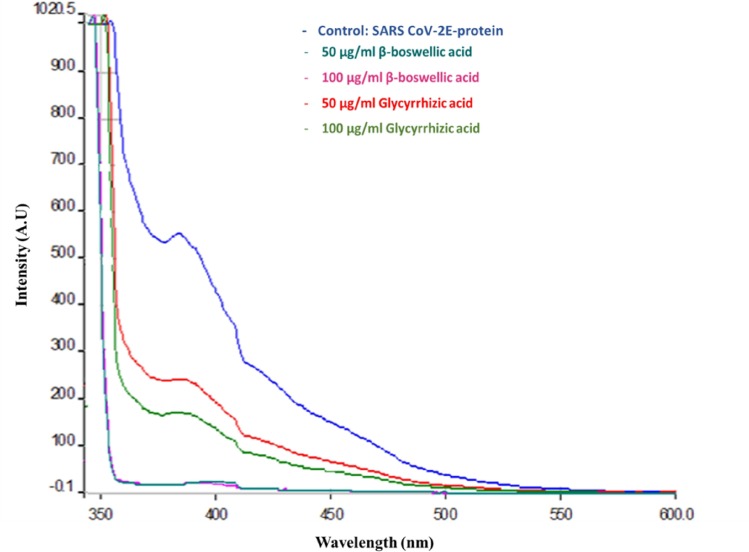
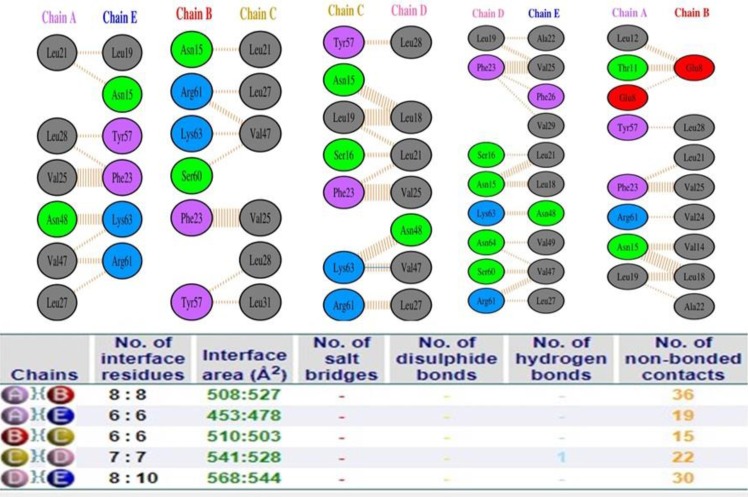
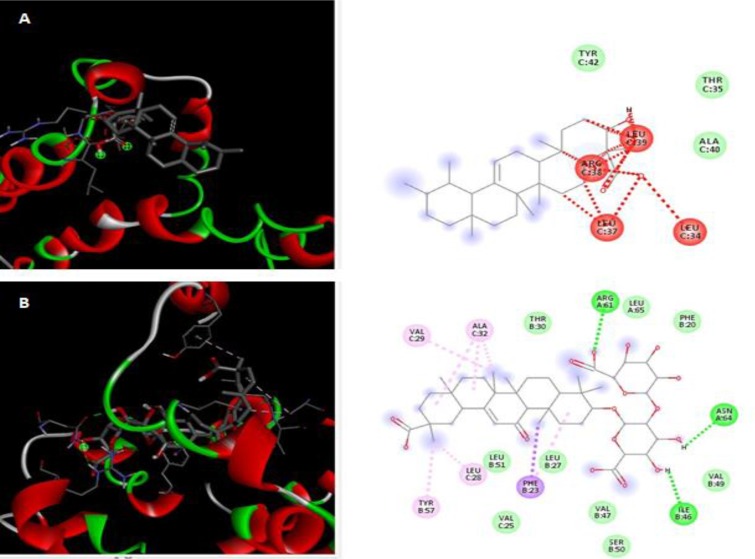
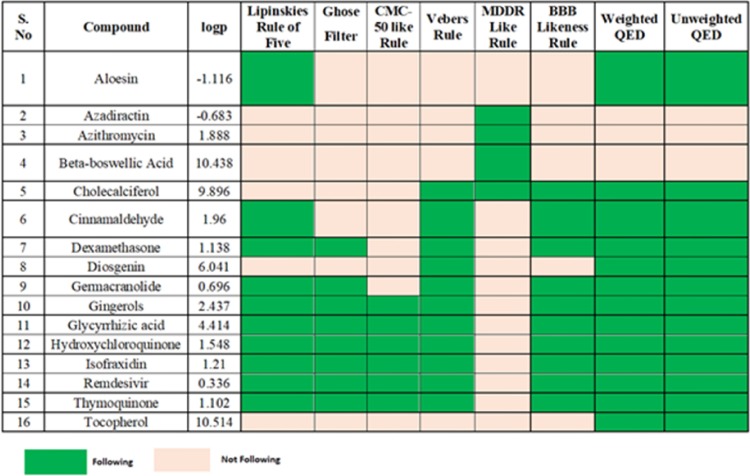
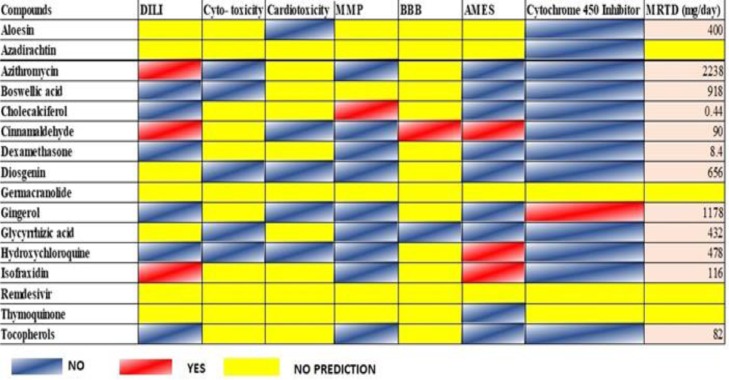
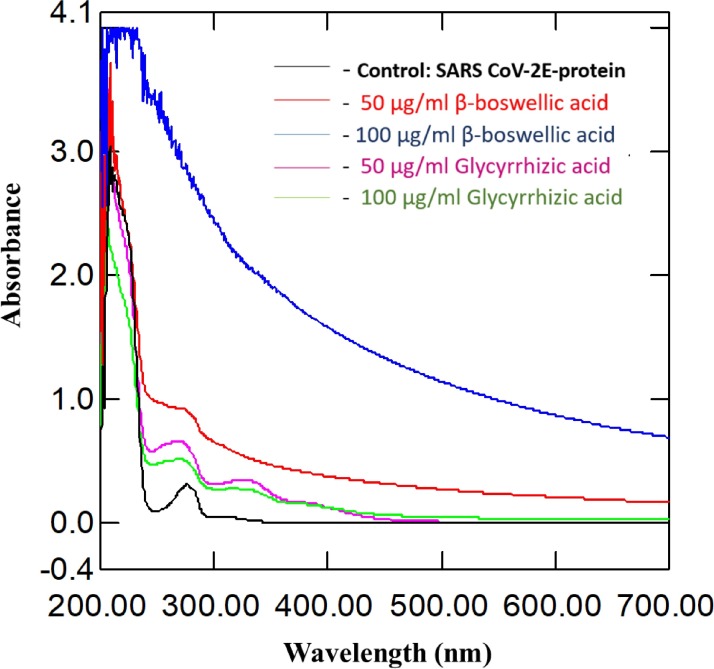
Glycyrrhizic acid, triterpene glycoside isolated from plants of (licorice) showed interactions with envelope protein at chain A: Arg 61, chain B: Phe 23, chain B: Tyr 57, and chain C: Val 25. β- boswellic acid, an ayurvedic herb (pentacyclic terpenoid are produced by ) represented direct interactions and indirect binding with chain C. Their pharmacological aspects and drug-likeness properties were deduced by DruLiTo. Toxicological assessment, along with their ADME profiling, was validated using vNNADMET. The findings showed that ligands, β-boswellic acid, and glycyrrhizic acid possessed the best bindings, with the target having binding affinity (-9.1 kcal/mol) amongst compounds tested against SARS-CoV-2 E. studies reveals the promising effect as potent SARS-CoV-2 E inhibitors. Functionality loss and structural disruptions with ∼90% were observed by UV-spectra and fluorescent based analyses.
The study demonstrated that β-boswellic acid, and glycyrrhizic acid are strong SARS-CoV-2 E protein inhibitors. In addition, the work linked GA antiviral activity to its effect on SARS-CoV- 2 E protein that can pave the way for designing antiviral therapeutics.
全球已有超过数百万人感染了严重急性呼吸综合征冠状病毒2(SARS-CoV-2),截至目前报告的死亡病例约占3%。人们尝试了一些传统的抗病毒治疗方法来减轻冠状病毒感染。然而,全球范围内正在评估许多替代疗法。在本研究中,我们研究了印度传统药用化合物作为靶向SARS-CoV-2E的有效药物的抗病毒效力。SARS-CoV-2 E蛋白在冠状病毒生命周期中起关键作用,是开发抗SARS-CoV-2 E药物的一个有吸引力的靶点。
使用计算机辅助药物设计筛选软件PyRx评估了对包膜病毒具有广泛药理和抗病毒活性的药用化合物的分子对接研究。从植物中分离出的12种药用化合物在Biovia Discovery-Studio上进行了筛选和可视化。此外,使用Swiss Model和ProFunc网络服务器解析了SARS-CoV-2 E蛋白的二级结构。
从甘草植物中分离出的三萜糖苷甘草酸显示出与包膜蛋白在链A的精氨酸61、链B的苯丙氨酸23、链B的酪氨酸57和链C的缬氨酸25处相互作用。阿育吠陀草药β-乳香酸(由其产生五环三萜类化合物)表现出与链C的直接相互作用和间接结合。通过DruLiTo推断了它们的药理学方面和类药性质。使用vNNADMET验证了毒理学评估及其药物代谢动力学(ADME)分析。研究结果表明,在针对SARS-CoV-2 E测试的化合物中,配体β-乳香酸和甘草酸具有最佳结合,与靶点的结合亲和力为-9.1千卡/摩尔。研究揭示了其作为有效的SARS-CoV-2 E抑制剂的有前景的效果。通过紫外光谱和基于荧光的分析观察到约90%的功能丧失和结构破坏。
该研究表明β-乳香酸和甘草酸是强效的SARS-CoV-2 E蛋白抑制剂。此外,该研究将甘草酸的抗病毒活性与其对SARS-CoV-2 E蛋白的作用联系起来,这可为设计抗病毒治疗方法铺平道路。