Institute for Biomedical Technologies, National Research Council of Italy, 20054 Segrate, Italy.
Institute for Biomedical Technologies, National Research Council of Italy, 70126 Bari, Italy.
Nutrients. 2022 Mar 23;14(7):1340. doi: 10.3390/nu14071340.
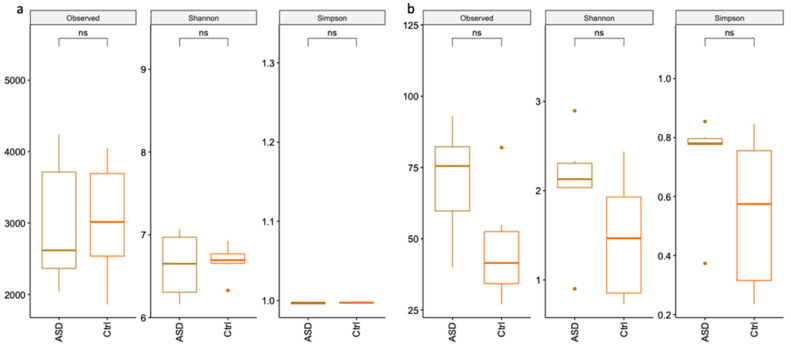
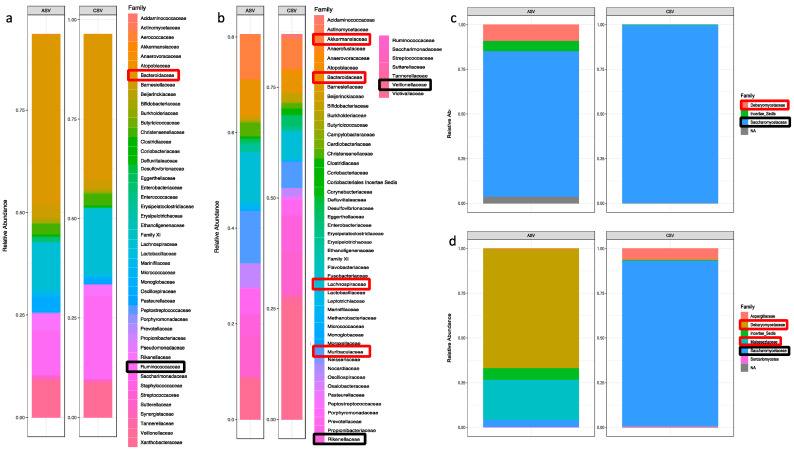
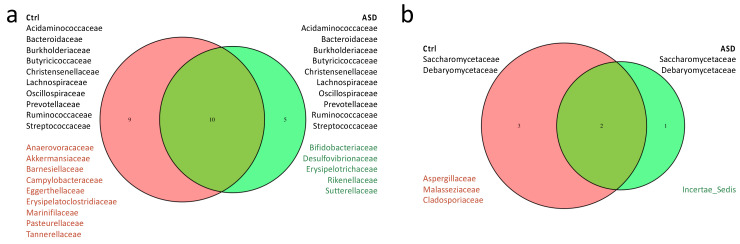
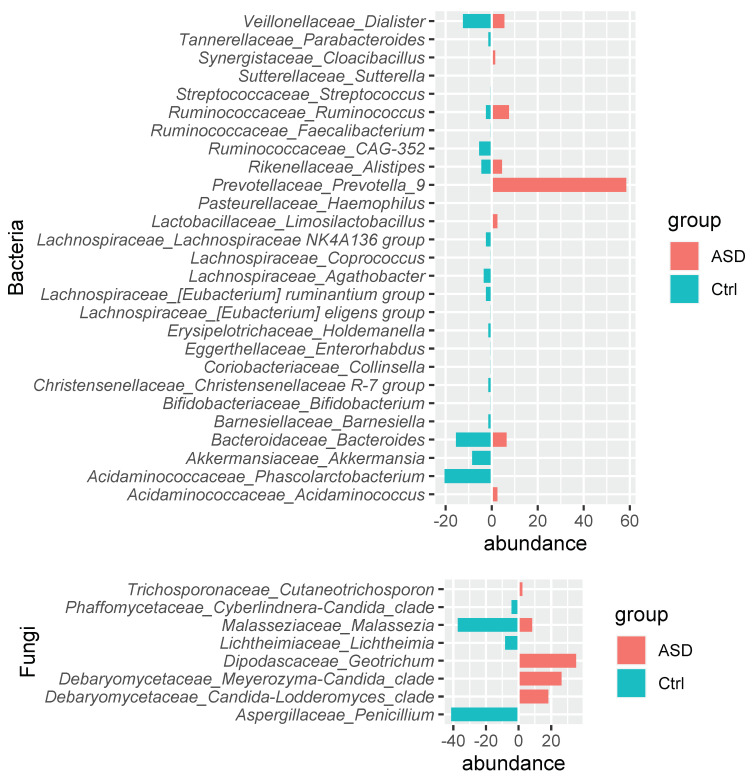
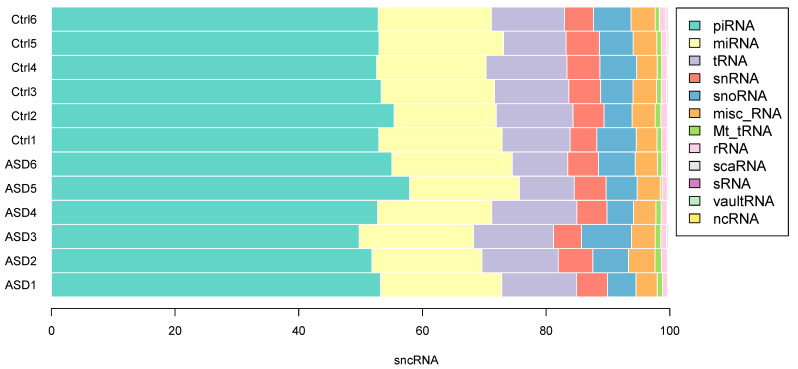
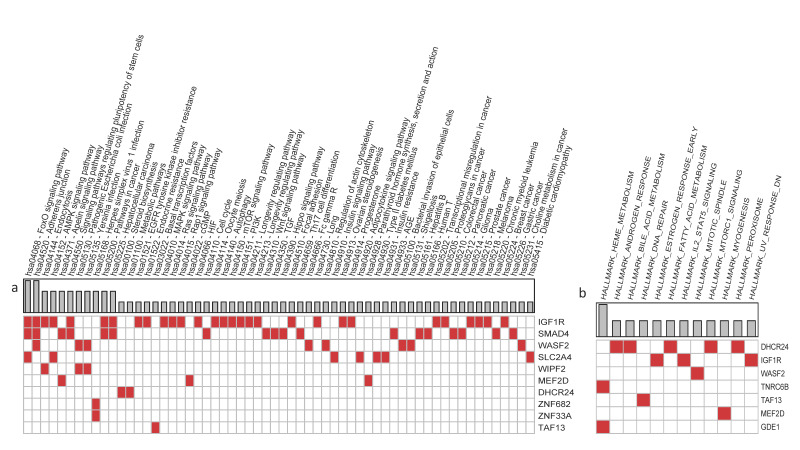
Intestinal microorganisms impact health by maintaining gut homeostasis and shaping the host immunity, while gut dysbiosis associates with many conditions, including autism, a complex neurodevelopmental disorder with multifactorial aetiology. In autism, gut dysbiosis correlates with symptom severity and is characterised by a reduced bacterial variability and a diminished beneficial commensal relationship. Microbiota can influence the expression of host microRNAs that, in turn, regulate the growth of intestinal bacteria by means of bidirectional host-gut microbiota cross-talk. We investigated possible interactions among intestinal microbes and between them and host transcriptional modulators in autism. To this purpose, we analysed, by "omics" technologies, faecal microbiome, mycobiome, and small non-coding-RNAs (particularly miRNAs and piRNAs) of children with autism and neurotypical development. Patients displayed gut dysbiosis related to a reduction of healthy gut micro- and mycobiota as well as up-regulated transcriptional modulators. The targets of dysregulated non-coding-RNAs are involved in intestinal permeability, inflammation, and autism. Furthermore, microbial families, underrepresented in patients, participate in the production of human essential metabolites negatively influencing the health condition. Here, we propose a novel approach to analyse faeces as a whole, and for the first time, we detected miRNAs and piRNAs in faecal samples of patients with autism.
肠道微生物通过维持肠道内环境稳态和塑造宿主免疫来影响健康,而肠道菌群失调与许多疾病有关,包括自闭症,一种具有多因素病因的复杂神经发育障碍。在自闭症中,肠道菌群失调与症状严重程度相关,其特征是细菌多样性减少和有益共生关系减弱。微生物群可以影响宿主 microRNAs 的表达,而宿主 microRNAs 又通过双向的宿主-肠道微生物群相互作用来调节肠道细菌的生长。我们研究了自闭症中肠道微生物之间以及它们与宿主转录调节剂之间可能存在的相互作用。为此,我们通过“组学”技术分析了自闭症儿童和神经发育正常儿童的粪便微生物群、真菌群和小非编码 RNA(特别是 microRNAs 和 piRNAs)。患者表现出与健康肠道微生物群和真菌群减少相关的肠道菌群失调,以及转录调节剂上调。失调的非编码 RNA 的靶标参与肠道通透性、炎症和自闭症。此外,在患者中代表性不足的微生物家族参与了人类必需代谢物的产生,这对健康状况有负面影响。在这里,我们提出了一种分析粪便的新方法,这是我们首次在自闭症患者的粪便样本中检测到 microRNAs 和 piRNAs。