Department of Food Science and Technology, University of California Davis, Davis, CA 95616, USA.
Foods for Health Institute, University of California Davis, Davis, CA 95616, USA.
Nutrients. 2022 Mar 29;14(7):1423. doi: 10.3390/nu14071423.
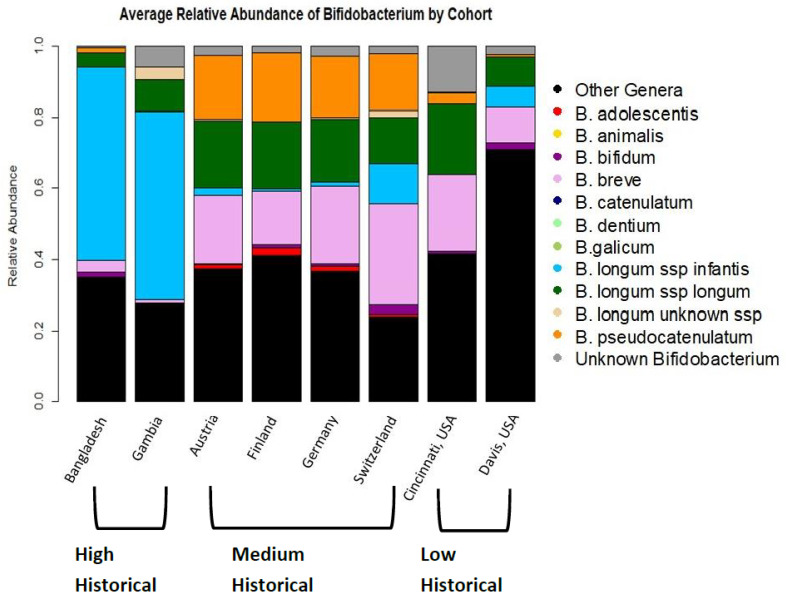
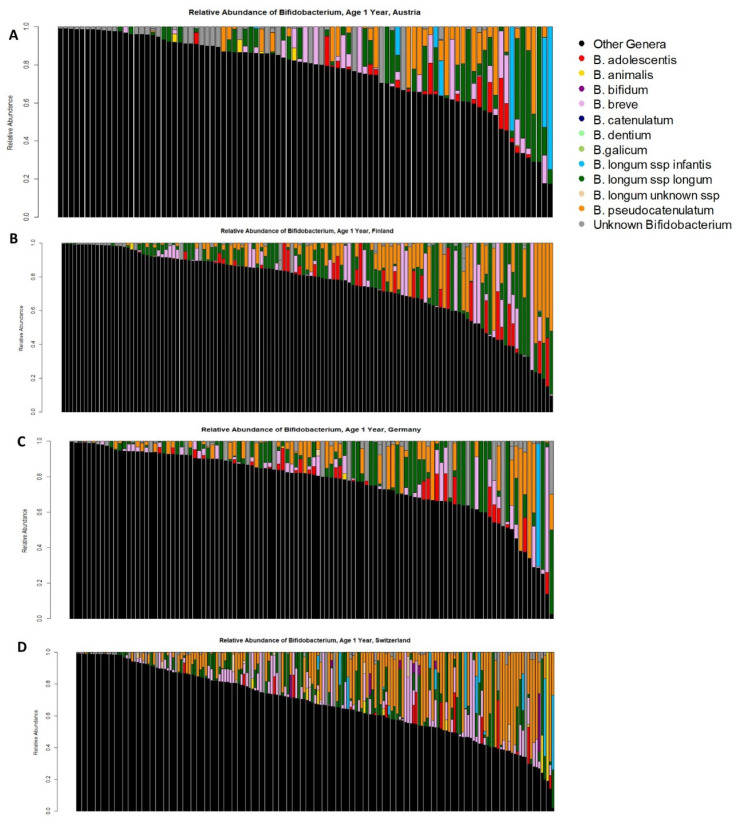
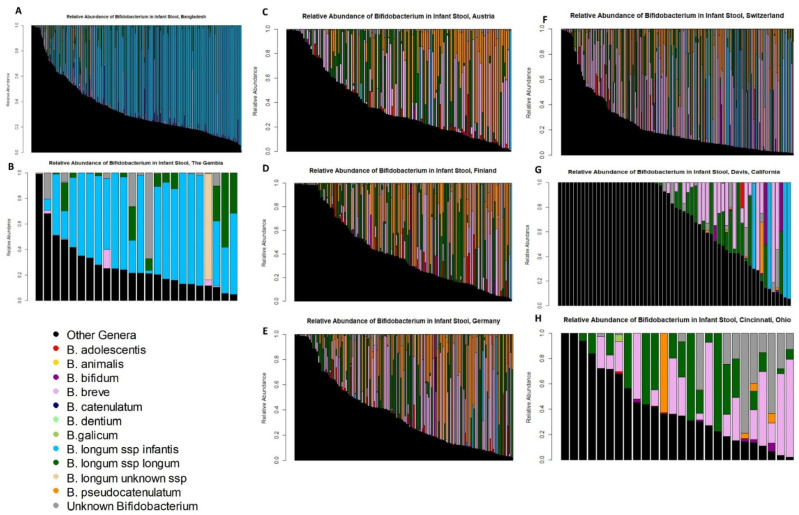
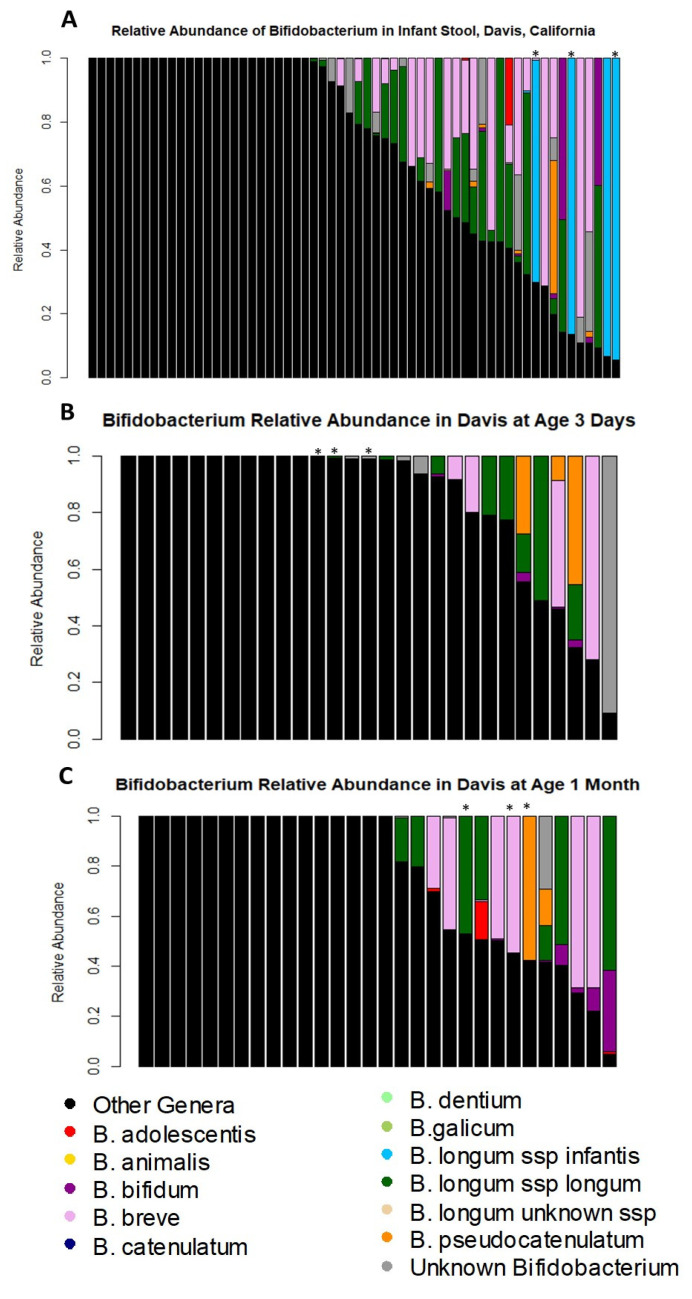
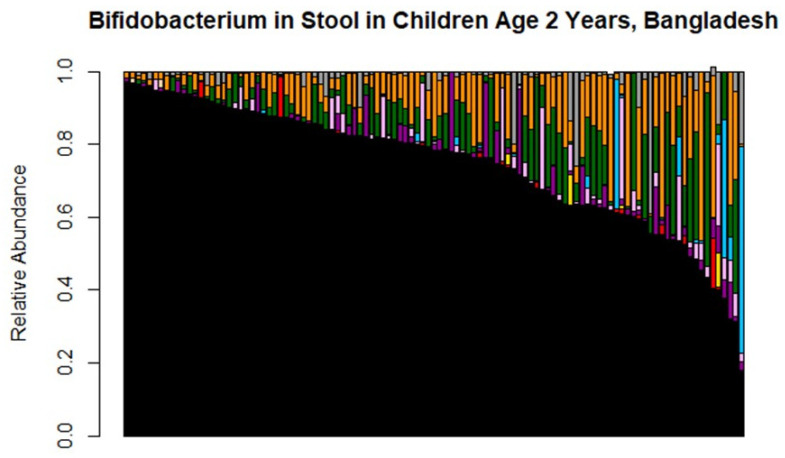
species are beneficial and dominant members of the breastfed infant gut microbiome; however, their health benefits are partially species-dependent. Here, we characterize the species and subspecies of in breastfed infants around the world to consider the potential impact of a historic dietary shift on the disappearance of subsp. in some populations. Across populations, three distinct patterns of colonization emerged: (1) The dominance of subspecies , (2) prevalent of multiple species, and (3) the frequent absence of any These patterns appear related to a country's history of breastfeeding, with infants in countries with historically high rates of long-duration breastfeeding more likely to be colonized by subspecies compared with infants in countries with histories of shorter-duration breastfeeding. In addition, the timing of infant colonization with subsp. is consistent with horizontal transmission of this subspecies, rather than the vertical transmission previously reported for other species. These findings highlight the need to consider historical and cultural influences on the prevalence of gut commensals and the need to understand epidemiological transmission patterns of and other major commensals.
物种是母乳喂养婴儿肠道微生物群中有益和占优势的成员;然而,它们的健康益处部分取决于物种。在这里,我们描述了世界各地母乳喂养婴儿中的 物种和亚种,以考虑历史饮食变化对某些人群中 subsp. 消失的潜在影响。在不同人群中,出现了三种不同的 定植模式:(1) 亚种 的优势,(2) 多种物种的普遍存在,以及 (3) 任何 的频繁缺失。这些模式似乎与一个国家母乳喂养的历史有关,与母乳喂养历史较短的国家相比,母乳喂养历史较长的国家的婴儿更容易被 subsp. 定植。此外,婴儿与 subsp. 定植的时间与该亚种的水平传播一致,而不是先前报道的其他 物种的垂直传播。这些发现强调了需要考虑历史和文化对肠道共生菌流行的影响,以及需要了解 和其他主要共生菌的流行病学传播模式。