Department of Food Science & Center for Sensory Sciences & Innovation, Rutgers University, New Brunswick, NJ 08901, USA.
Department of Biochemistry and Microbiology, Center for Microbiome, Nutrition, and Health, New Jersey Institute for Food, Nutrition, and Health, Rutgers University, New Brunswick, NJ 08901, USA.
Nutrients. 2022 Apr 2;14(7):1492. doi: 10.3390/nu14071492.
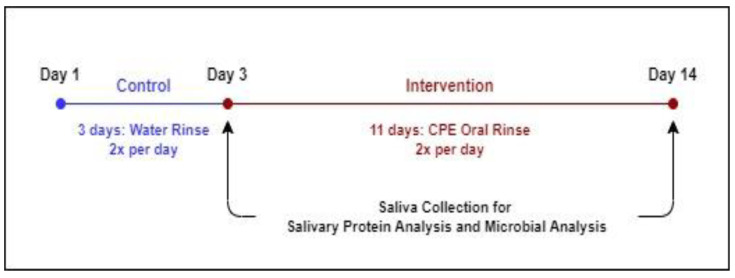
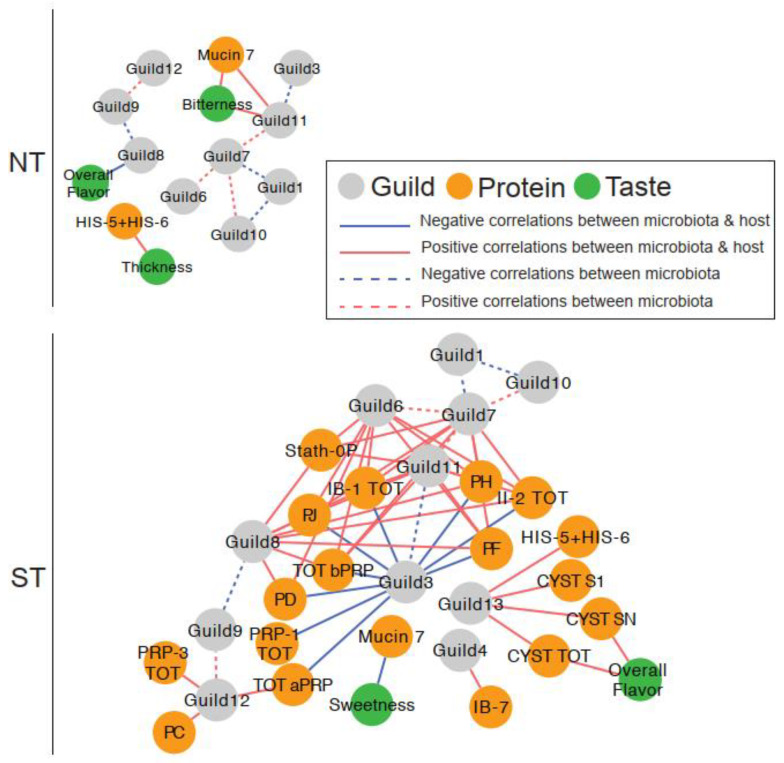
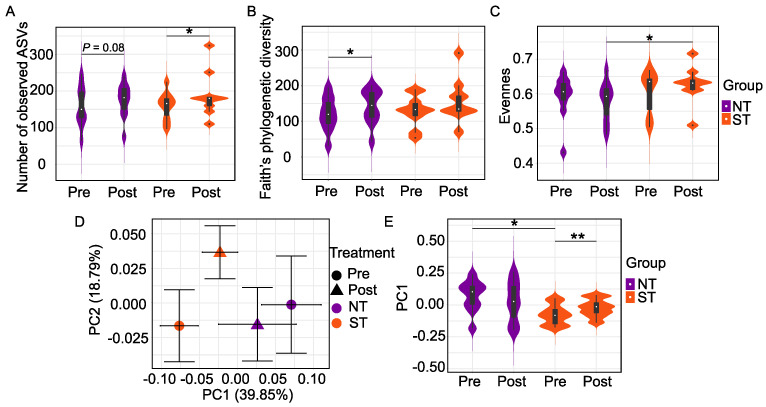
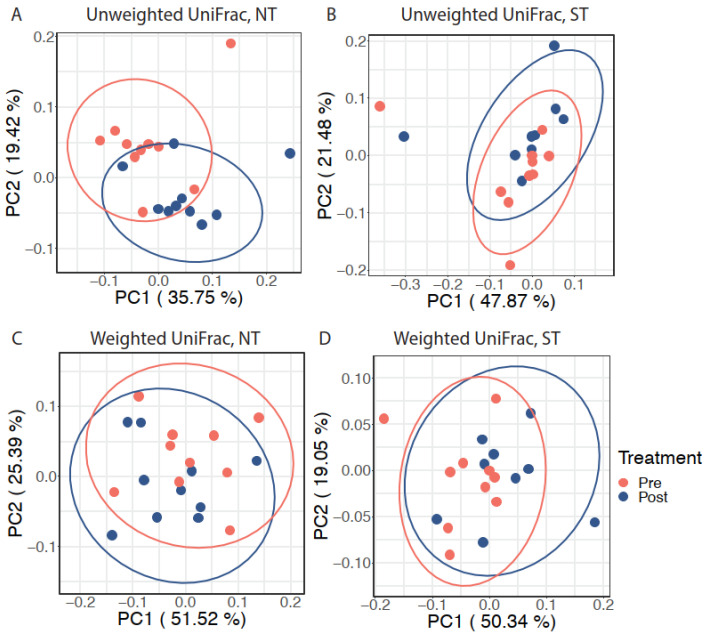
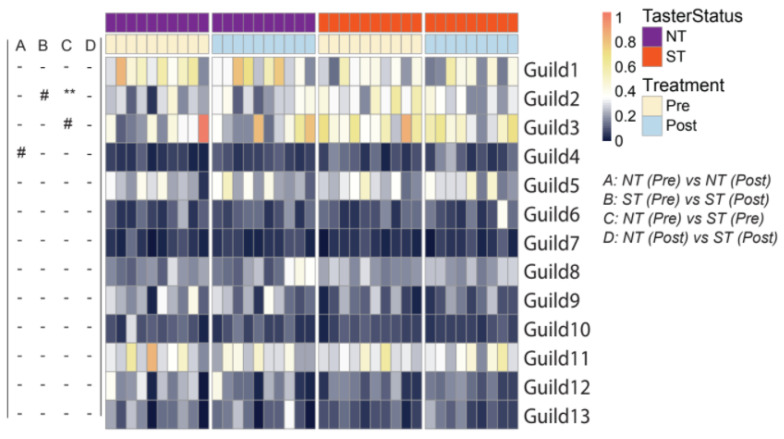
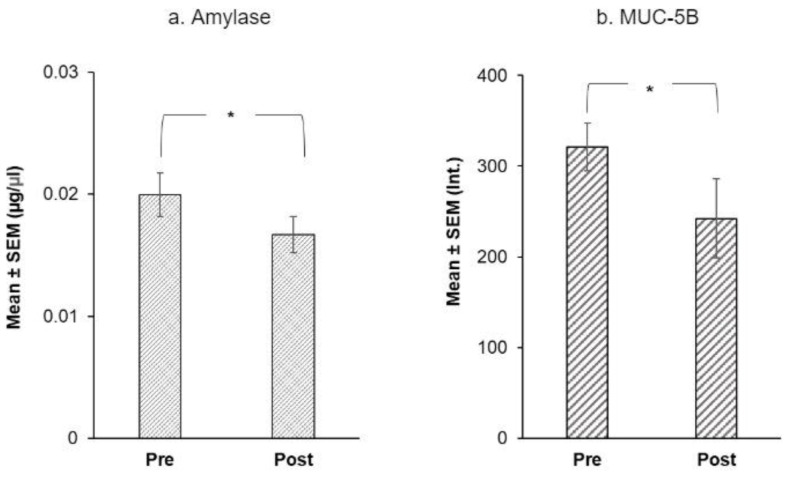
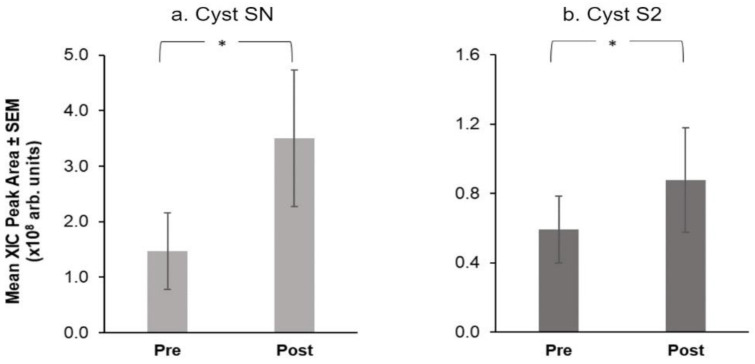
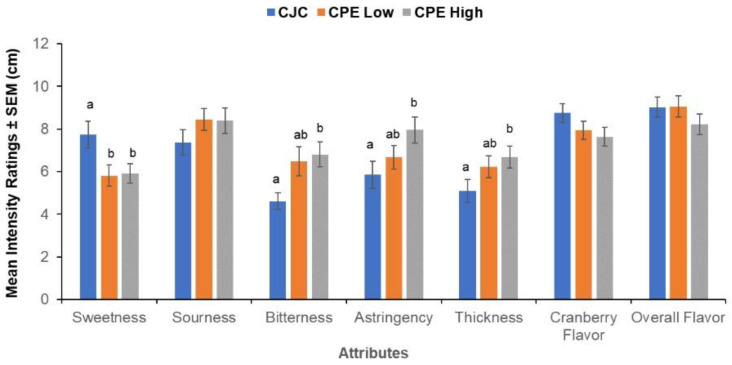
Diet and salivary proteins influence the composition of the oral microbiome, and recent data suggest that TAS2R38 bitter taste genetics may also play a role. We investigated the effects of daily exposure to a cranberry polyphenol oral rinse on taste perception, salivary proteins, and oral microbiota. 6-n-Propylthiouracil (PROP) super-tasters (ST, = 10) and non-tasters (NT, = 10) rinsed with 30 mL of 0.75 g/L cranberry polyphenol extract (CPE) in spring water, twice daily for 11 days while consuming their habitual diets. The 16S rRNA gene sequencing showed that the NT oral microbiome composition was different than that of STs at baseline ( = 0.012) but not after the intervention ( = 0.525). Principal coordinates analysis using unweighted UniFrac distance showed that CPE modified microbiome composition in NTs ( = 0.023) but not in STs ( = 0.096). The intervention also altered specific salivary protein levels (α-amylase, MUC-5B, and selected S-type Cystatins) with no changes in sensory perception. Correlation networks between oral microbiota, salivary proteins, and sensory ratings showed that the ST microbiome had a more complex relationship with salivary proteins, particularly proline-rich proteins, than that in NTs. These findings show that CPE modulated the oral microbiome of NTs to be similar to that of STs, which could have implications for oral health.
饮食和唾液蛋白会影响口腔微生物组的组成,最近的数据表明 TAS2R38 苦味基因可能也起作用。我们研究了每日使用蔓越莓多酚口腔冲洗液对味觉感知、唾液蛋白和口腔微生物群的影响。6-正丙基硫氧嘧啶(PROP)超级味觉者(ST,n = 10)和非味觉者(NT,n = 10)每天用 30 毫升 0.75 g/L 的蔓越莓多酚提取物(CPE)在泉水冲洗两次,持续 11 天,同时摄入他们的习惯性饮食。16S rRNA 基因测序显示,NT 的口腔微生物组组成在基线时与 ST 不同( = 0.012),但干预后无差异( = 0.525)。基于未加权 UniFrac 距离的主坐标分析显示,CPE 改变了 NT 中的微生物组组成( = 0.023),但对 ST 无影响( = 0.096)。该干预还改变了特定的唾液蛋白水平(α-淀粉酶、MUC-5B 和选定的 S 型半胱氨酸蛋白酶抑制剂),但对感官感知没有影响。口腔微生物群、唾液蛋白和感官评分之间的相关网络表明,ST 微生物群与唾液蛋白(特别是富含脯氨酸的蛋白)的关系比 NT 更复杂。这些发现表明,CPE 调节了 NT 的口腔微生物群,使其与 ST 相似,这可能对口腔健康有影响。