Yuk Jin-Sung, Hwang Je Hyung
Department of Obstetrics and Gynecology, Sanggye Paik Hospital, Inje University 1342, Dongil-ro, Nowon-gu, Seoul 139-707, Korea.
Department of Ophthalmology, Sanggye Paik Hospital, Inje University 1342, Dongil-ro, Nowon-gu, Seoul 139-707, Korea.
J Clin Med. 2022 Mar 29;11(7):1899. doi: 10.3390/jcm11071899.
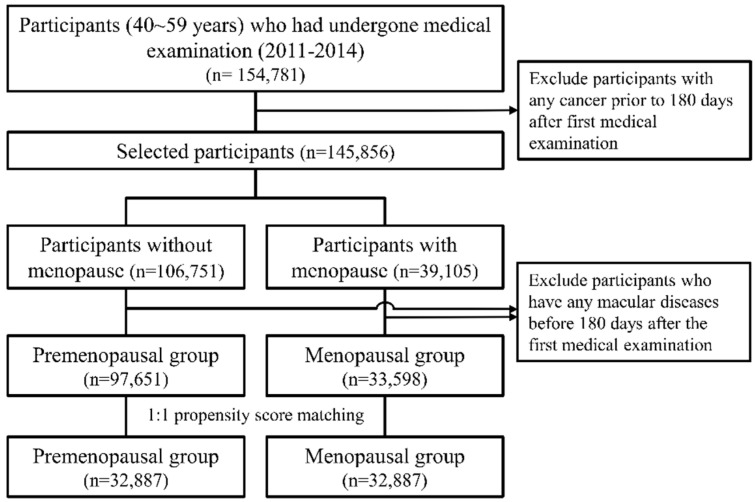
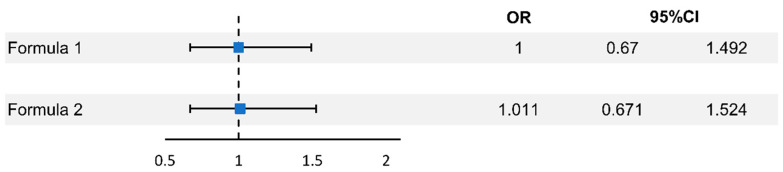
Previous studies have shown that menopausal hormone therapy in postmenopausal women results in a higher prevalence of age-related macular degeneration. This study aimed to evaluate the effects of menopause and patient factors on the development of age-related macular degeneration in Korean women. Data between 2011 and 2014 were collected from the Korean National Health Insurance database. In this retrospective cohort study, 97,651 participants were premenopausal and 33,598 were menopausal. Participants were divided into menopausal and premenopausal groups to analyze the risk factors associated with the development of age-related macular degeneration. The prevalence of age-related macular degeneration was compared between the two groups. Other patient factors were also analyzed. Using a 1:1 propensity score matching method and adjusting for variables, the incidence of age-related macular degeneration was not significantly different between the two groups. Age and diabetes mellitus were associated with an increased risk of developing age-related macular degeneration, regardless of menopause. Menopause was not a risk factor for age-related macular degeneration. These findings may help physicians identify women with diabetes who are at a greater risk of developing age-related macular degeneration.
先前的研究表明,绝经后女性进行绝经激素治疗会导致年龄相关性黄斑变性的患病率更高。本研究旨在评估绝经状态和患者因素对韩国女性年龄相关性黄斑变性发病的影响。2011年至2014年的数据来自韩国国民健康保险数据库。在这项回顾性队列研究中,97651名参与者处于绝经前状态,33598名处于绝经状态。将参与者分为绝经组和绝经前组,以分析与年龄相关性黄斑变性发病相关的危险因素。比较了两组年龄相关性黄斑变性的患病率。还分析了其他患者因素。采用1:1倾向评分匹配方法并对变量进行调整后,两组年龄相关性黄斑变性的发病率无显著差异。无论是否绝经,年龄和糖尿病都与年龄相关性黄斑变性发病风险增加有关。绝经不是年龄相关性黄斑变性的危险因素。这些发现可能有助于医生识别患年龄相关性黄斑变性风险更高的糖尿病女性。