Department of Science in Korean Medicine, Graduate School, Kyung Hee University, 26 Kyungheedae Rd., Dongdaemun-gu, Seoul 02447, Korea.
Institute of Safety and Effectiveness Evaluation for Korean Medicine, 26 Kyungheedae Rd., Dongdaemun-gu, Seoul 02447, Korea.
Molecules. 2022 Mar 24;27(7):2106. doi: 10.3390/molecules27072106.
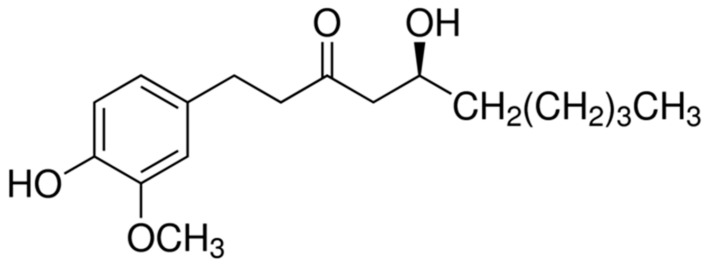
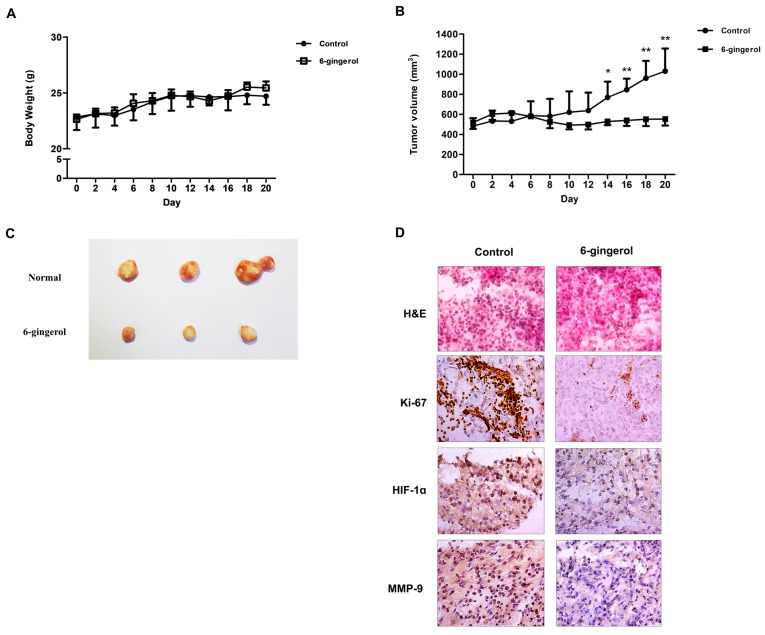
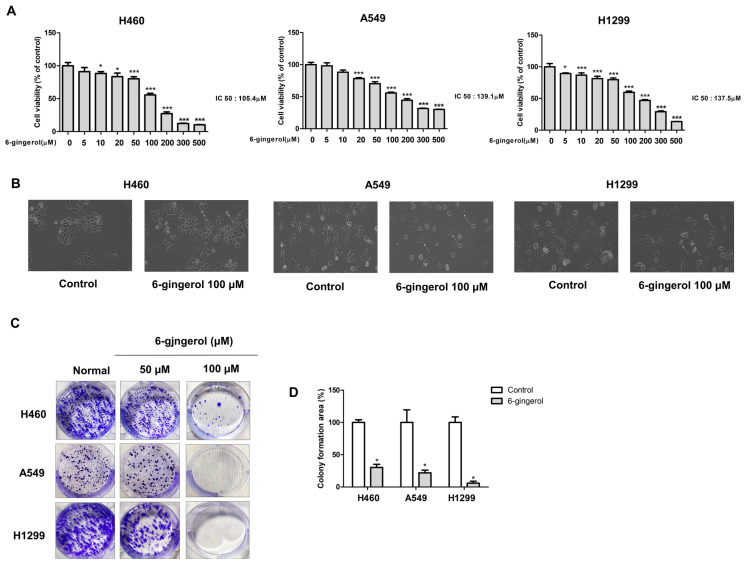
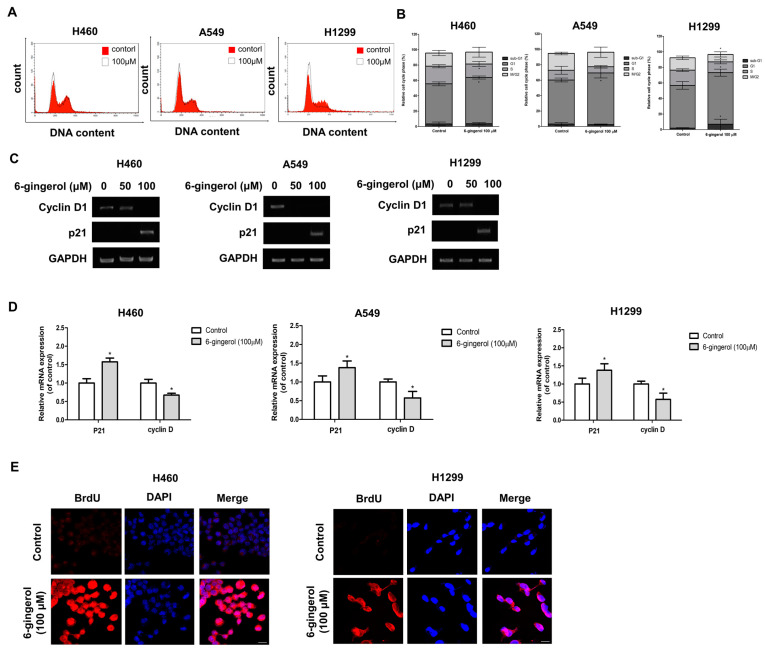
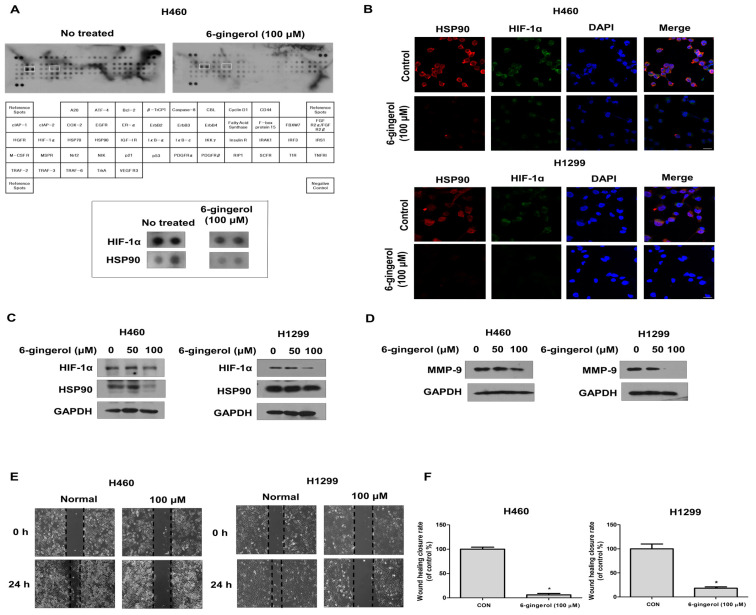
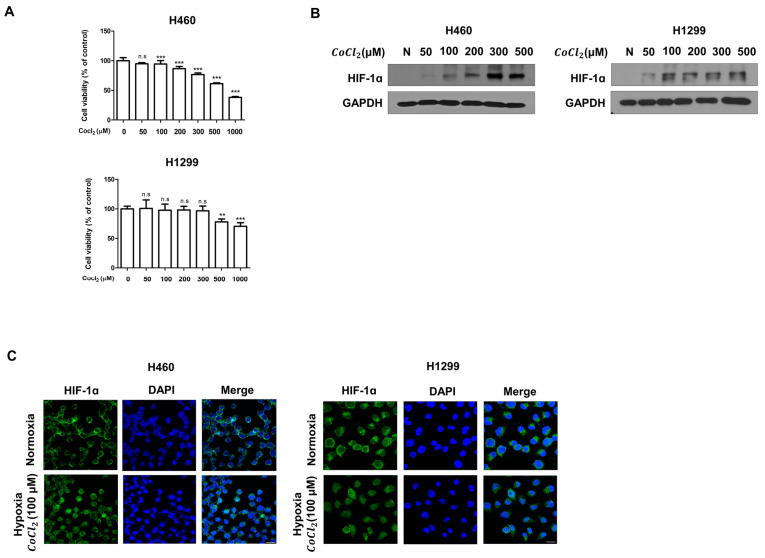
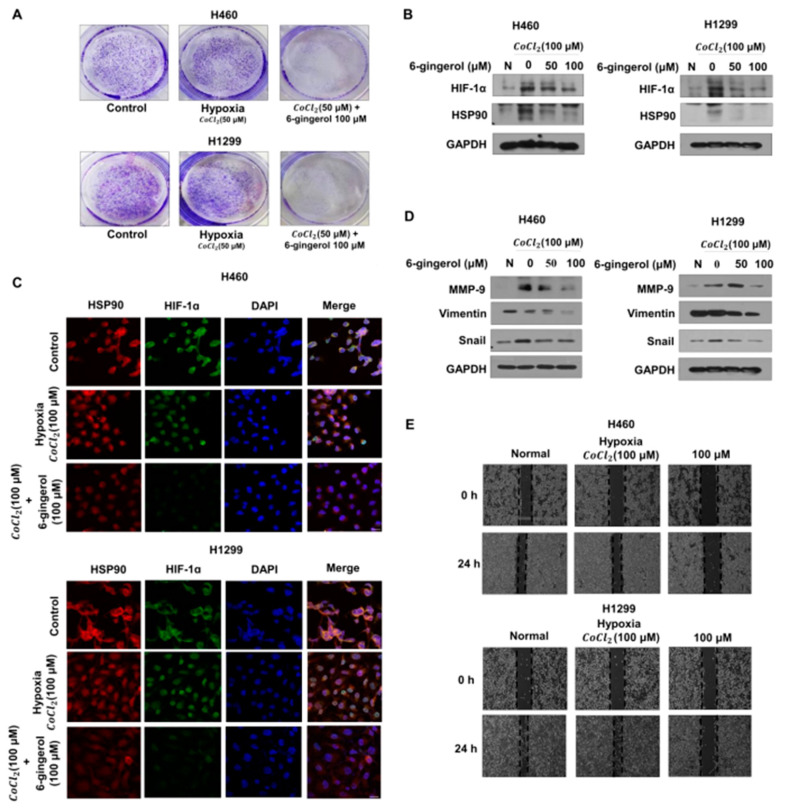
Lung cancer (LC) is the leading global cause of cancer-related death, and metastasis is a great challenge in LC therapy. Additionally, solid cancer, including lung, prostate, and colon cancer, are characterized by hypoxia. A low-oxygen state is facilitated by the oncogene pathway, which correlates with a poor cancer prognosis. Thus, we need to understand the related mechanisms in solid tumors to improve and develop new anticancer strategies. The experiments herein describe an anticancer mechanism in which heat shock protein 90 (HSP90) stabilizes HIF-1α, a master transcription factor of oxygen homeostasis that has been implicated in the survival, proliferation and malignant progression of cancers. We demonstrate the efficacy of 6-gingerol and the molecular mechanism by which 6-gingerol inhibits LC metastasis in different oxygen environments. Our results showed that cell proliferation was inhibited after 6-gingerol treatment. Additionally, HIF-1α, a transcriptional regulator, was found to be recruited to the hypoxia response element (HRE) of target genes to induce the transcription of a series of target genes, including MMP-9, vimentin and snail. Interestingly, we found that 6-gingerol treatment suppressed activation of the transcription factor HIF-1α by downregulating HSP90 under both normoxic and hypoxic conditions. Furthermore, an experiment in an in vivo xenograft model revealed decreased tumor growth after 6-gingerol treatment. Both in vitro and in vivo analyses showed the inhibition of metastasis through HIF-1α/HSP90 after 6-gingerol treatment. In summary, our study demonstrates that 6-gingerol suppresses proliferation and blocks the nuclear translocation of HIF-1α and activation of the EMT pathway. These data suggest that 6-gingerol is a candidate antimetastatic treatment for LC.
肺癌(LC)是全球癌症相关死亡的主要原因,转移是 LC 治疗的一大挑战。此外,包括肺癌、前列腺癌和结肠癌在内的实体瘤以缺氧为特征。低氧状态是由致癌基因途径促进的,这与癌症预后不良相关。因此,我们需要了解实体瘤中的相关机制,以改善和开发新的抗癌策略。本文中的实验描述了一种抗癌机制,其中热休克蛋白 90(HSP90)稳定了缺氧诱导因子 1α(HIF-1α),HIF-1α 是一种氧平衡的主要转录因子,与癌症的存活、增殖和恶性进展有关。我们证明了 6-姜酚在不同氧环境下抑制 LC 转移的疗效及其分子机制。我们的结果表明,6-姜酚处理后细胞增殖受到抑制。此外,作为转录调节剂的 HIF-1α 被发现募集到靶基因的低氧反应元件(HRE),以诱导一系列靶基因的转录,包括 MMP-9、波形蛋白和 snail。有趣的是,我们发现 6-姜酚处理通过下调 HSP90 抑制了缺氧和常氧条件下转录因子 HIF-1α 的激活。此外,在体内异种移植模型实验中发现 6-姜酚处理后肿瘤生长减少。体外和体内分析均表明,6-姜酚处理后通过 HIF-1α/HSP90 抑制转移。综上所述,我们的研究表明,6-姜酚抑制增殖并阻止 HIF-1α 的核易位和 EMT 途径的激活。这些数据表明,6-姜酚是治疗 LC 的候选抗转移治疗药物。