First Department of Pathology, Medical School, National and Kapodistrian University of Athens, 75, Mikras Asias Street, Bld 10, Goudi, 11527 Athens, Greece.
Department of Forensic Medicine and Toxicology, Pathology, Medical School, National and Kapodistrian University of Athens, 75, Mikras Asias Street, Goudi, 11527 Athens, Greece.
Int J Mol Sci. 2022 Mar 24;23(7):3551. doi: 10.3390/ijms23073551.
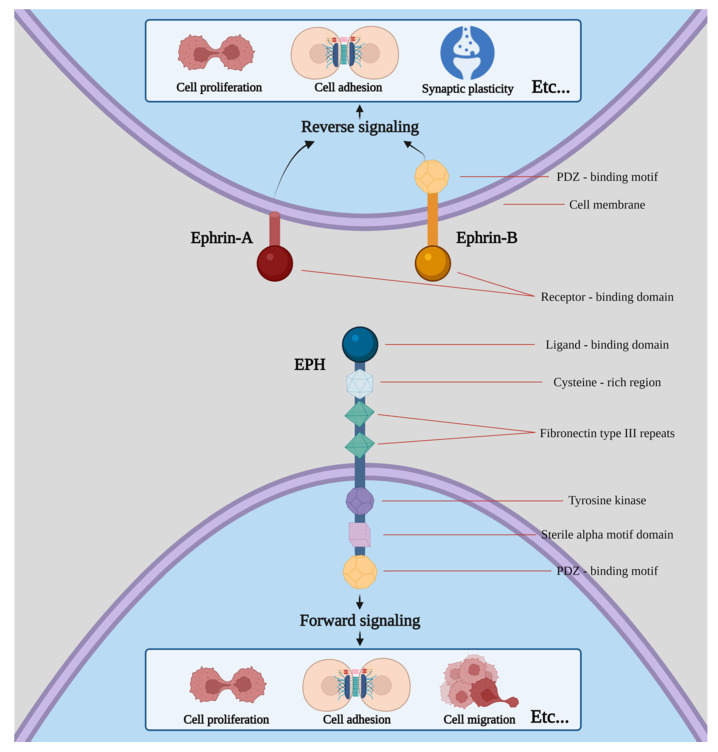
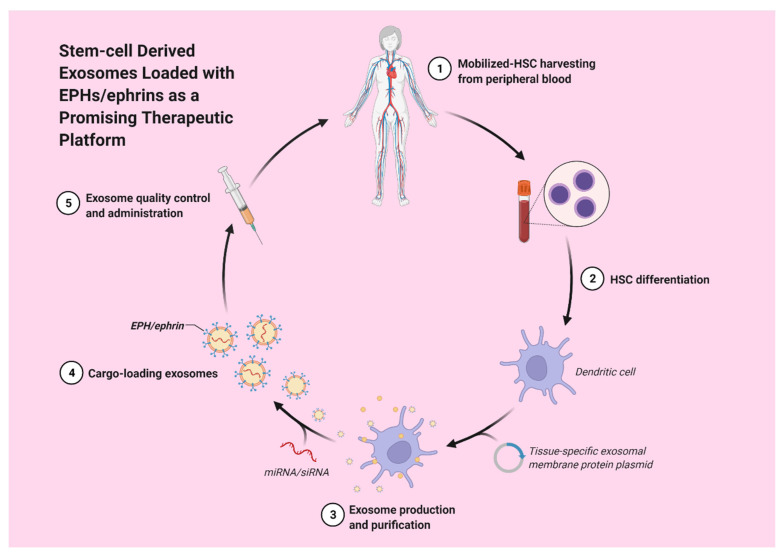
Exosomes are cell-secreted nanoparticles containing various molecules including small vesicles, microRNAs (miRNAs), messenger RNAs or bioactive proteins which are thought to be of paramount importance for intercellular communication. The unique effects of exosomes in terms of cell penetration capacity, decreased immunogenicity and inherent stability, along with their key role in mediating information exchange among tumor cells and their surrounding tumor microenvironment (TME), render them a promising platform for drug targeted delivery. Compared to synthetic drugs, exosomes boast a plethora of advantages, including higher biocompatibility, lower toxicity and increased ability of tissue infiltration. Nevertheless, the use of artificial exosomes can be limited in practice, partly due to their poor targeting ability and partly due to their limited efficacy. Therefore, efforts have been made to engineer stem cell-derived exosomes in order to increase selectiveness and effectivity, which can then become loaded with various active substances depending on the therapeutic approach followed. Erythropoietin-producing human hepatocellular receptors (EPHs), along with their ligands, the EPH family receptor interacting proteins (ephrins), have been extensively investigated for their key roles in both physiology and cancer pathogenesis. EPHs/ephrins exhibit both tumorigenic and tumor suppressing properties, with their targeting representing a promising, novel therapeutic approach in cancer patients' management. In our review, the use of ephrin-loaded exosomes as a potential therapeutic targeted delivery system in cancer will be discussed.
外泌体是细胞分泌的纳米颗粒,包含各种分子,包括小囊泡、microRNAs (miRNAs)、信使 RNA 或生物活性蛋白,它们被认为在细胞间通讯中至关重要。外泌体在细胞穿透能力、免疫原性降低和固有稳定性方面的独特作用,以及它们在介导肿瘤细胞与其周围肿瘤微环境 (TME) 之间的信息交换方面的关键作用,使它们成为药物靶向递送的有前途的平台。与合成药物相比,外泌体具有许多优势,包括更高的生物相容性、更低的毒性和更强的组织渗透能力。然而,在实践中外泌体的使用可能会受到限制,部分原因是它们的靶向能力差,部分原因是它们的疗效有限。因此,人们努力工程化干细胞衍生的外泌体,以提高选择性和有效性,然后根据所采用的治疗方法将各种活性物质装载到这些外泌体中。Erythropoietin-producing human hepatocellular receptors (EPHs)及其配体 EPH 家族受体相互作用蛋白 (ephrins) 因其在生理和癌症发病机制中的关键作用而受到广泛研究。EPHs/ephrins 具有致癌和抑癌特性,其靶向治疗代表了癌症患者管理的一种有前途的新治疗方法。在我们的综述中,将讨论载有 ephrin 的外泌体作为癌症潜在治疗性靶向递药系统的用途。