Department of Social Work and Social Administration, The University of Hong Kong, Hong Kong.
Department of Sociology, Haverford College, Haverford, PA 19041, USA.
Int J Environ Res Public Health. 2022 Mar 30;19(7):4082. doi: 10.3390/ijerph19074082.
Research has established the family as the predominant context for child labor practices. Decisions to involve children in child labor within the family or by a family member (herein family child labor) is strongly motivated by cultural beliefs that normalize child labor. This systematic review sought to synthesize evidence on the social norms that support child labor practices, and the normative interpretation of international child labor legislation/standards.
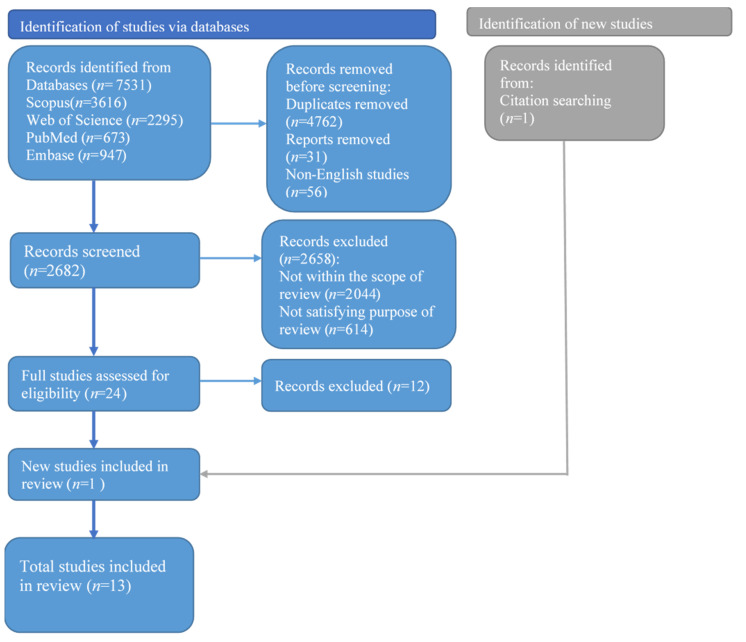
We followed the PRISMA procedure for systematic review by reviewing empirical articles published between 2000 to 2021 and contained within the four key databases: Scopus, ISI Web of Sciences, PubMed and Embase. Findings from 13 articles that met the inclusion criteria were analyzed thematically.
The review included studies from three continents: Africa, Asia and Europe. Gender norms, informal apprenticeship norm, norms on succession and sustenance as well as obedience, were key social norms that influenced child labor practices in the family. Parents' decision to involve children in child labor was strongly influenced by the collective acceptance of some occupations (e.g., cocoa farming and fishing) as family occupations, which need to be preserved, undertaken and passed on to children. Child rights and the UNCRC principle of children's participation were considered foreign to most non-western countries and interpreted as contravention to the cherished social norm of obedience. The findings underlie the link between social norms and the common social values of resilience, hard work, and respect.
The results provide foundations and target to develop normative change intervention programs to re-orient the negative interpretations of common social values and provide alternative pathways that prevent child labor within the social context.
研究已经确立了家庭是童工实践的主要背景。家庭成员决定让儿童参与家庭内或由家庭成员进行的童工劳动(以下简称家庭童工劳动),这主要是受到将童工劳动正常化的文化信念的驱动。本系统评价旨在综合有关支持童工劳动实践的社会规范以及国际童工立法/标准的规范解释的证据。
我们遵循系统评价的 PRISMA 程序,对 2000 年至 2021 年期间发表的并包含在四个主要数据库中的实证文章进行了回顾:Scopus、ISI Web of Sciences、PubMed 和 Embase。对符合纳入标准的 13 篇文章的结果进行了主题分析。
该评价纳入了来自三个大洲的研究:非洲、亚洲和欧洲。性别规范、非正式学徒规范、继承和维持规范以及服从规范,是影响家庭童工劳动实践的关键社会规范。父母让孩子参与童工劳动的决定受到一些职业(例如可可种植和捕鱼)作为家庭职业的集体接受的强烈影响,这些职业需要被保留、进行并传承给孩子。儿童权利和《儿童权利公约》关于儿童参与的原则被大多数非西方国家视为外来的,并被解释为违反了服从这一珍贵的社会规范。这些发现为社会规范与韧性、努力工作和尊重等共同社会价值观之间的联系提供了基础和目标,以制定规范变革干预计划,重新调整对共同社会价值观的负面解释,并提供防止社会背景下童工劳动的替代途径。
结果为制定规范变革干预计划提供了基础和目标,以重新调整对共同社会价值观的负面解释,并提供替代途径,防止社会背景下的童工劳动。