Center for Collaborative Palliative Care, Department of Health and Caring Sciences, Linnaeus University, 35195 Växjö, Sweden.
Ariadne Labs, Boston, MA 02215, USA.
Int J Environ Res Public Health. 2022 Mar 31;19(7):4162. doi: 10.3390/ijerph19074162.
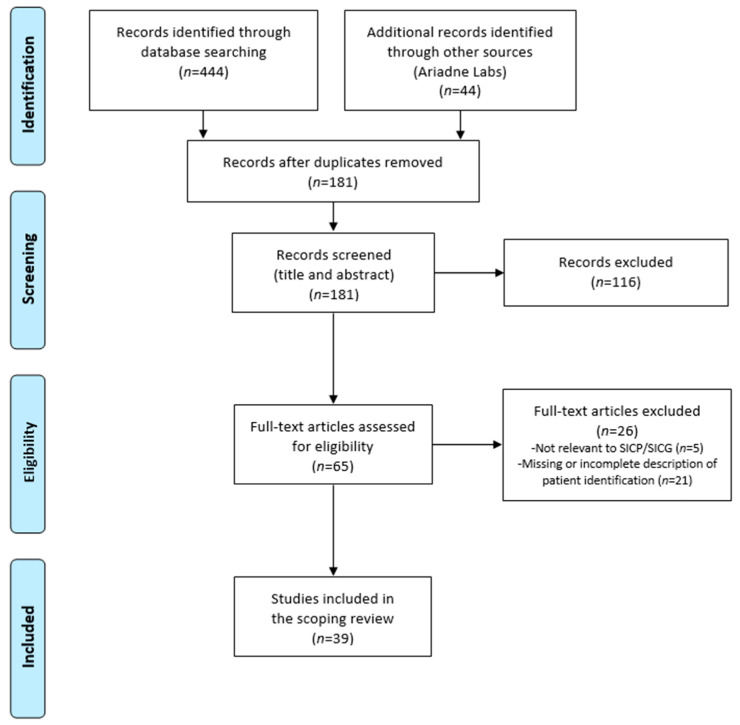
Serious illness conversations aim to align medical care and treatment with patients' values, goals, priorities, and preferences. Timely and accurate identification of patients for serious illness conversations is essential; however, existent methods for patient identification in different settings and population groups have not been compared and contrasted. This study aimed to examine the current literature regarding patient identification for serious illness conversations within the context of the Serious Illness Care Program and/or the Serious Illness Conversation Guide. A scoping review was conducted using the Joanna Briggs Institute guidelines. A comprehensive search was undertaken in four databases for literature published between January 2014 and September 2021. In total, 39 articles met the criteria for inclusion. This review found that patients were primarily identified for serious illness conversations using clinical/diagnostic triggers, the 'surprise question', or a combination of methods. A diverse assortment of clinicians and non-clinical resources were described in the identification process, including physicians, nurses, allied health staff, administrative staff, and automated algorithms. Facilitators and barriers to patient identification are elucidated. Future research should test the efficacy of adapted identification methods and explore how clinicians inform judgements surrounding patient identification.
严重疾病对话旨在使医疗护理和治疗与患者的价值观、目标、优先事项和偏好保持一致。及时准确地识别需要进行严重疾病对话的患者至关重要;然而,在不同环境和人群中用于患者识别的现有方法尚未进行比较和对比。本研究旨在根据严重疾病护理计划和/或严重疾病对话指南,检查有关严重疾病对话患者识别的当前文献。使用 Joanna Briggs 研究所指南进行了范围综述。在四个数据库中进行了全面搜索,以查找 2014 年 1 月至 2021 年 9 月期间发表的文献。共有 39 篇文章符合纳入标准。本综述发现,主要使用临床/诊断触发因素、“意外问题”或多种方法来识别患者进行严重疾病对话。在识别过程中描述了各种临床医生和非临床资源,包括医生、护士、联合健康工作人员、行政人员和自动化算法。阐明了患者识别的促进因素和障碍。未来的研究应测试改编后的识别方法的有效性,并探讨临床医生如何告知患者识别判断。