Ramírez-Herrera María Teresa, Coca Oswaldo, Vargas-Espinosa Victor
Instituto de Geografía, Lab. de Tsunamis y Paleosismología, Universidad Nacional Autónoma de México, Cd. De México, México.
Postgrado en Geografía, Instituto de Geografía, Universidad Nacional Autónoma de México, Cd. De México, México.
Pure Appl Geophys. 2022;179(4):1117-1137. doi: 10.1007/s00024-022-03017-9. Epub 2022 Apr 11.
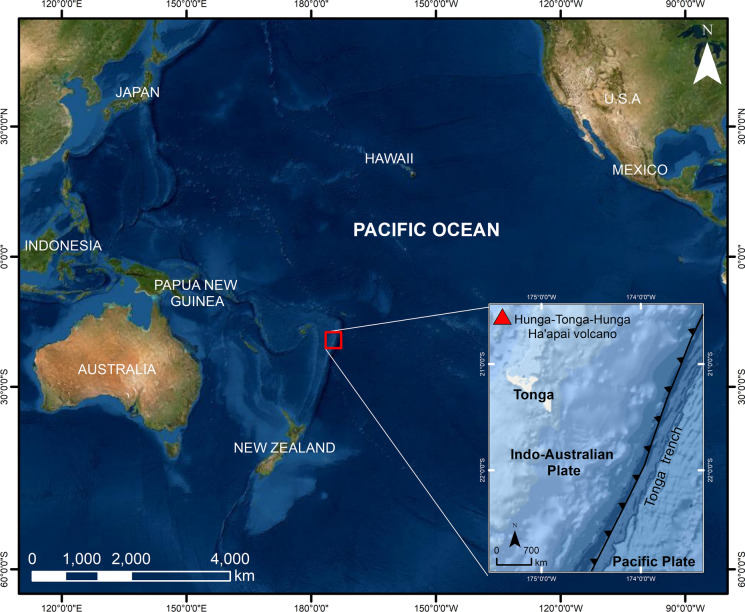
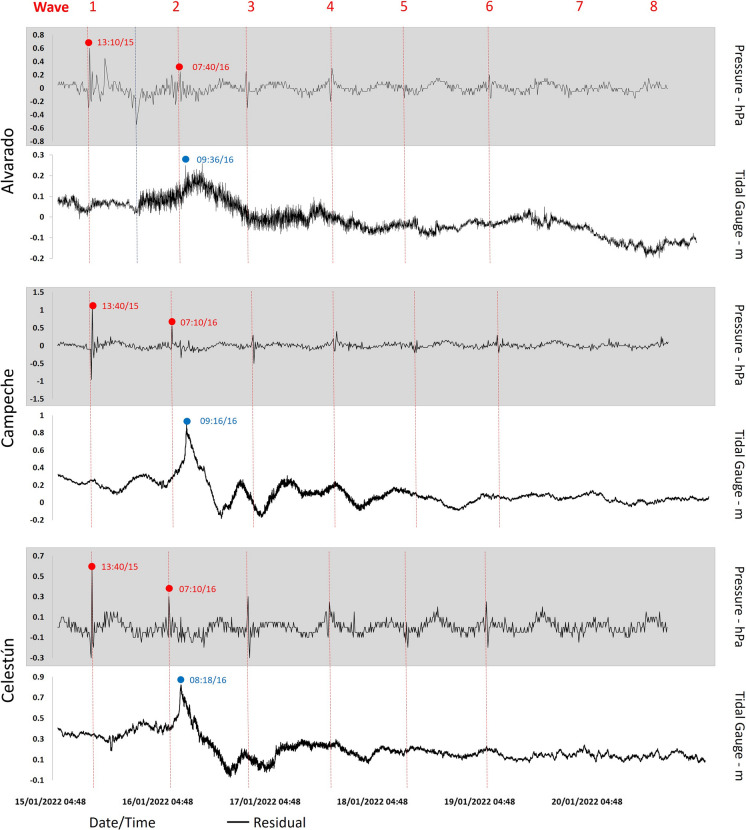
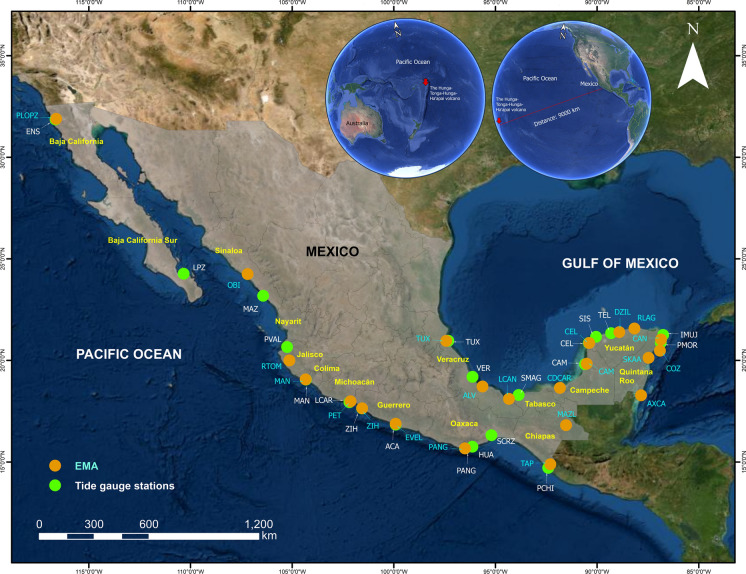
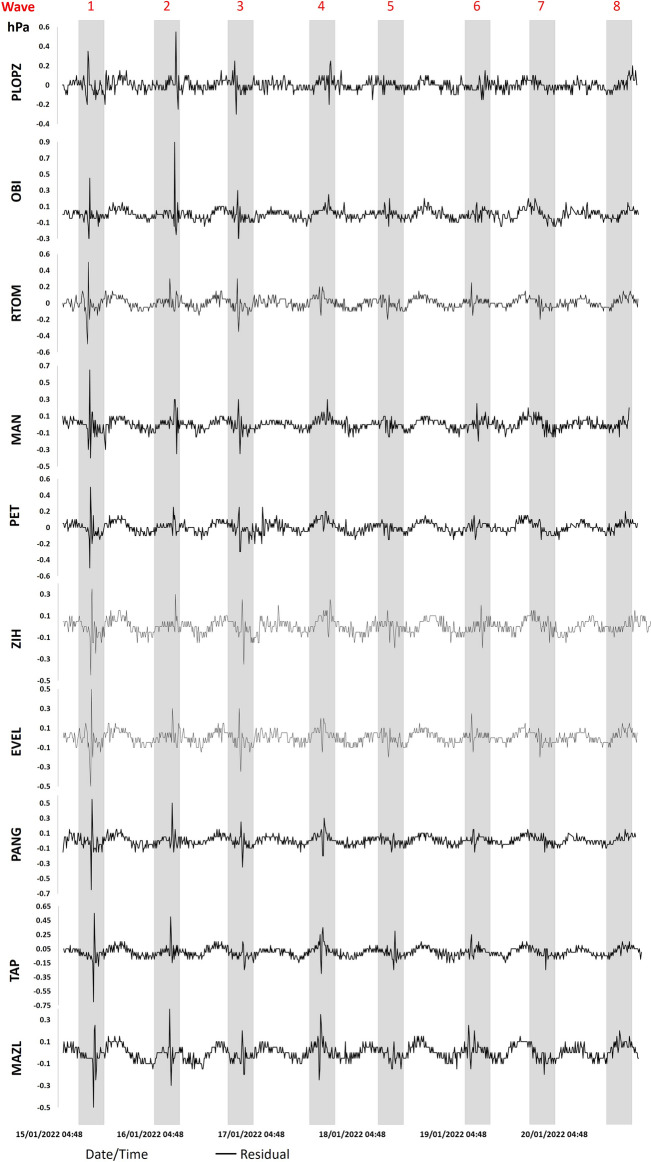
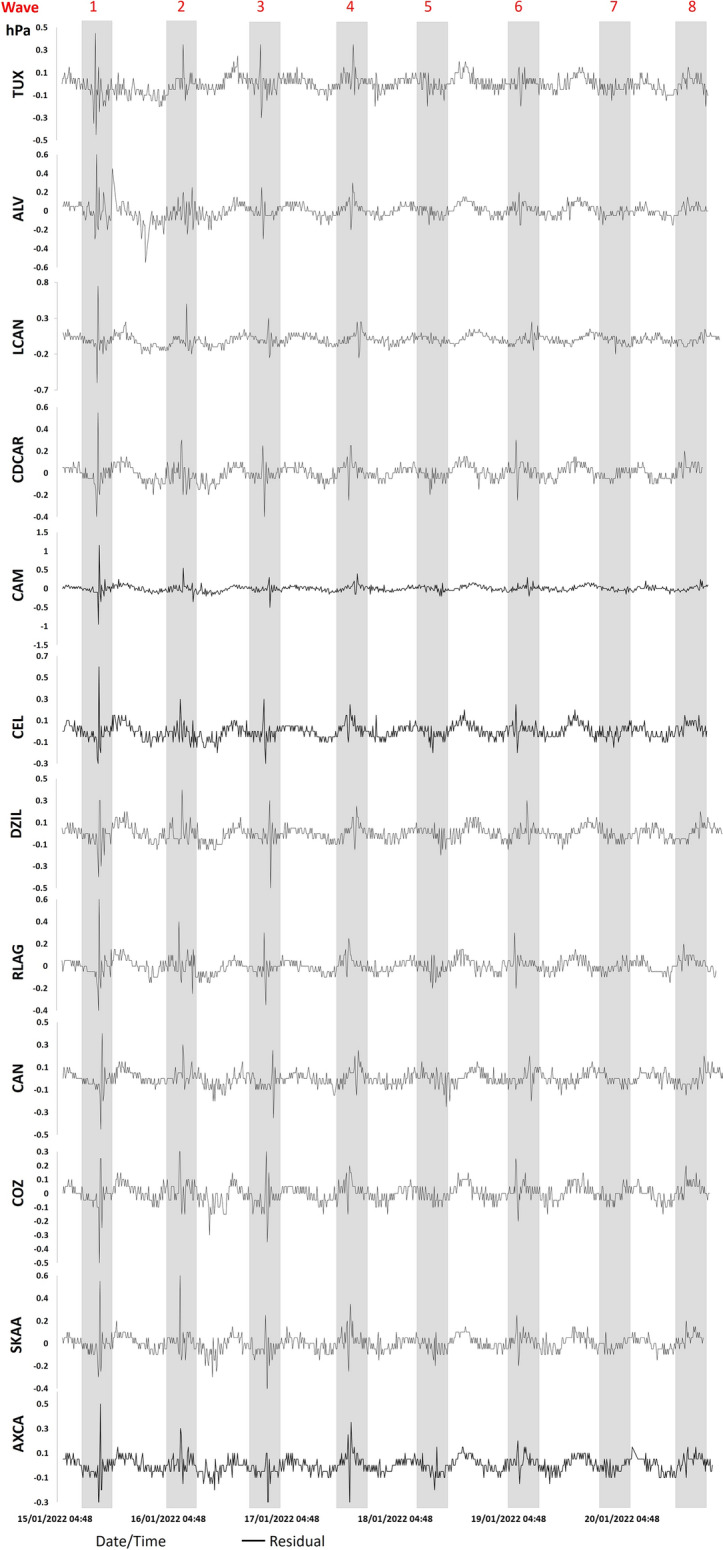
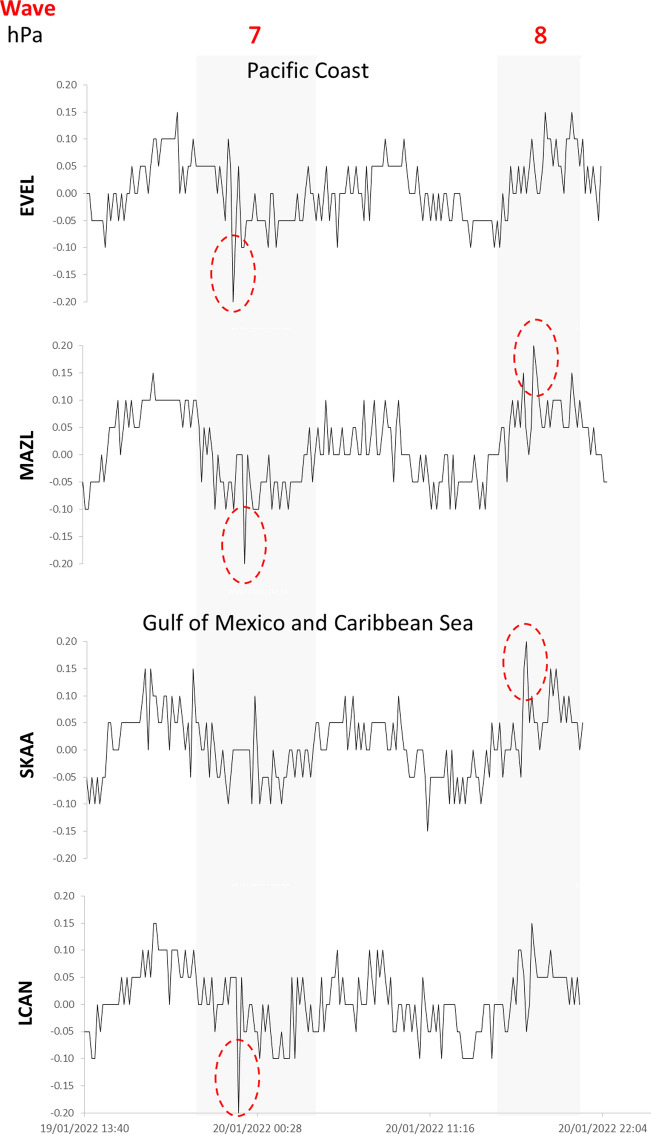
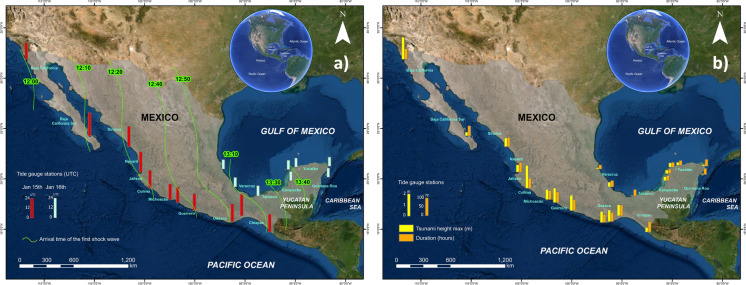
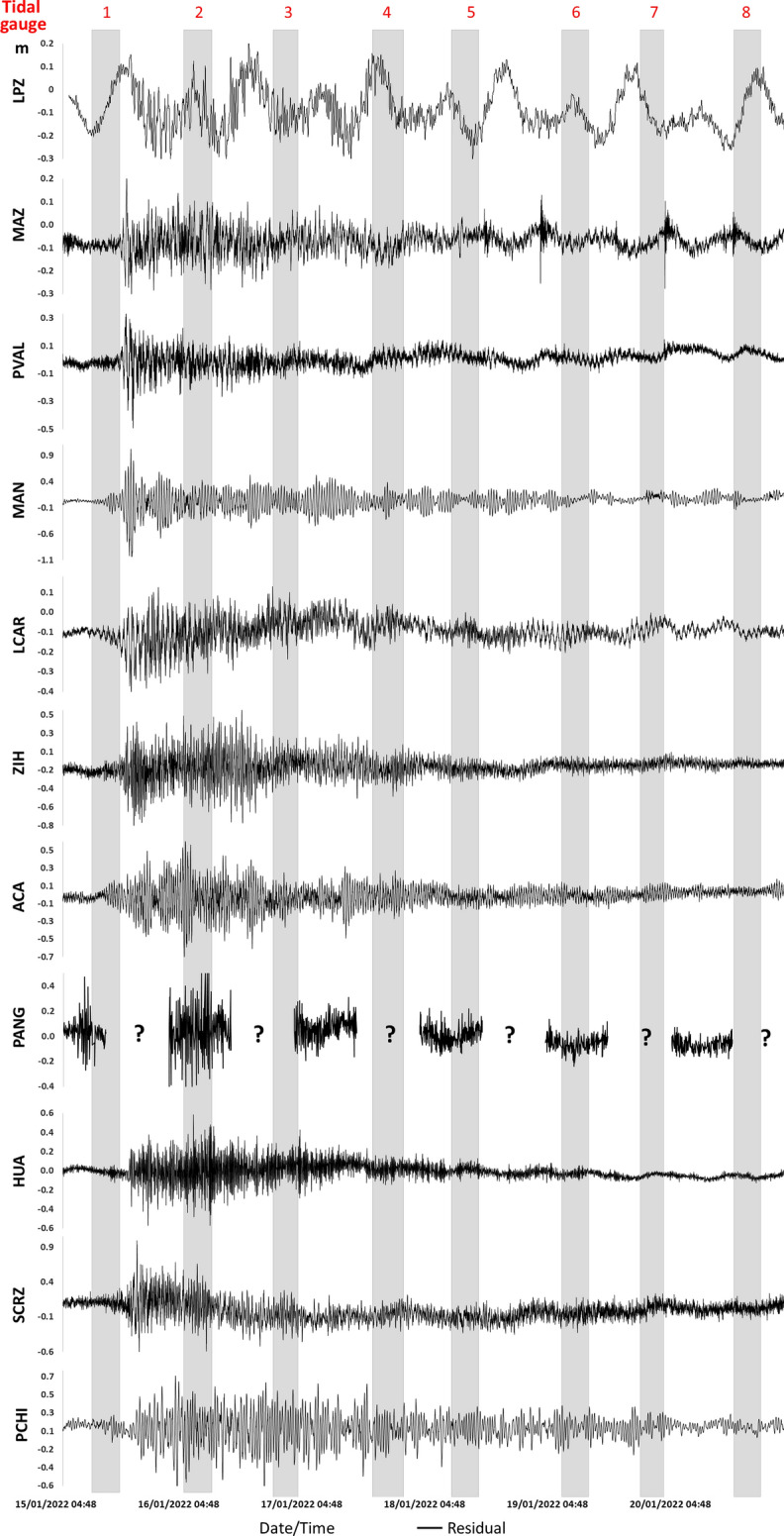
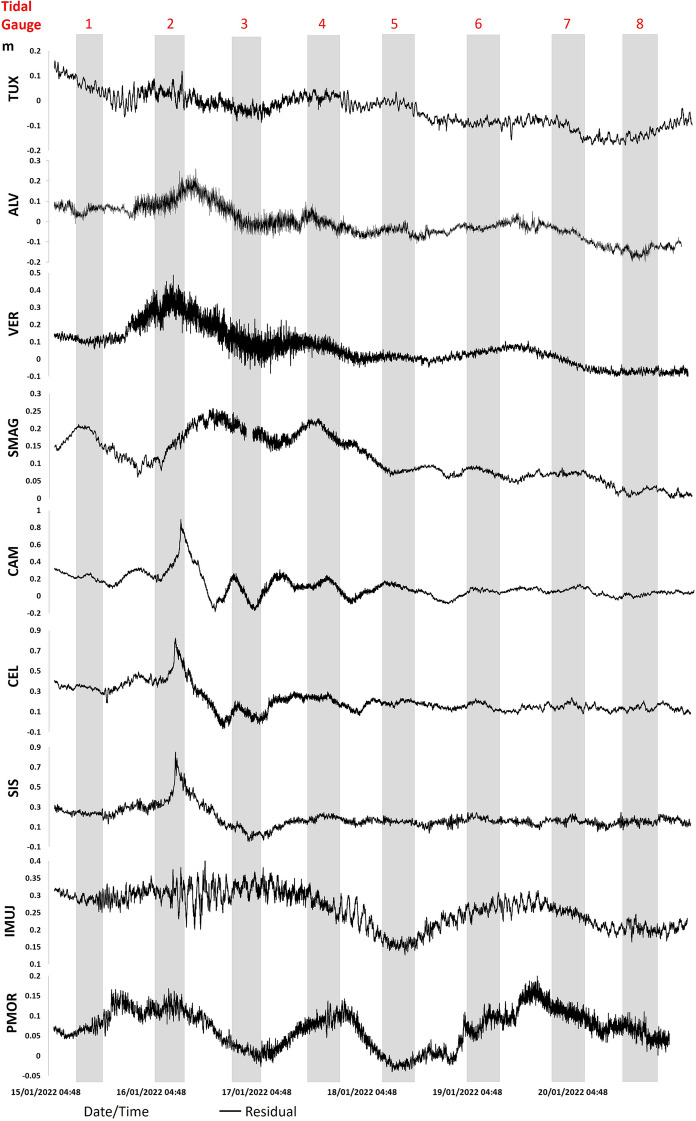
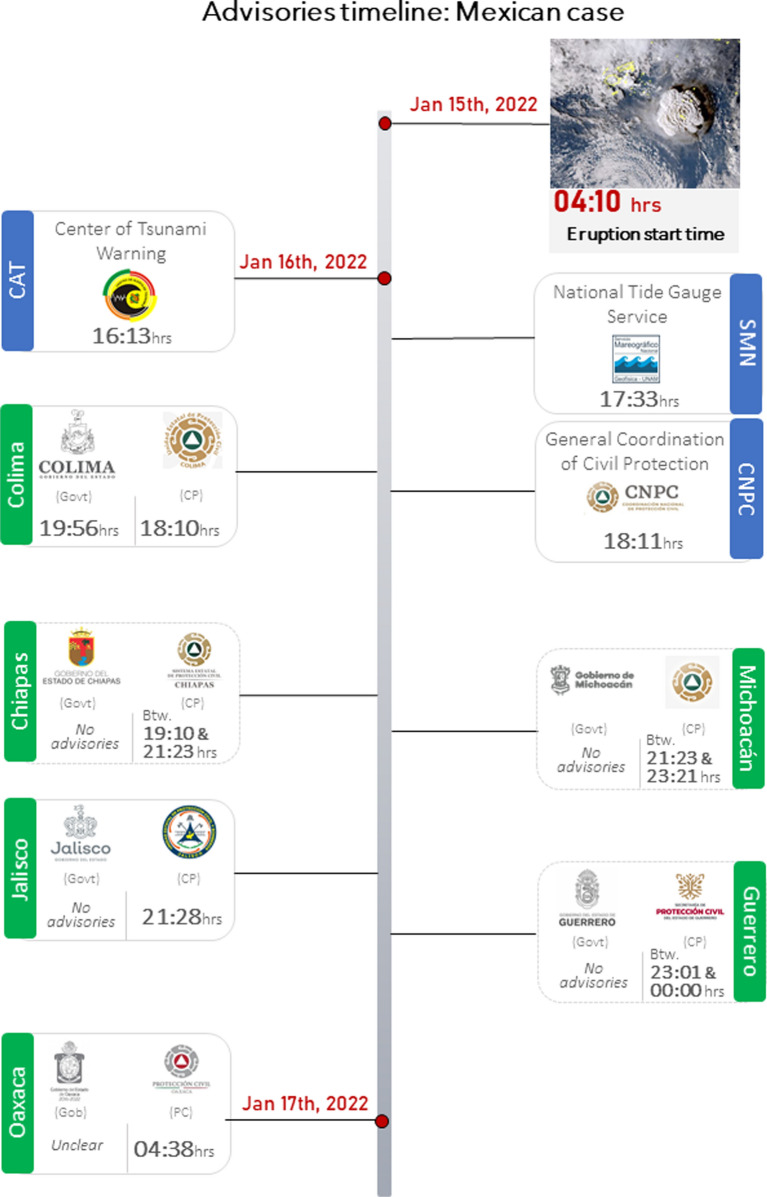
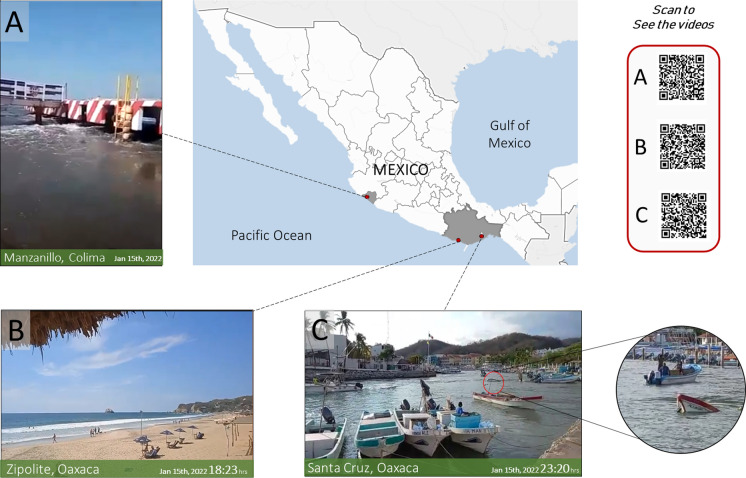
The massive explosion by the January 15, 2022 Hunga Tonga-Hunga Ha'apai volcano in Tonga triggered a trans-oceanic tsunami generated by coupled ocean and atmospheric shock waves during the explosion. The tsunami reached first the coast of Tonga, and later many coasts around the world. The shock wave went around the globe, causing sea perturbations as far as the Caribbean and the Mediterranean seas. We present the effects of the January 15, 2022 Tonga tsunami on the Mexican Pacific Coast, Gulf of Mexico, and Mexican Caribbean coast, and discuss the underrated hazard caused by great volcanic explosions, and the role of early tsunami warning systems, in particular in Mexico. The shock wave took about 7.5 h to reach the coast of Mexico, located about 9000 km away from the volcano, and the signal lasted several hours, about 133 h (5.13 days). The shock wave was the only cause for sea alterations on the Gulf of Mexico and Caribbean Sea, while at the Mexican Pacific coast both shock wave and the triggered tsunami by the volcano eruption and collapse affected this coast. The first tsunami waves recorded on the Mexican Pacific coast arrived around 12:35 on January 15, at the Lázaro Cárdenas, Michoacán tide gauge station. The maximum tsunami height exceeded 2 m at the Ensenada, Baja California, and Manzanillo, Colima, tide gauge stations. Most tsunami warning advisories, with two exceptions, reached communities via social media (Twitter and Facebook), but did not clearly state that people must stay away from the shore. We suggest that, although no casualties were reported in Mexico, tsunami warning advisories of far-field tsunamis and those triggered non-seismic sources, such as landslides and volcanic eruptions, should be included and improved to reach coastal communities timely, explaining the associated hazards on the coast.
The online version contains supplementary material available at 10.1007/s00024-022-03017-9.
2022年1月15日汤加的洪阿哈阿帕伊岛火山大规模爆发引发了跨洋海啸,此次海啸由爆炸期间的海洋和大气耦合冲击波产生。海啸首先抵达汤加海岸,随后蔓延至世界许多海岸。冲击波环绕全球,远至加勒比海和地中海都出现了海水扰动。我们展示了2022年1月15日汤加海啸对墨西哥太平洋海岸、墨西哥湾和墨西哥加勒比海岸的影响,并讨论了大型火山爆发造成的被低估的危害,以及早期海啸预警系统的作用,特别是在墨西哥的作用。冲击波大约花了7.5小时到达距离火山约9000公里的墨西哥海岸,信号持续了几个小时,约133小时(5.13天)。冲击波是墨西哥湾和加勒比海海水变化的唯一原因,而在墨西哥太平洋海岸,冲击波以及火山喷发和坍塌引发的海啸都对该海岸产生了影响。墨西哥太平洋海岸记录到的第一波海啸于1月15日12:35左右抵达米却肯州拉萨罗·卡德纳斯的潮汐测量站。在南下加利福尼亚州恩塞纳达和科利马州曼萨尼约的潮汐测量站,海啸最大高度超过2米。除了两个例外,大多数海啸预警建议是通过社交媒体(推特和脸书)传达给社区的,但没有明确说明人们必须远离海岸。我们建议,尽管墨西哥没有报告人员伤亡,但远场海啸以及由山体滑坡和火山爆发等非地震源引发的海啸的预警建议应予以完善并及时传达给沿海社区,同时解释海岸相关的危害。
在线版本包含可在10.1007/s00024-022-03017-9获取的补充材料。